



Painted Shell Trade Harms Indonesia’s Hermit Crabs, Key Guardians of Ocean Health
- 22 Jul 2026 06:50 WIB
- Voice of Indonesia
Key Points
- Indonesian vendors are endangering local hermit crabs by selling them with painted or tattooed shells as novelty pets.
- BRIN researcher revealed that hermit crabs serve as crucial bioindicators and "tiny guardians" of ocean health.
- Conservationists warn that the pet trade severely undermines the ecological role of these marine creatures.
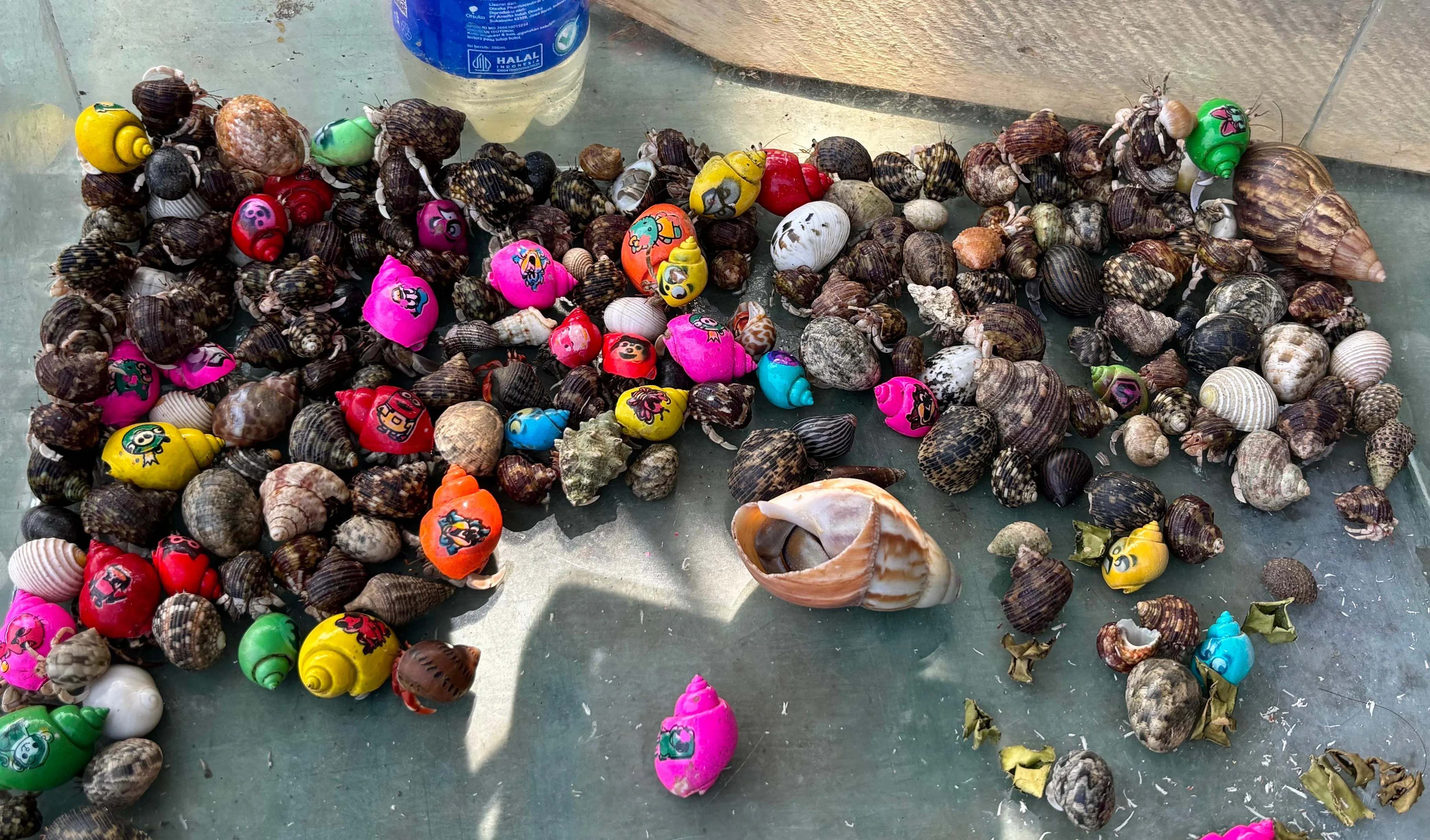
RRI.CO.ID, Jakarta - On Indonesia’s beaches, hermit crabs are more than seaside curiosities. They are vital components of marine biodiversity and serve as bioindicators of the ocean health.
Yet, their survival is increasingly jeopardized by the growing trade in painted hermit crabs, a practice conservationists condemn as cruel and dangerous.
Vendors coat shells with bright colors or even tattoos to attract buyers, especially children. This practice is deadly. Hermit crab shells have tiny pores that allow air circulation. Paint blocks these pores, trapping heat and toxins inside. The result is suffocation, stress, and slow death.
Species most often exploited include the Strawberry Hermit Crab (Coenobita perlatus) and the Wrinkled Hermit Crab (Coenobita rugosus), sold cheaply in local markets. The irony is stark: creatures that could help monitor ocean health are instead commodified in ways that destroy them.
Researchers from the National Research and Innovation Agency (BRIN) stress that hermit crabs can act as “tiny guardians” of the sea. Their distribution and habitat preferences reveal much about the condition of coastal ecosystems.
Studies have documented 115 species of Diogenidae across 12 Indonesian marine ecoregions, with the Banda Sea in eastern Indonesia noted for its highest diversity.
Conservationists warn that the painted shell trade undermines this ecological role. By turning hermit crabs into novelty pets, the practice not only kills individuals but also erodes public awareness of their importance.
Proper care for hermit crabs requires controlled environments, humidity regulation, sand substrates, replacement shells, nutritious food, and access to both fresh and salt water--conditions rarely met in casual pet trade.
“By understanding their distribution and habitat preferences, we can know how healthy our seas are. Hermit crabs can be small guardians that signal when ecosystems are in danger,” said Tyani, researcher at BRIN’s Oceanography Research Center, as quoted on the agency's official website,
Scientific studies have recorded more than 200 hermit crab species in Indonesia, with 115 Diogenidae species spread across 12 marine ecoregions. The Banda Sea is noted for its highest genus diversity. Most species thrive in shallow coastal zones, though some adapt to depths of more than 700 meters.
Protecting hermit crabs means rejecting harmful trends and recognizing their role in sustaining Indonesia’s marine ecosystems. “By mapping their distribution and ecology, we can better understand how hermit crabs contribute to the balance of Indonesia’s seas," Tyani concluded. ***
News Recomendation
Loading latest news.....