



Three Bat Species in Tapin's Batu Hapu Cave Guard Karst Ecosystem
- 14 Jul 2026 18:09 WIB
- Voice of Indonesia
Key Points
- The Meratus Geopark Management Agency identified three bat species in Batu Hapu Cave, which are Hipposideros larvatus, Taphozous melanopogon, and Taphozous longimanus.
- The discovery highlights Batu Hapu Cave's ecological importance beyond its geological significance within the Meratus UNESCO Global Geopark.
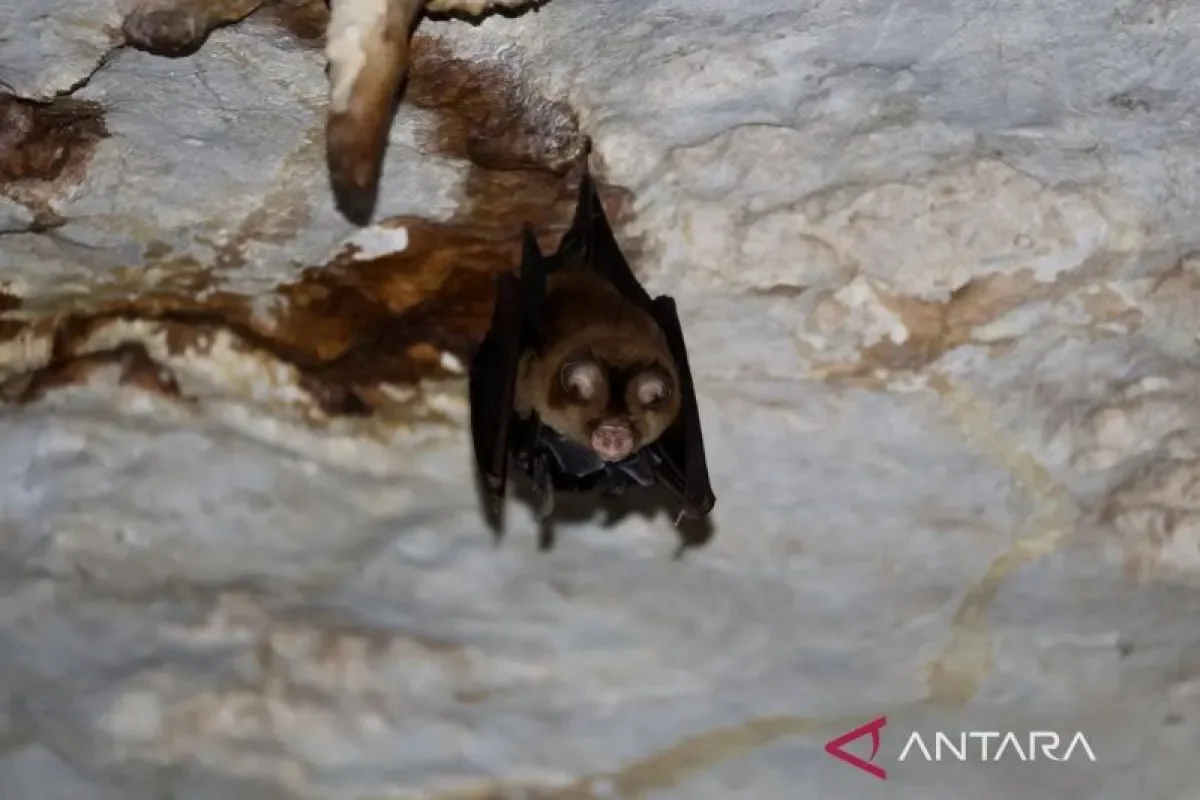
RRI.CO.ID, Tapin - The Meratus Geopark Management Agency has identified three bat species inhabiting the karst area of Batu Hapu Cave in Tapin Regency, South Kalimantan, which are Hipposideros larvatus, Taphozous melanopogon, and Taphozous longimanus. The discovery sheds new light on the cave’s ecological role, where each species’ distinct physical adaptations complement one another in regulating local insect populations.
Located within the Meratus UNESCO Global Geopark, this cave preserves stunning limestone formations with natural ornaments. Furthermore, it serves as a crucial habitat for animals that maintain the ecosystem's balance.
The finding reveals another dimension of the karst area, which until now has been best known for its geological beauty. Behind the rock formations created over a long natural process lies life that depends on cave conditions, such as humidity, shelter, and food availability.
A biologist with the Meratus Geopark Management Agency, Ramadhan Jayusman, said the monitoring is an initial step toward understanding the bat diversity in Batu Hapu Cave. He added that further studies should take into account observation timing, seasons, and the animals’ activity patterns.
The preliminary monitoring opens opportunities to further explore the relationships among the karst ecosystem, bats, and life within the cave.
When night falls over the Meratus karst, bats emerge from their hiding places. From fissures in Batu Hapu Cave’s rocks, the nocturnal animals take flight to forage, performing ecological roles that often go unnoticed by people.
Within the cave ecosystem, bats are more than occupants of dark spaces. Their activities contribute to natural balance, including controlling insect populations around their habitat.
As reported by Antara, the Geopark Management Agency’s monitoring found that the three bat species in Gua Batu Hapu each have distinct characteristics and adaptive abilities.
Hipposideros larvatus has a noseleaf structure that supports its echolocation system. This ability allows it to navigate its surroundings and locate prey, especially insects, even in very low light.
Taphozous melanopogon is distinguished by dark “beard-like” fur on its chin and throat and uses sheltered cave spaces as roosting sites. Taphozous longimanus, meanwhile, has relatively long wings, making it more agile when moving and foraging around its habitat.
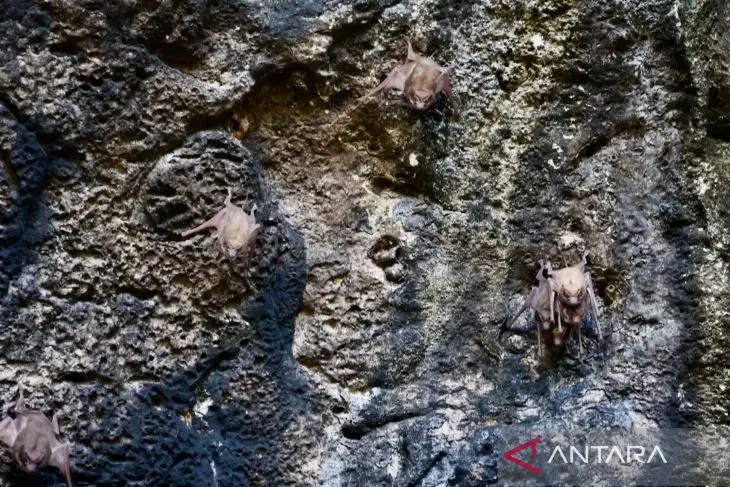
These differing traits show that each bat species adapts in its own way to utilize living space within Batu Hapu Cave.
Ramadhan said further study is needed to determine species composition, population conditions, activity patterns, and habitat use by bats in Batu Hapu Cave. Such data are important to understand bats’ roles in the area’s ecosystem and to form the basis for habitat management and protection measures.
Around the bat colonies’ resting sites, accumulated guano becomes part of the cave’s life cycle. That organic material supports small organisms that in turn join the underground food web.
Life in Batu Hapu Cave demonstrates the close links among bats, small organisms, rock formations, and humidity in maintaining the karst ecosystem’s balance. Far from the surface bustle, bats quietly help sustain life across this landscape.
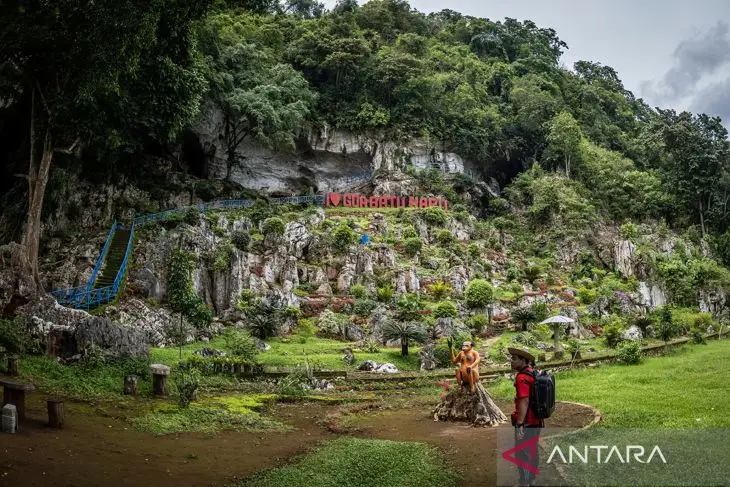
Batu Hapu Cave is located in Batu Hapu Village, Hatungun Subdistrict, Tapin Regency, about 31 kilometers from Rantau City. The site is easily accessible by motorcycle or car.
The name Hapu, which in the local language means white, refers to the bright karst outcrops composed of the Berai Limestone Formation. These rocks formed during the Oligocene to Early Miocene, roughly 16–36.5 million years ago.
Those ancient geological processes created a cave with a peak reaching about 120 meters above sea level, featuring a wide entrance and grand interior chambers. Visitors can see natural ornaments such as stalactites, stalagmites, and cave curtains.
Besides its geological value, the area also holds local folk stories about the cave’s origins that remain alive in the community.
For bats, the dark crevices of the karst provide shelter and a place to complete their life cycles. The connection between geological formations and living organisms shows that karst is more than an assembly of rocks, it is an interconnected natural system.
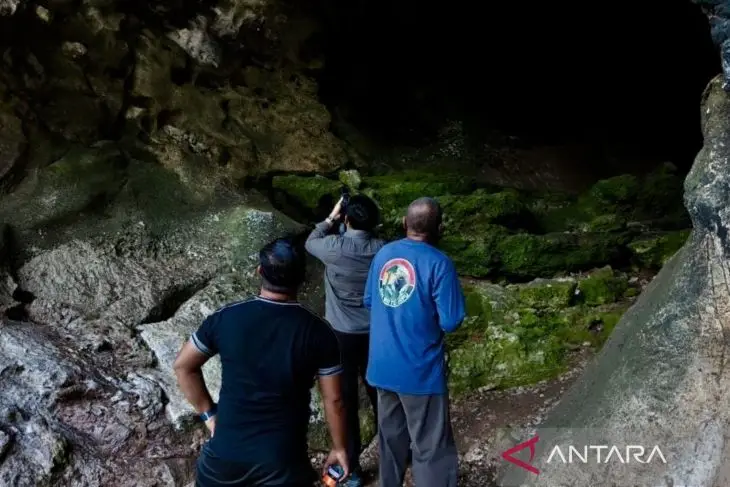
A geologist at the Meratus UNESCO Global Geopark Management Agency, Aditya Rathomy, said the cave’s natural characteristics make it an ideal habitat for bats. He noted that stable humidity and well-preserved stalactites and stalagmites create conditions that support various bat species.
“Batu Hapu Cave’s environmental conditions strongly support bat life,” said Aditya on Friday, July 10, 2026.
Protecting Batu Hapu Cave is not only about conserving the cave’s beauty, but also about safeguarding the karst ecosystem, which plays roles in water regulation, groundwater storage, and the continuity of natural habitats.
Head of the Geological Heritage and Groundwater Section at the South Kalimantan Provincial Energy and Mineral Resources Agency, Sumarmiati, stressed the importance of protection through designation as a Karst Landscape Area (KBAK). She said this step is needed to ensure sustainable management of the area.
She added that inventorying and identifying karst potential is fundamental to understanding its geological character and ecological functions, while preserving its scientific, conservation, and environmental values.
Deputy Chairperson of the Meratus UNESCO Global Geopark Management Agency, Theodorik Rizal Manik, said the bat monitoring at Batu Hapu Cave is an initial effort to strengthen the scientific data base for managing the area.
He noted that bats play important roles in controlling insect populations, dispersing seeds, and serving as indicators of environmental health. For these reasons, he hopes further research will support conservation, education, and tourism development that preserves the cave ecosystem.
More than a repository of rock formations shaped by the earth’s history, Batu Hapu Cave harbors life that depends on the natural balance hidden behind its karst walls.
When night again envelops the Meratus interior, bats will continue to emerge from their refuges. Their presence is a reminder that preserving geological heritage also means protecting the living spaces concealed within the darkness of karst. ***
News Recomendation
Loading latest news.....