



BRIN Develops Eco-Friendly Natural Dyes for Batik
- 02 Jul 2026 10:29 WIB
- Voice of Indonesia
Key Points
- BRIN is helping a Batam batik MSME develop natural dyes from turmeric and mahogany bark.
- The project promotes sustainable batik production while meeting international quality standards.
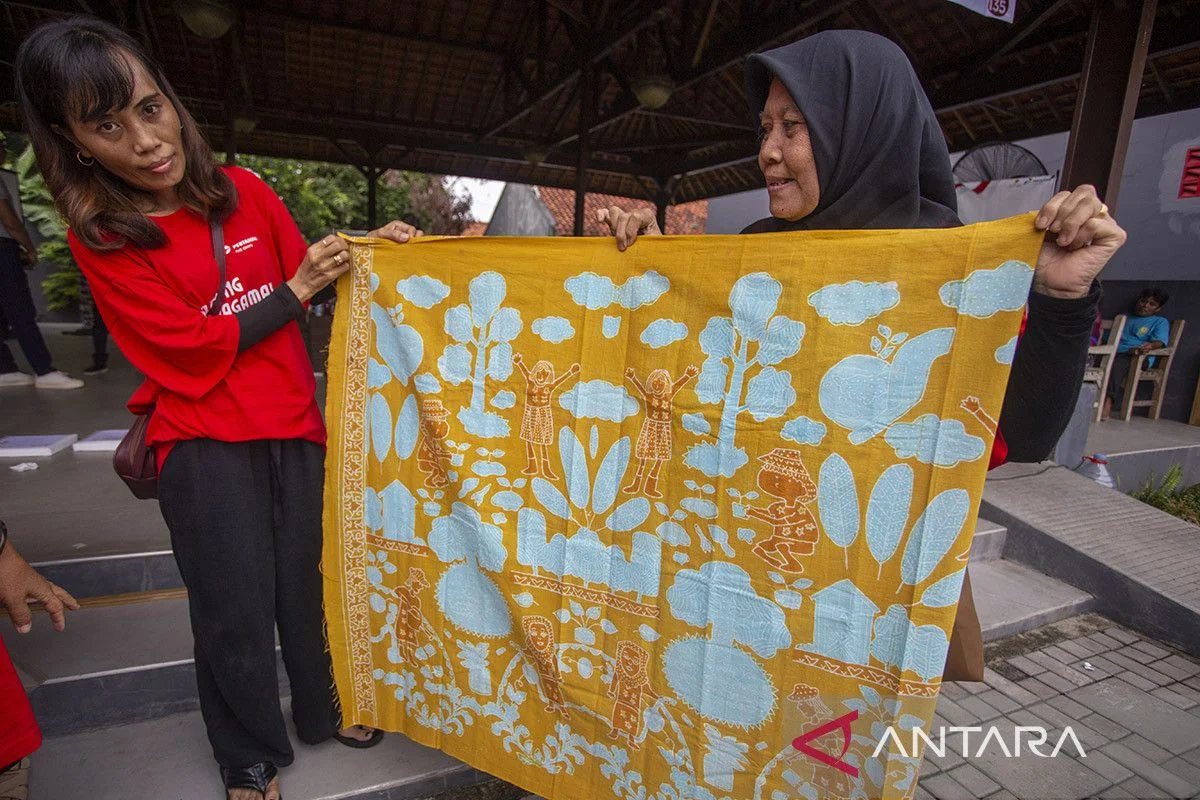
RRI.CO.ID, Jakarta - While Indonesian batik is globally celebrated for its complex artistic patterns and deep ancestral traditions, the thriving domestic textile sector faces growing environmental and public health backlash due to its heavy reliance on chemical-laden synthetic dyes.
To address this ecological challenge, the National Research and Innovation Agency (BRIN) has joined forces with Cindur Batik, a local micro, small, and medium enterprise (MSME) based in Batam, Riau Islands. Through the joint initiative, BRIN researchers are providing specialized technological mentorship to help artisans substitute hazardous synthetic colors with stable, plant-based extraction methods derived from turmeric and mahogany bark.
The primary objective of the scientific partnership is to scale up and standardize artisan methods, so they meet rigid corporate supply chains.
"Our goal is to bring local wisdom to a measurable industrial level. We assist MSMEs in understanding extraction techniques and the proper use of mordants. This ensures that these natural colors are not only beautiful to the eye but also robust in quality, meeting international standards," Suci Woelanda, a Junior Technology Utilization Analyst at BRIN, said in a written release on Wednesday, July 1, as quoted on BRIN's official website.
Under the guidance of the agency, artisans utilize turmeric (Curcuma longa) to produce vivid, traditional bright yellows, while utilizing the bark of mahogany trees (Swietenia macrophylla) to draw out warm, rich earthy brown tones.
Historically, the widespread adoption of organic dyes has been bottlenecked by consumer fears regarding poor colorfastness, with natural pigments prone to rapid fading. To resolve this, BRIN scientists subjected the newly developed plant dyes to rigorous SNI/ISO testing parameters, ensuring the organic colors can confidently compete with synthetic alternatives in the global marketplace.
A Junior Policy Analyst at BRIN, Donny Hermawan, explained that testing procedures are aligned directly with the international SNI/ISO 105 standard matrix. This matrix measures color resistance against a variety of harsh everyday conditions.
"Such as washing, rubbing, sweat, the heat of an iron, and even exposure to sunlight. Through this testing, we can ensure that this natural dye is environmentally friendly and meets the quality standards consumers require," Donny said.
Moving beyond abstract laboratory trials, BRIN has actively implemented practical on-site training workshops for the Batam artisans. Cindur Batik's design team has been trained in utilizing natural mordants (color-fixing agents) like alum (tawas) and plant-derived tannins, which chemically lock the pigments into the cotton and silk fibers to withstand sunlight exposure and repeated washing cycles.
Furthermore, researchers are encouraging local weavers to experiment with other native flora, such as indigo leaves (indigofera) and mango leaves, to expand their color choices and capture premium eco-conscious consumer demographics.
Founder and owner of Cindur Batik, Sri Ekowati Budi Rahayu, expressed great optimism regarding the technological upgrade, noting that transitioning into sustainable production methods offers her brand a distinct competitive edge.
"Through BRIN's mentoring, we gained new insights into natural dyeing techniques and product quality control. This innovation provides an opportunity for us to present batik that is more environmentally friendly and has distinct characteristics," Sri remarked.
The successful alliance between BRIN and Cindur Batik serves as a practical model of how advanced scientific research can preserve cultural heritage while advancing industrial sustainability. By backing grassroots creators with state-level laboratory infrastructure, the program effectively helps domestic MSMEs transition into highly competitive, green-certified international exporters. ***
News Recomendation
Loading latest news.....