



July Skies: Buck Moon, Meteor Showers, and the Milky Way’s Grand Show
- 30 Jun 2026 17:22 WIB
- Voice of Indonesia
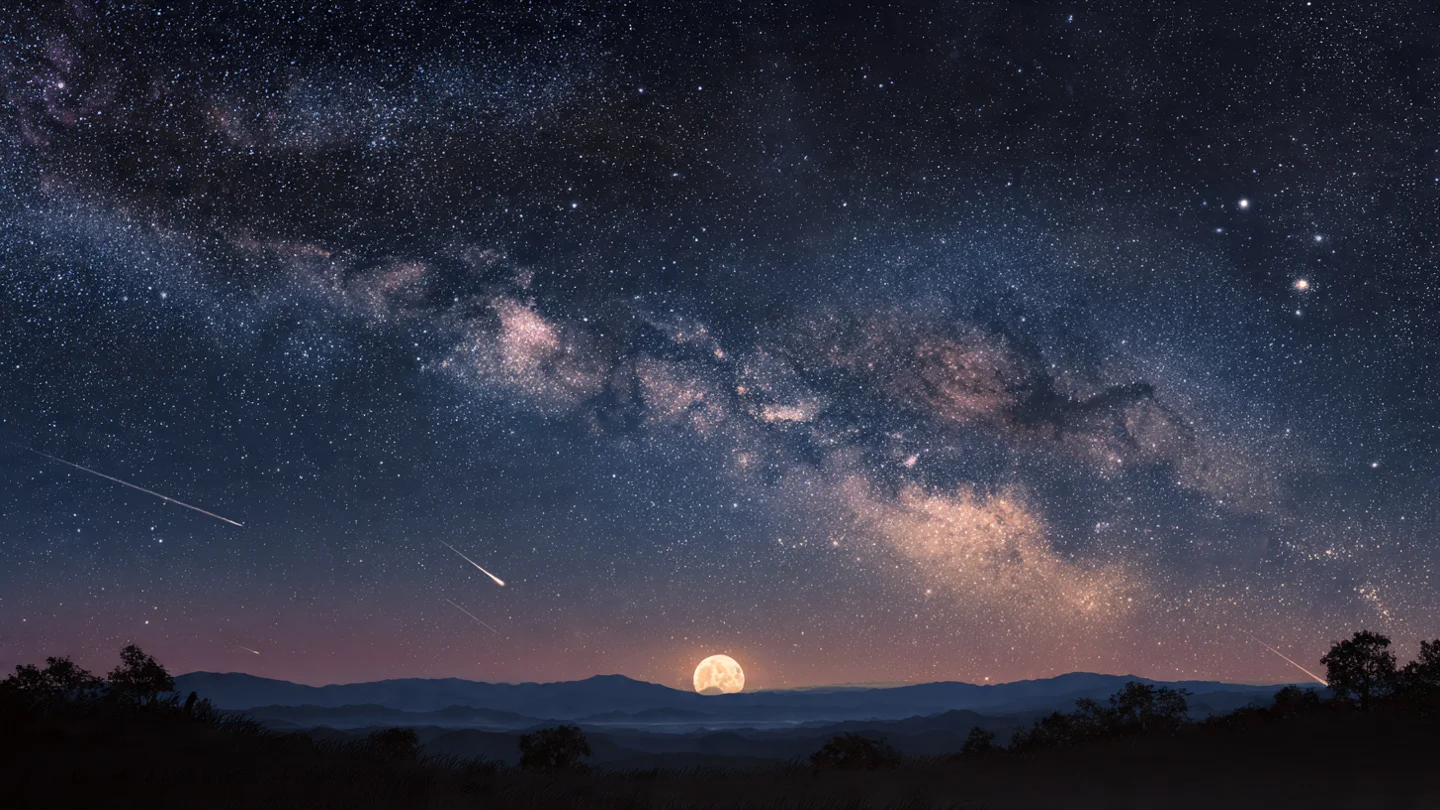
RRI.CO.ID, Jakarta - July is pulling out all the cosmic stops before August’s Perseids and Europe’s eclipse take over. This month gives stargazers planet-moon meetups, two meteor showers at once, and one of the best chances all year to see the Milky Way’s glowing core under dark summer skies. If you’ve been waiting for a reason to stay up late, this is it.
The month kicks off with planetary company. After midnight on July 7–8, the third-quarter moon snuggles up to Saturn just above the eastern horizon, about a fist’s width apart. They drift together until dawn, and Mars plus the Pleiades star cluster join the lineup right before sunrise.
Then, on the morning of July 11, a thin crescent moon forms a neat triangle with the pale-blue Pleiades and orange-tinted Mars, only three finger widths across. Binoculars will reveal dozens more stars in the Pleiades and bring the moon’s craters into sharp relief.
For deep-sky fans, circle July 14 on your calendar. That’s the new moon, when lunar glare disappears and the sky turns inky black. It’s the perfect night to hunt the Milky Way’s shimmery galactic core, the Great Hercules Cluster, or the Ring Nebula. Give your eyes 30 minutes to adjust, find Sagittarius’ teapot asterism, and the galaxy’s center will stretch across the southern sky.
Throughout July you can also track Comet 10P near Capricornus. A small telescope catches it early in the month, and by late July binoculars should be enough as it brightens toward its August peak.
Venus gets its moment on July 17. A delicate crescent moon hangs about three finger widths from the planet above the western horizon right after sunset. The duo shines for roughly two hours and makes an easy, eye-catching target even from light-polluted cities.
The full “Buck Moon” arrives July 28–29, peaking around 10:30 a.m. ET on the 29. Catch it rising the evenings before or setting the morning of the 29. Near the horizon it looks extra large thanks to the moon illusion. The name comes from deer season, when bucks’ antlers are growing fast.
Meteors lovers get a double feature on July 30–31. The Southern Delta Aquariids peak in the predawn hours with up to 20 meteors per hour under dark skies, best from the Southern Hemisphere. The same nights, the Alpha Capricornids also peak with fewer meteors, about five per hour, but they’re famous for bright fireballs that can punch through moonlight. The catch this year is a bright waning gibbous moon that will wash out the fainter streaks, so look 30–40 degrees away from Aquarius and Capricornus, their radiant points.
From moon-planet triangles to the Milky Way’s 100-billion-star core, July is a month to step outside. Bring binoculars, find a dark spot like a park or rural area, and let your eyes adapt. Whether you’re tracking Comet 10P, chasing fireballs, or just watching the Buck Moon rise, the summer sky has plenty to admire before the bigger August events roll in.\
Source NatGeo
News Recomendation
Loading latest news.....