



Rescued Elephant Calf Rejoins Herd in Jambi Sanctuary
- 30 Jun 2026 00:47 WIB
- Voice of Indonesia
Key Points
- A rescued Sumatran elephant calf has recovered and returned to its herd after being freed from an illegal snare.
- Authorities are dismantling a 95-kilometer network of illegal fences and traps threatening elephants in the Bukit Tigapuluh conservation landscape.
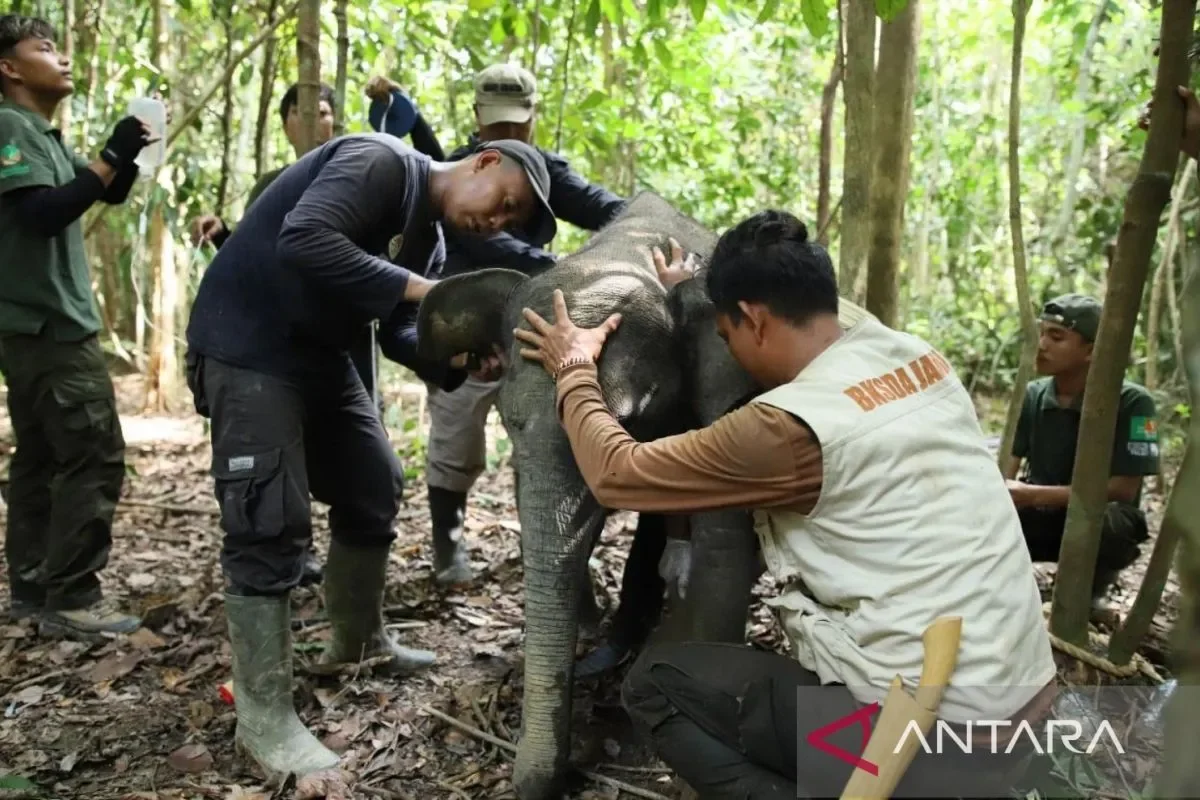
RRI.CO.ID, Jambi - A young Sumatran elephant (Elephas maximus sumatranus) calf has successfully recovered and rejoined its herd after being severely wounded by a steel cable snare in the Bukit Tigapuluh National Park (TNBT) landscape in Riau and Jambi, shining a harsh spotlight on an aggressive, 95-kilometer web of illegal fences and booby traps threatening the critically endangered species.
The rescue and subsequent recovery of the calf, named Sakda, has triggered a major defensive mobilization by wildlife authorities against illegal encroachers who are transforming a critical conservation buffer zone into a deadly grid of high-voltage wire fences and poacher snares.
The calf's predicament was discovered during a routine field patrol in mid-June 2026 within a corporate concession zone acting as a buffer to the TNBT sanctuary in Tebo Regency, Jambi Province. Rangers spotted Sakda limping severely due to a heavy steel cable tightly constricting its leg. The team immediately intervened, removing the wire and administering medical treatment to a deep, open wound.
"His wounds have healed, and he has joined his group," Head of the Jambi Natural Resources Conservation Center (BKSDA), Himawan Sasongko, confirmed on Monday, June 29, 2026, in Jambi City, marking a rare victory for local conservationists, as quoted by Antara.
However, the rescue led to a chilling discovery. BKSDA intelligence units mapped out an extensive network of illegal fences spanning roughly 95 kilometers across the elephants’ historical migratory corridors.
Set up clandestinely by illegal land encroachers, some segments of these wire blockades are hooked up to high-voltage power lines designed to electrocute large mammals.
In response, Himawan announced that his office is building criminal cases against the illegal land clearers who are intentionally rigging elephant migratory paths with lethal traps.
"We are developing a plan to address this, because whatever the reason, setting snares and electric wires is prohibited," Himawan declared, vowing swift prosecution for those found violating federal wildlife protection acts.
The security crisis comes at a delicate ecological juncture for the Bukit Tigapuluh landscape, which currently serves as a sanctuary for roughly 120 Sumatran elephants. Among this population are 15 vulnerable calves aged between two and three years old.
To closely monitor the remaining population amid the encroaching human threats, the BKSDA has divided the mammals into six separate monitoring groups—comprising five female-led herds and one bachelor group.
Every single major herd has been fitted with specialized Global Positioning System (GPS) tracking collars to mapping out their daily movements. To streamline field identification and intercept potential conflicts early, the five female-led breeding herds have been assigned individual tracker codes: Xienta, Yunita, Vina, Ginting, and Wardani. ***
News Recomendation
Loading latest news.....