



Jambi Coast Emerges as Key Migratory Bird Sanctuary
- 27 Jun 2026 09:07 WIB
- Voice of Indonesia
Key Points
- An IPB University study identified Jambi’s eastern coast as a vital stopover for thousands of migratory birds traveling between East Asia and Australia.
- Researchers urge stronger protection of coastal mudflats and mangroves that support endangered bird species and local ecosystems.
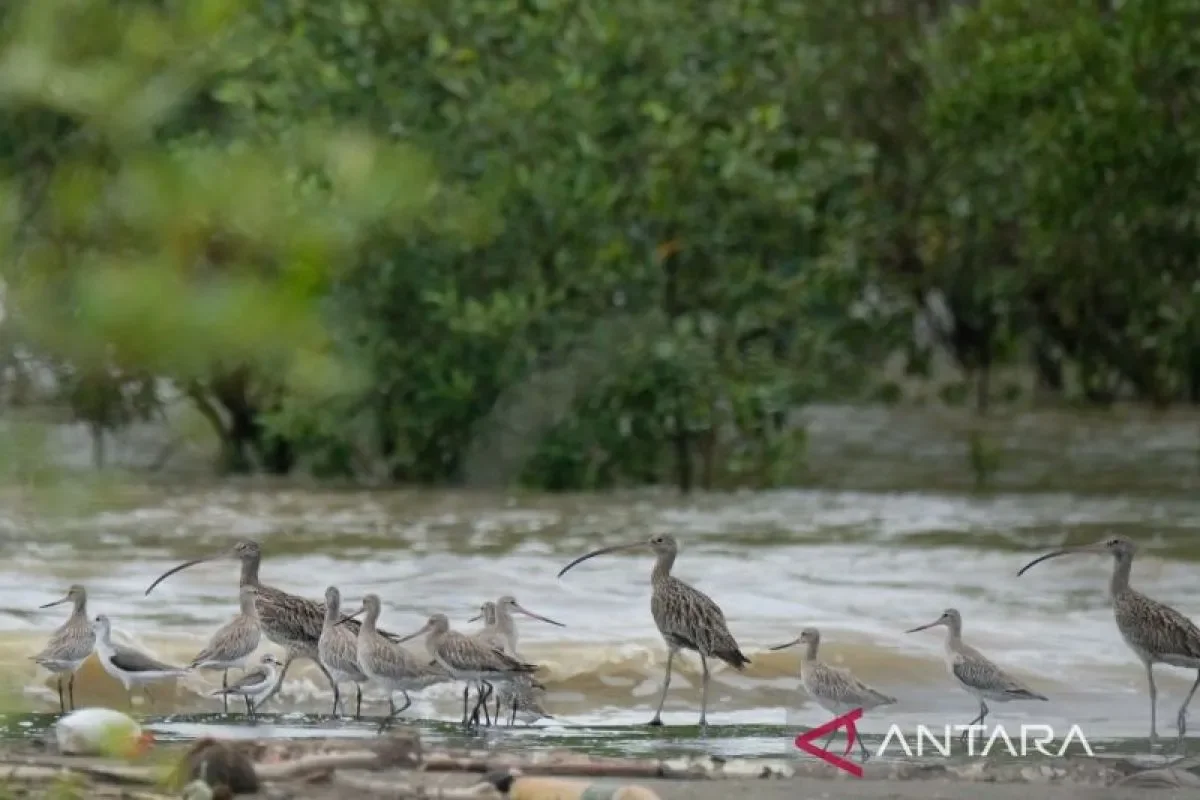
RRI.CO.ID, Jambi - The eastern coastline of Jambi, Sumatra, has been identified as a critical intercontinental rest stop for thousands of migratory shorebirds traveling along the East Asian-Australasian Flyway (EAAF) from East Asia to Australia between August and April.
The finding underscores the urgent need to protect Indonesia's vulnerable coastal mudflats and mangrove networks, which serve as essential global ecological infrastructure. Environmental scientists warn that any degradation to these specific feeding grounds could break a vital link in the international flyway, leading to a steep decline in global migratory bird populations.
Coastal Wetland SCS-SAP Project Coordinator at IPB University’s Center for Coastal and Marine Resources Studies (PKSPL), Eko Budi Priyanto, revealed that extensive field monitoring by the Essential Ecosystem Area (KEE) task force in 2025 documented over 1,000 birds from 24 distinct shorebird species taking refuge along the coast simultaneously.
"We also noted that three species of migratory shorebirds are classified as endangered (EN) based on the International Union for Conservation of Nature (IUCN) Red List criteria," Eko said in a written report on Friday, June 26, 2026, as quoted by Antara.
Eko explained that the target zone, specifically the Cemara Coast preservation area, holds immense ecological value. Its unique combination of mangrove forests and sprawling mudflats acts as a high-nutrient foraging and roosting ground. Among the highly endangered species relying on the site are Nordmann's greenshank (Tringa guttifer), the Far Eastern curlew (Numenius madagascariensis), and the great knot (Calidris tenuirostris).
Beyond serving as an international avian haven, the preservation area functions as a vital buffer zone for the nearby Berbak Sembilang National Park. The coastal ecosystem plays a strategic role in sustaining the livelihoods of local fishing communities, maintaining regional water tables, preventing severe coastal erosion, and buffering coastal villages against extreme weather events driven by climate change.
To address future management challenges, the regional government previously established the Collaborative Management Forum for the Cemara Coast Essential Ecosystem under Jambi Governor’s Decree No. 398/Kep.Gub/Dishut-3.3/2019.
To evaluate the ongoing success and structural hurdles of this conservation model, the team recently conducted a comprehensive Management Effectiveness Tracking Tool (METT) assessment on Tuesday, June 23, 2026, aiming to optimize protective measures ahead of the upcoming August migration cycle. ***
News Recomendation
Loading latest news.....