



Two Endangered Javan Hawk-Eagles Released in Megamendung Landscape
- 10 Jun 2026 21:33 WIB
- Voice of Indonesia
Key Points
- Two rehabilitated Javan hawk-eagles were released into the wild in Megamendung after completing a 30-month rehabilitation program.
- The Ministry of Forestry also inaugurated a new aviary and Timor deer breeding center to strengthen conservation, research, and ecosystem restoration efforts in West Java.
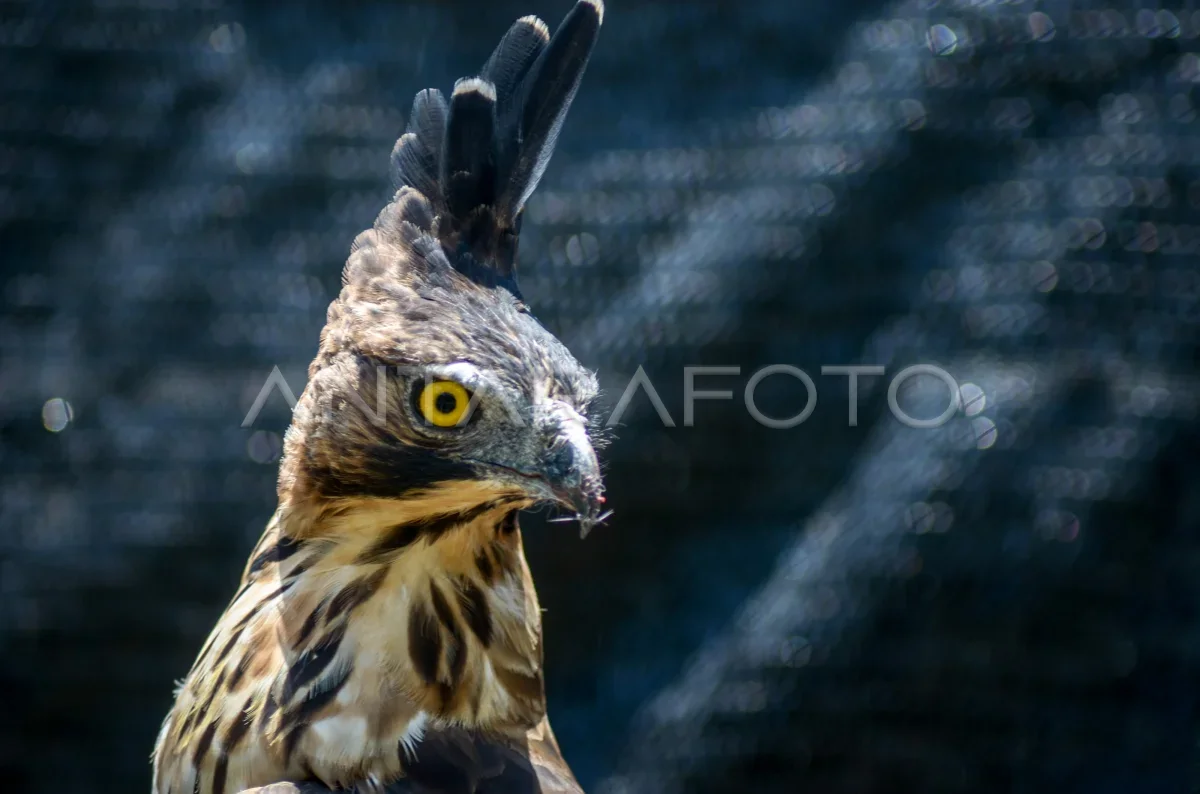
RRI.CO.ID, Bogor - The Indonesian Ministry of Forestry has significantly expanded its footprint in ex-situ conservation and ecosystem restoration within West Java, deploying a multi-pronged initiative in the strategic Megamendung landscape that culminated in the reintroduction of two critically endangered Javan hawk-eagles into the wild.
Representing the Minister of Forestry, the Director General of Natural Resources and Ecosystem Conservation (KSDAE), Satyawan Pudyatmoko, conducted a working visit to the highland corridor in Bogor Regency on Tuesday. During the visit, Satyawan officially inaugurated the non-commercial Paseban Valley Aviary, opened a Timor deer breeding facility, and supervised the release of the apex avian predators.
The two Javan hawk-eagles (Nisaetus bartelsi) returned to the mountain canopy are a female named Agni and a male named Beta. As an endemic species to Java Island, the majestic raptor is not only a high-priority national conservation icon but also serves as a vital biological indicator of the overall health of Java's remaining montane forest ecosystems.
Agni was rescued and prepared by the Kamojang Eagle Conservation Center (PKEK), while Beta underwent rehabilitation under the care of the Cikananga Conservation Foundation (YCKT). Both raptors completed a rigorous 30-month rehabilitation, habituation, and veterinary evaluation process before being deemed behaviorally and physically fit for survival in the wild.
"Agni from the PKEK Conservation Institution and Beta from the YCKT Conservation Institution have undergone a rehabilitation, habituation, and technical evaluation process for approximately two years and six months before being declared fit to return to their natural habitat," Satyawan confirmed, as quoted on Ministry's official website, on June 9, 2026.
To ensure rigorous post-release monitoring, conservation teams fitted both eagles with advanced GPS trackers. This satellite telemetry allows scientists to chart their real-time geographical movements, analyze territory establishment, and verify their adaptive success in the wild.
The Ministry of Forestry extended its appreciation to PKEK and YCKT for their ongoing commitment to wildlife rescue. However, officials stressed that successful long-term reintroduction relies heavily on habitat security and local human cooperation to prevent territorial encroachment and illegal poaching.
Beyond the eagle release, the newly minted Paseban Valley Aviary will function as a dedicated, non-commercial facility geared toward avian research, environmental literacy, responsible captive breeding, and future soft-release programs for threatened Indonesian bird species. Alongside it, the newly opened Timor Deer Breeding Center will act as a live educational tool and an ex-situ gene pool asset.
"Both facilities were developed on the principle that ex-situ conservation is not the ultimate goal, but rather an instrument to support the recovery of wildlife populations in nature and strengthen ecosystem functions," Satyawan pointed out, delivering the Minister's core mandate.
The broader ecological movement in Megamendung is spearheaded by the Paseban Foundation, an organization that pioneered sustainable organic farming techniques in the area 16 years ago. Over nearly two decades, the grassroots agricultural trial has scaled into a landscape-wide ecosystem restoration collective, successfully combining organic agroforestry with biodiversity tracking and community empowerment.
Patron of the Paseban Foundation, Andy Utama detailed that their long-term blueprint involves resetting the local environment back to its historical baseline.
"We have a simple yet grand dream, which is to contribute to returning Megamendung as close as possible to its ecological condition as it was known about one hundred years ago," Andy shared.
Meanwhile, Foundation’s Advisor, Wiratno, emphasized that Megamendung serves a hydro-ecological purpose that stretches far past regional mapping borders, acting as a buffer zone for the UNESCO-recognized Cibodas Biosphere Reserve.
"This area is an important part of the landscape connected to the Cibodas Biosphere Reserve and plays a role in maintaining ecological functions whose benefits are felt all the way to downstream areas," Wiratno said, highlighting its role in safeguarding clean water supplies for downstream urban centers like Jakarta.
Despite intense developmental and commercial pressures spreading across West Java, the Megamendung landscape remains a crucial refuge area for Java's highly fragmented wildlife. Recent biodiversity surveys have documented the continued presence of several vulnerable and protected species, including the Javan surili, Javan gibbon, Javan lutung, Sunda pangolin, banded linsang, and the Javan porcupine. ***
News Recomendation
Loading latest news.....