



Control of Invasive Red Devil Fish Vital for Lake Toba’s Survival
- 09 Jun 2026 16:59 WIB
- Voice of Indonesia
Key Points
- Biodiversity experts are urging authorities to control the growing Red Devil fish population in Lake Toba to protect native aquatic species and local fisheries.
- Researchers warn the invasive species is disrupting the lake’s ecosystem due to its aggressive behavior, rapid reproduction, and lack of natural predators.
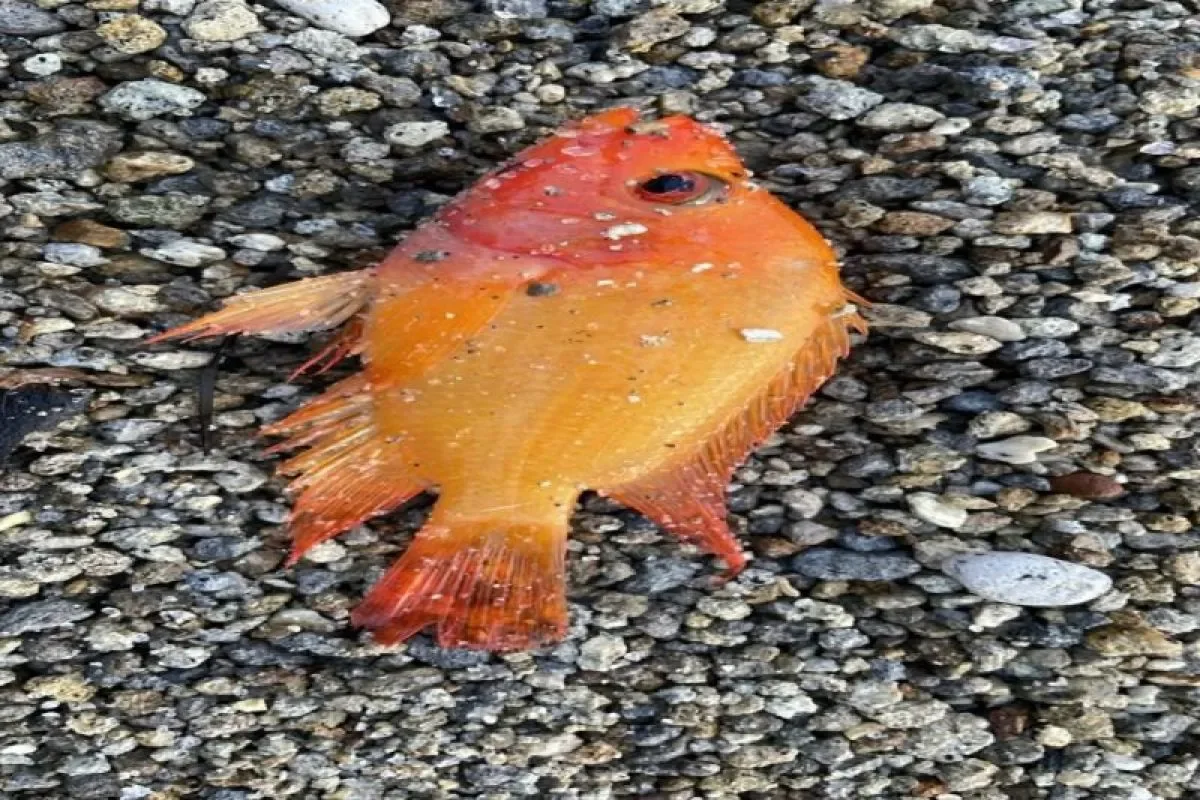
RRI.CO.ID, Medan - A systematic population control strategy targeting the invasive Red Devil fish (Amphilophus labiatus) is urgently required to stabilize the degrading aquatic ecosystem of Lake Toba and safeguard the livelihoods of local fishing communities, a prominent biodiversity expert warns.
A leading biodiversity researcher from the University of North Sumatra (USU) and a member of the Center for Tropical Ecology and Biodiversity Conservation, Onrizal, noted that the aggressive alien species has adapted too well to the volcanic lake. Lacking natural predators and fueled by an abundant food supply, the population has ballooned, actively suffocating native marine life.
"The Red Devil is not a native species of Lake Toba. Under suitable environmental conditions, the fish can multiply rapidly and has the potential to suppress local fish populations," Onrizal said in Medan on Tuesday, June 9, 2026, as quoted by Antara.
Originating from Central America, the cichlid species is believed to have infiltrated Lake Toba's open waters via the ornamental aquarium trade, either through accidental escapes or irresponsible deliberate releases.
Onrizal explained that the Red Devil possesses an intensely territorial and protective nature, particularly when guarding its nests and offspring. This behavior gives it an evolutionary upper hand over native Lake Toba species.
"In a lake ecosystem, such characteristics can suppress local fish through food competition, territorial disputes, and the potential predation of other fish fingerlings," Onrizal added, highlighting the ecological imbalance.
The biological invasion has already triggered severe economic repercussions for the traditional fishermen patrolling the volcanic caldera. Because the market value of the Red Devil is significantly lower than that of the indigenous consumption fish traditionally harvested by locals, the dominance of the invasive species in daily catches has caused a sharp drop in regional fishery revenues.
While a tactical intervention is critical, Onrizal admitted that completely eradicating the established population across Lake Toba's massive 1,130-square-kilometer expanse is mathematically improbable.
"A more realistic strategy is population control and the restriction of its spread," he suggested, advocating for a pragmatic management paradigm over complete eradication.
To execute this, conservationists recommend intensive, targeted harvesting operations focused directly on verified spawning grounds and areas with high population densities.
Rather than wasting the biometric mass, the captured Red Devils could be repurposed as raw material for animal feed or processed fertilizer products. However, authorities must manage this utilization strictly to ensure it does not inadvertently incentivize the commercial aquaculture or further distribution of the pest to other Indonesian waterways.
Onrizal urged regional administrations, academic bodies, state research institutes, and local fishermen collectives to unite and draft a data-driven integrated management blueprint. This collaborative framework would map real-time population distribution, monitor precise impacts on native fish stocks, and accurately measure the effectiveness of ongoing culling initiatives. ***
News Recomendation
Loading latest news.....