



Healthcare Industry in Indonesia Turns to Solar Power for Sustainability
- 06 Jun 2026 16:55 WIB
- Voice of Indonesia
Key Points
- PT Integrated Healthcare Indonesia adopted solar power for eco-friendly operations.
- The solar initiative balances carbon reduction with strict operational reliability.
- Renewable energy is becoming a key strategy for global competitiveness.
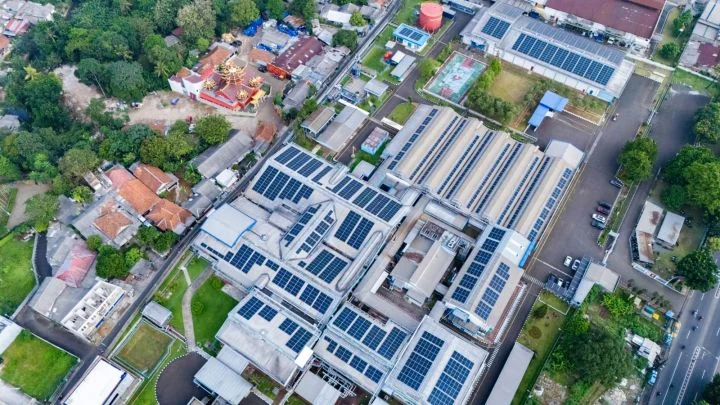
RRI.CO.ID, Jakarta - Indonesia’s healthcare manufacturing sector is taking concrete steps toward sustainability by adopting solar energy to reduce carbon emissions and strengthen efficient, eco-friendly operations.
The initiative reflects the industry’s growing role in supporting national climate goals while maintaining high standards of product quality and reliability.
One of the pioneers is PT Integrated Healthcare Indonesia (IHI), which since February 2026 has operated an On-Grid Solar Power Plant (PLTS) with a capacity of 777.98-kilowatt peak (kWp) at its East Jakarta facility. President Director Teerasak Lueuwirat explained that solar energy is part of IHI’s long-term operational strategy.
“The healthcare industry faces unique challenges in energy transition because it must maintain strict quality and safety standards. Facilities such as cleanrooms, laboratories, and cooling systems require stable energy supply,” he said on Saturday, June 6, 2026, as quoted by Antara.
Teerasak emphasized that renewable energy adoption in healthcare is not only about cutting emissions but also ensuring operational reliability. The PLTS is projected to generate 1,012,503 kilowatt hours (kWh) annually, reducing carbon emissions by 787.73 tons of CO₂ per year, equivalent to planting more than 13,000 trees.
The electricity produced is directly allocated to core operations, including water treatment, cooling systems, lighting, production facilities, and warehousing. To maximize efficiency, the system is integrated with real-time digital monitoring, ensuring optimal performance and sustainability.
CEO of SUN Energy, Jefferson Kuesar, highlighted the significance of this shift. “Healthcare manufacturing is one of the most energy-critical industries in Indonesia, operating under high standards of quality and reliability," he said.
"But now we see a positive trend where healthcare companies view renewable energy not just as an environmental initiative, but as a business strategy to boost global competitiveness,” he added.
This aligns with Indonesia’s national climate roadmap under the Second NDC 2030, which targets a 31.89 percent reduction in greenhouse gas emissions through domestic efforts and 43.2 percent with international support. The government aims to keep global temperature rise as close as possible to the 1.5°C limit set in the Paris Agreement.
Kuesar added that the adoption of solar power in healthcare facilities is a tangible example of energy transformation in Indonesia.
“The use of PLTS in healthcare facilities supports the creation of a more efficient, competitive, and environmentally friendly industry. On this World Environment Day 2026, we hope climate action and environmental preservation become embedded in society at all levels,” he concluded.
This initiative demonstrates how renewable energy can serve as both an environmental commitment and a competitive advantage, positioning Indonesia’s healthcare industry as a leader in sustainable manufacturing. ***
News Recomendation
Loading latest news.....