



Bali Elephant Ivory Trafficking Ring Busted Through Cyber Patrol
- 03 Jun 2026 20:53 WIB
- Voice of Indonesia
Key Points
- Indonesian forestry authorities dismantled an illegal elephant ivory trading network in Bali after detecting sales activity through cyber patrol monitoring on Facebook.
- Investigators seized multiple ivory carvings and handicrafts in Gianyar Regency, while prosecutors finalized charges against the suspect under wildlife conservation laws.
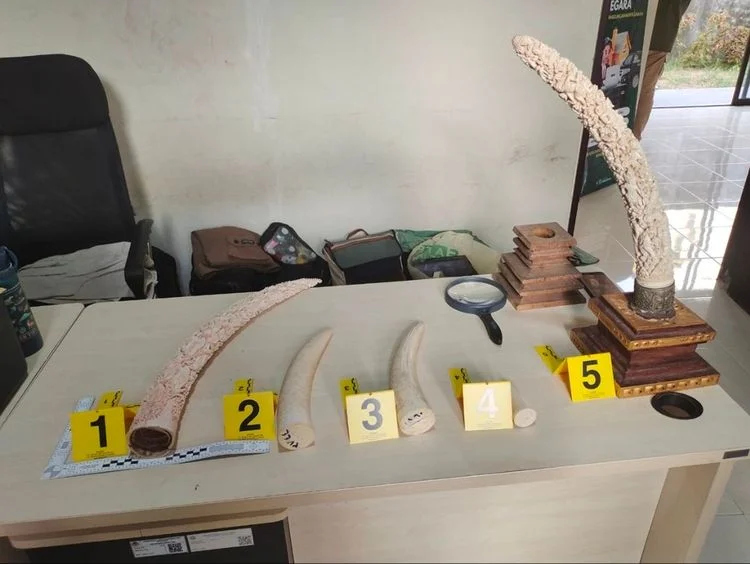
RRI.CO.ID, Denpasar - The Indonesian Ministry of Forestry, through the Directorate General of Forestry Law Enforcement (Gakkumhut), has finalized the case dossier regarding the suspected illegal trade of protected wildlife parts involving elephant ivory in Gianyar Regency, Bali. The investigation was spearheaded by the Java, Bali, and Nusa Tenggara Regional Gakkumhut Office, and the case file has officially been declared complete (P-21) by the public prosecutor.
The illicit trading network was initially uncovered during a routine digital investigation by the Java, Bali, and Nusa Tenggara Regional Gakkumhut Cyber Patrol Team, which flagged a Facebook social media post offering items suspected to be sourced from protected wildlife parts. Following up on this digital footprint, the enforcement team tracked the operation to Tampaksiring, Gianyar Regency, conducting an on-site inspection at an art shop on April 14, 2026.
The operation expanded on April 15, 2026, in coordination with the Civil Servant Investigator Coordination and Supervision unit (Korwas PPNS) of the Bali Regional Police. Across two distinct locations in Gianyar, authorities confiscated a significant haul of evidence consisting of various handicrafts, carvings, and components suspected to be manufactured from authentic elephant ivory.
This evidence plays a pivotal role in the prosecution, demonstrating that protected wildlife parts are still being commercialized under the guise of collectible items and decorative crafts.
Following thorough interrogation and network development, investigators officially named an individual identified by the initials IKS as the primary suspect. The investigation team successfully secured formal confiscation approval for the seized evidence from the Denpasar District Court.
After completing witness examinations, evaluating the physical evidence, coordinating with public prosecutors, and satisfying all legal instructions, IKS's case dossier was finalized, clearing the path for the formal transfer of the suspect and the seized goods to the public prosecutor's office.
The suspect faces criminal prosecution under the statutory provisions of Law No. 32/2024 concerning Amendments to Law No. 5/1990 on the Conservation of Living Natural Resources and Their Ecosystems. The legislation strictly prohibits anyone from storing, possessing, transporting, marketing, or trading specimens, components, or any manufactured goods derived from protected wildlife species.
Director General of Forestry Law Enforcement, Dwi Januanto Nugroho, emphasized that this prosecution is part of an intensified campaign to enforce conservation laws against the illegal trade of protected animal parts. The trade of elephant ivory and similar items remains a severe threat to Indonesia's rich biodiversity. As long as these items are viewed as status symbols, home decorations, or highly valued economic assets, illegal poaching and trafficking networks will continue to find a market.
"Therefore, conservation law enforcement involves not only processing cases but also shutting down trade and raising public awareness that protected wildlife is not a commodity. Indonesia's biological wealth must be protected as the nation's living heritage, not traded as inanimate objects," Dwi Januanto asserted in a statement on Tuesday, June 2, 2026, as quoted by ministry’s official website.
The Head of the Java, Bali, and Nusa Tenggara Regional Gakkumhut Office, Aswin Bangun, shed light on the meticulous forensic work required to prosecute wildlife cases involving modified artisan goods.
He noted that when contraband is no longer shaped like an intact animal part but has instead been transformed into high-end carvings and handicrafts, proving the crime demands absolute precision. Investigators must legally substantiate the exact material composition, the protected status of the origin animal, the legal custody of the items, and explicit commercial intent.
"With the declaration of complete case files, we will immediately prepare to hand over the suspect and evidence to the public prosecutor. We also remind the public that protected animal parts may not be traded, even if they have been transformed into carvings, ornaments, or collectibles," Aswin warned.
In light of this case, the Ministry of Forestry has issued a strong advisory urging citizens and international travelers alike to refrain from buying, storing, ordering, collecting, or trading protected wildlife parts in any format.
This includes elephant ivory that has been altered into souvenirs, artistic carvings, or exhibition displays. Furthermore, the public is requested to actively report any suspicious advertisements or offers involving protected species and their components, either in person or via official government grievance channels. ***
News Recomendation
Loading latest news.....