



East Kalimantan to Build Corridors for Fragmented Orangutan Habitats
- 29 Mei 2026 20:31 WIB
- Voice of Indonesia
Key Points
- Most East Kalimantan orangutans live in concession lands, not protected forests, making them vulnerable to changing commercial land use.
- The province spans about 12 million hectares, roughly 4 million hectares are orangutan range, but only around 700,000 hectares (20%) are formal conservation areas.
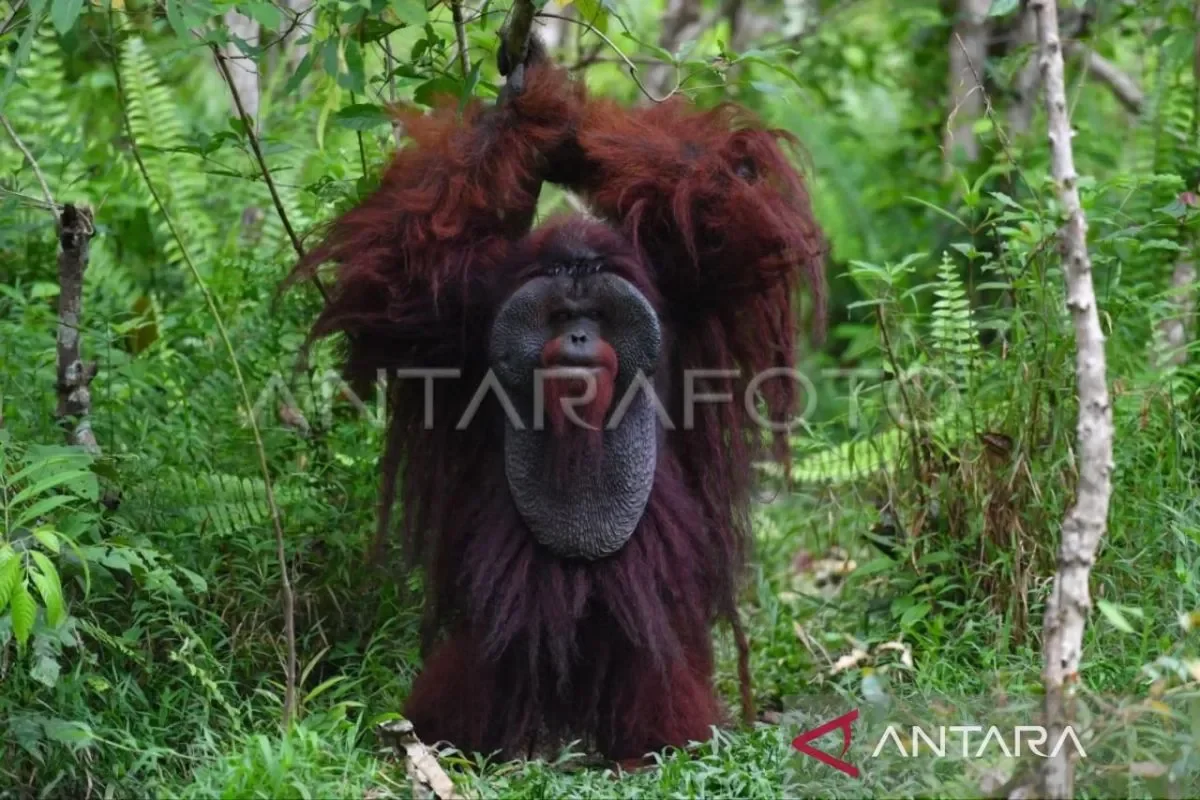
RRI.CO.ID, Samarinda - Most of East Kalimantan's orangutans do not live in protected forests, they live in concession lands whose management can shift with business priorities. That stark reality is now driving a fundamental rethink of how the province protects one of its most iconic species.
The Natural Resources Conservation Center (BKSDA) of East Kalimantan is working to reconnect fragmented orangutan habitats scattered across production forest areas. Habitat corridor development has emerged as the centerpiece of a strategy that goes well beyond evacuation and relocation.
"Our main challenge is to invite all stakeholders to fully support wildlife-friendly conservation activities," said BKSDA East Kalimantan Province Head, M Ari Wibawanto, in Samarinda on Friday, May 29, 2026.
As reported by Antara, the scale of the challenge is significant. East Kalimantan covers twelve million hectares in total, of which four million hectares form the natural distribution range of orangutans.
That range stretches from the northern waters of the Mahakam River all the way along the southern bank of the Kelay River in Berau. Yet of that vast expanse, only around twenty percent, approximately 700,000 hectares, has been designated specifically as a conservation area.
The remaining eighty percent of the orangutan's ecological space falls within concession lands, where land use can change rapidly depending on commercial interests. For the animals that depend on forest continuity to survive, that instability poses a direct threat.
BKSDA is now mapping remaining tree cover to establish habitat corridors, linking fragmented patches of forest into a connected landscape so that orangutan populations are not driven into further ecological isolation. Ari explained that this connectivity is not merely a matter of convenience but a biological necessity.
"Connecting these corridors is an important condition to avoid the risk of inbreeding and to safeguard the stability, quality, and conservation of orangutan diversity," he said.
He was candid about the limits of the approach that has long dominated wildlife response. Evacuation operations to safer locations continue, but they are not recognized as a permanent protection solution.
Despite frequent reports of orangutan encounters in plantation areas, Ari noted that no cases of armed poaching have ever been recorded. "Although reports of encounters with orangutans in plantations are often found, we have never once found evidence of armed hunting crimes," he said.
A new legal framework is now adding weight to the agency's efforts. The provisions of Law Number 32/2024 on biological conservation are seen by BKSDA as providing legal certainty through mandatory conservation area obligations for landholders.
"Under that regulation, land managers must always protect their conservation ecosystems, or they must be prepared to accept sanctions in the form of operational license revocation," said Ari. ***
News Recomendation
Loading latest news.....