



BRIN Reveals 8 of 13 Indonesian Seahorse Species Enmeshed in Commercial Trade
- 22 Mei 2026 21:09 WIB
- Voice of Indonesia
Key Points
- BRIN revealed that 8 of Indonesia’s 13 known seahorse species are actively involved in commercial trade.
- Researchers identified Hippocampus trimaculatus as the most widely traded species, while H. mohnikei was newly confirmed in Indonesian waters.
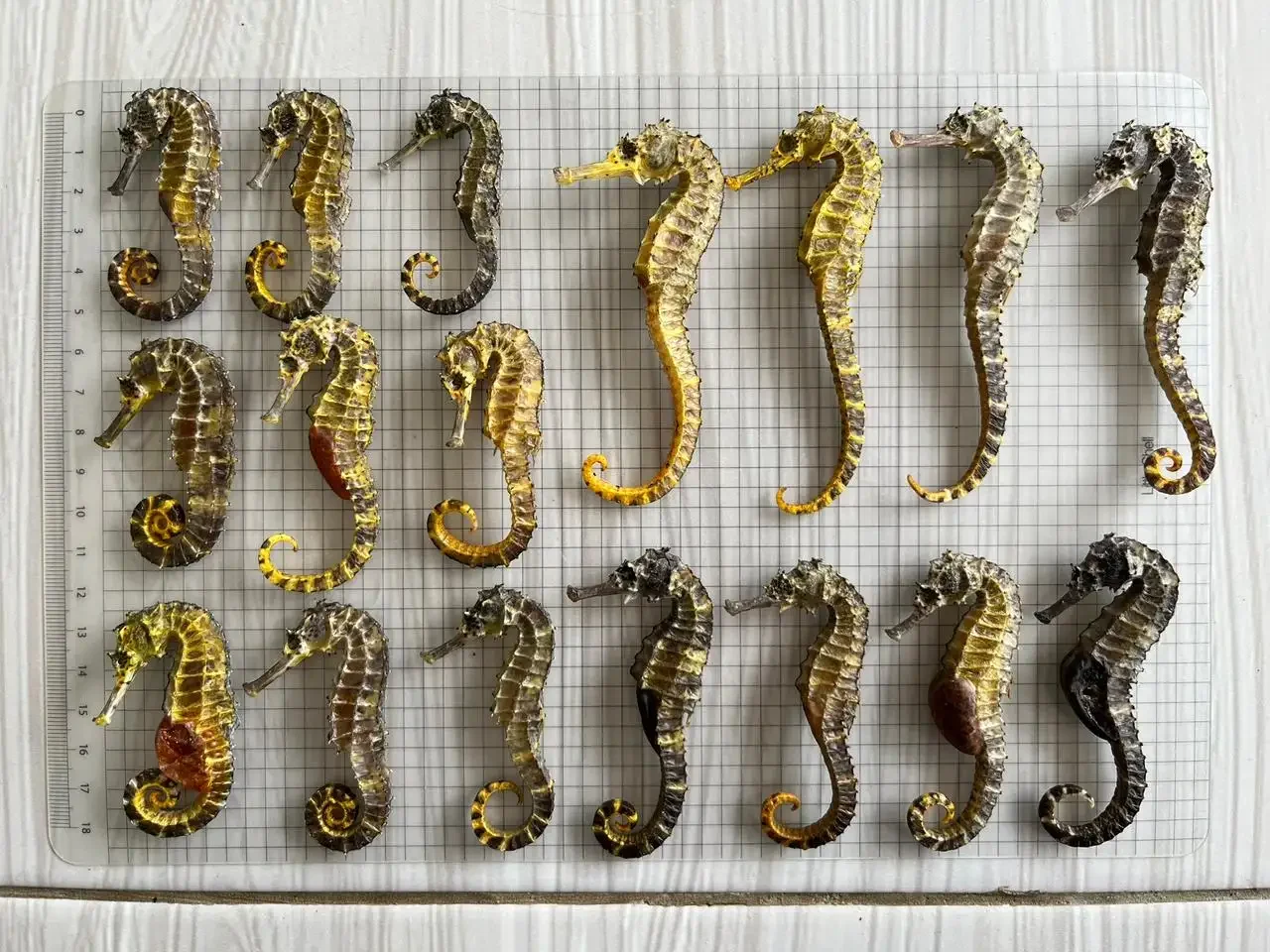
RRI.CO.ID, Jakarta - A collaborative study by the National Research and Innovation Agency (BRIN) has revealed that eight out of thirteen seahorse species native to Indonesian waters are actively being exploited in commercial trade.
The findings, which show seahorses transitioning from accidental bycatch into high-value economic commodities, were presented during a joint workshop with Project Seahorse from the University of British Columbia at the B.J. Habibie Building on Wednesday, May 20.
Representing the joint research team, Muthya Farah from Project Seahorse revealed that out of 13 seahorse species known to inhabit Indonesian waters, a striking eight species are actively exploited in commercial trade. The identified species include Hippocampus histrix, H. barbouri, H. comes, H. mohnikei, H. kelloggi, H. kuda, H. spinosissimus, and H. trimaculatus. Among these, H. trimaculatus is the most pervasive commodity found across Kalimantan, Sumatra, and Java.
Furthermore, the discovery of H. mohnikei has drawn intense scientific scrutiny. Globally, the species had previously only been recorded in the Strait of Malacca region. However, researchers successfully gathered specimens and confirmed sightings reported by local fishermen in Madura.
| Baca juga: World Rhino Day Brings Hope to Ujung Kulon |
“This is a new occurrence for Indonesia,” Muthya noted, emphasizing the novelty of this geographic distribution, as quoted on BRIN's official website.
The comprehensive study synthesized data from 343 respondents, including fishermen, traders, collectors, aquaculturists, recreational divers, and coastal residents across diverse Indonesian territories. The field surveys spanned from May to September 2025, with subsequent follow-up investigations conducted in Aceh and West Sumatra between February and March 2026.
Through in-depth, qualitative interviews, researchers mapped out specific catch patterns and trade routes.
"We asked fishermen about their experiences, whether they had ever caught seahorses as bycatch or intentionally targeted them," Muthya explained.
The team also provided foundational education regarding the species' conservation status, biological life cycles, and reproductive habits.
The findings highlighted that even when seahorses are snared unintentionally, their economic value drives fishermen to sell them rather than return them to the sea. In specific regions like Tegal, Central Java, seahorses are colloquially referred to by local fishermen as recreational savings due to their reliable secondary income potential.
Conversely, areas such as Batam, Bintan, and the Riau Islands were mapped as primary target catch zones rather than accidental bycatch hubs because operators there possess specific harvesting quotas.
Junior Expert Researcher at BRIN’s Biota System Research Center, Masayu Rahmia Anwar Putri, strongly advocated for the rapid formulation of a localized national baseline. This baseline is deemed crucial to strengthening Indonesia's Seahorse National Action Plan (RAN). Masayu pointed out that global threat classifications do not always accurately mirror local population densities.
"We must have our own baseline. A species may be declared critically endangered globally, but in Indonesia, the resources are still there and can be proven," Masayu asserted.
To address this gap, her team will launch a rigorous national status review for several seahorse species throughout 2026, opening up collaborative opportunities for domestic universities and non-governmental organizations.
Moreover, Masayu stressed the absolute necessity of completing Non-Detriment Finding (NDF) assessments to legally ensure that commercial harvesting does not drive local populations toward extinction.
"Of the eight species entering the trade, only two have completed their NDF assessments. This assessment is crucial to ensure that Indonesian seahorse trade is non-detrimental and accountable for export to other countries," Masayu explained.
Both Muthya and Masayu concluded that fortifying the National Action Plan requires far more than raw scientific data, it demands an overhaul of public outreach and human resource capacity. Masayu acknowledged that regulatory enforcement currently outpaces public awareness.
"Many people only learned about the restrictions after enforcement. This means that outreach has not been optimal," she said.
To bridge this educational gap, the research team plans to host follow-up workshops later in 2026. These sessions will target specific pilot locations and actively involve regional environmental managers, training centers, lecturers, instructors, and agricultural extension officers to broaden nationwide proficiency in seahorse species identification. ***
News Recomendation
Loading latest news.....