



Key Points
- NTB authorities and BKSDA released 1,392 birds back into the wild after intercepting an illegal wildlife shipment bound for Bali.
- Officials warned that illegal animal trafficking threatens biodiversity, ecosystem balance, and increases the risk of disease transmission.
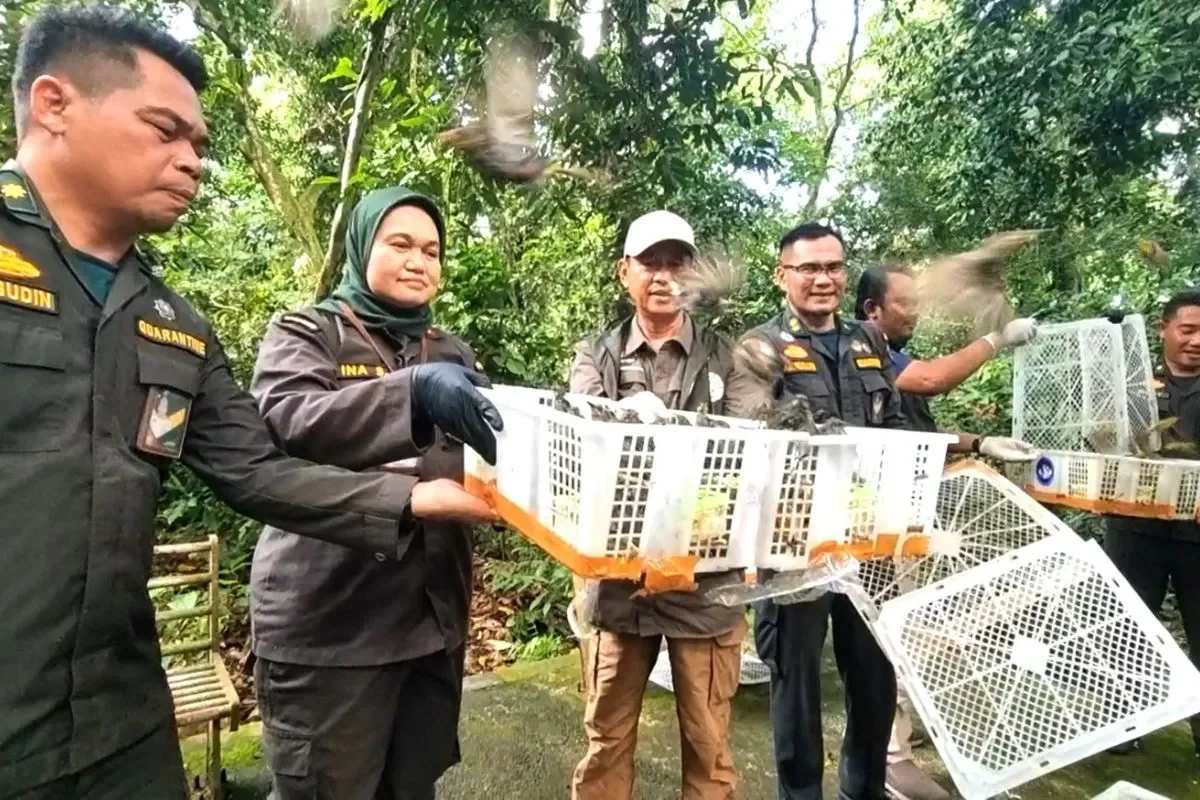
RRI.CO.ID, Mataram - The West Nusa Tenggara (NTB) Quarantine Authority, in collaboration with the NTB Natural Resources Conservation Agency (BKSDA), released ,1392 birds into the Suranadi Nature Recreation Park (TWA) in West Lombok to combat illegal wildlife trafficking and restore regional biodiversity on Friday, May 15, 2026.
The mass release follows a successful operation that intercepted the birds during an attempted illegal transit to Bali. The birds had been transported without the mandatory health certifications or official documentation required by law.
The species returned to their natural habitat include the pleci kacamata (lemon-bellied white-eye), pleci walacea (Wallacea white-eye), prenjak kepala merah (bar-winged prinia), ciblek (bar-winged prinia variant), kopyor jambul, cabe-cabean (flowerpecker), cendet (long-tailed shrike), burung madu kumbang (sunbird), and the black-naped oriole (kepodang).
Head of the NTB Quarantine Authority, Ina Soelistyani, emphasized that returning these birds to the wild is a critical component of the administration's strategy to maintain ecological equilibrium in the province.
"These birds can finally return to live and adapt in their habitat, breed, and maintain the ecosystem balance and the sustainability of biological resources, especially in NTB," Ina said on Saturday, May 16, 2026, as quoted by Antara.
The official highlighted the severe environmental risks posed by the illicit wildlife trade. Beyond the threat of local extinction, the movement of animals without quarantine supervision poses a significant biosafety risk.
"We are committed, together with the BKSDA, to keeping wildlife in their natural habitats. Illegal traffic is very disruptive because there is no health guarantee and it has the potential to carry protected wildlife without supervision," Ina added.
The authority further urged the public to comply with administrative and health protocols when transporting animals to prevent the spread of zoonotic diseases and ensure that local ecosystems remain undisturbed.
"The goal is so that we can provide health insurance so as not to transmit disease outside the region or disturb the wildlife ecosystem in NTB," Ina explained.
The head of BKSDA Region I Lombok, Bambang Dwidarto, lauded the inter-agency cooperation that led to the interception and subsequent release. He noted that such synergy is the most effective deterrent against the persistent threat of illegal animal trade in the region. ***
News Recomendation
Loading latest news.....