



Mount Ciremai's Forest Offers a Blueprint for Indonesia's Climate Goals
- 12 Mei 2026 18:02 WIB
- Voice of Indonesia
Key Points
- Forest cover in Mount Ciremai National Park (TNGC) has surged from barely 50% to nearly 90% within a single decade.
- This success serves as a national model for the Indonesia FOLU Net Sink 2030 initiative, which targets net emission reductions in the forestry sector.
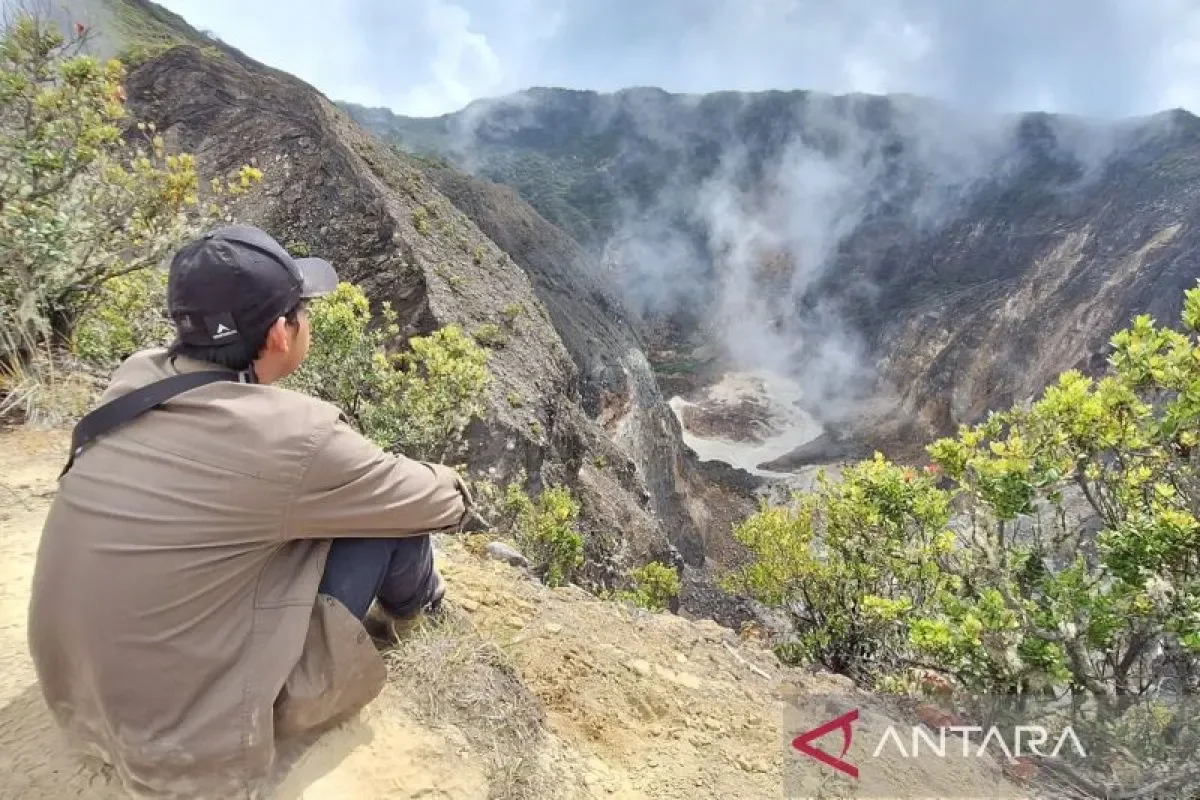
RRI.CO.ID, Kuningan - Mount Ciremai National Park’s forest cover has surged from barely 50% to nearly 90% in just one decade. This recovery proves that Indonesia's forests are a decisive force in achieving national climate commitments.
The turnaround at Mount Ciremai National Park (TNGC) in Kuningan, West Java, has positioned the park as a national model for the Indonesia FOLU Net Sink 2030 initiative. The initiative is the government's landmark framework targeting a net reduction of emissions from the forestry and land-use sector by the end of this decade.
"This is a concrete step in keeping national carbon reserves from being released into the atmosphere, and it is part of the effort to achieve the FOLU Net Sink 2030 target," said Head of the Mount Ciremai National Park Authority, Toni Anwar, speaking at the forum Indonesian Women's Synergy for Indonesia FOLU Net Sink 2030, held at the park on Monday, May 11, 2026.
As reported by Antara, the restoration of forest cover has been driven by sustained on-the-ground action. Through regular patrols and rigorous monitoring, park authorities have worked to shield the forest's carbon stocks from encroachment and wildfire, two of the most persistent threats to Indonesia's forest ecosystems.
Toni affirmed that the park's restoration achievements constitute tangible evidence of national parks' significant contribution to Indonesia's Second Nationally Determined Contribution (NDC) under the Paris Agreement.
Yet the park's significance extends beyond carbon. Home to 279 plant species and dozens of fauna including the Javan Hawk-Eagle, one of Indonesia's most iconic and endangered raptors, Mount Ciremai National Park represents a critical biodiversity refuge whose protection carries both ecological and climate value.
Mount Ciremai's model stands out for reasons that go beyond ecological recovery. Chief among them is how the park has confronted a challenge that has long undermined conservation efforts across Indonesia, agrarian conflict between forest communities and protected areas.
Rather than displacing the 54 villages that once cultivated land within or adjacent to the park, authorities pursued a deliberate transformation of livelihoods. Former land cultivators were converted into nature tourism management partners, integrating local communities directly into the conservation economy.
"The ecosystem's integrity is the primary economic asset for these communities. This synergy is what we are pushing to become a model for nationally scaling community-based forest management," said Toni.
The approach reflects a broader understanding that long-term forest protection is only viable when the communities living alongside it have a tangible stake in its survival. By aligning biodiversity conservation with local economic wellbeing, the park has effectively neutralized one of the most entrenched drivers of deforestation.
The stakes of replicating this model are considerable. Indonesia's 57 national parks are expected to serve as the backbone of efforts to reduce national emissions by 1.6 billion tonnes of CO₂ equivalent by 2030, while keeping annual deforestation below the baseline threshold of 310,000 hectares.
"Through active community involvement, we are proving that biodiversity protection and the achievement of emissions targets can go hand in hand with the welfare of local residents," said Toni.
For a country where forests cover roughly half the land area and where deforestation has historically ranked among the highest in the world, Mount Ciremai's story offers more than a local success. It offers a replicable answer to one of climate policy's hardest questions, which is how to keep forests standing when the communities who depend on them have few other options. ***
News Recomendation
Loading latest news.....