



Javan Leopard Survey Finds Eight in Bromo Tengger Semeru
- 06 Mei 2026 10:02 WIB
- Voice of Indonesia
Key Points
- The Java Wide Leopard Survey identified eight Javan leopards in Bromo Tengger Semeru National Park.
- The findings support data-driven conservation strategies to protect one of Indonesia’s most endangered predators.
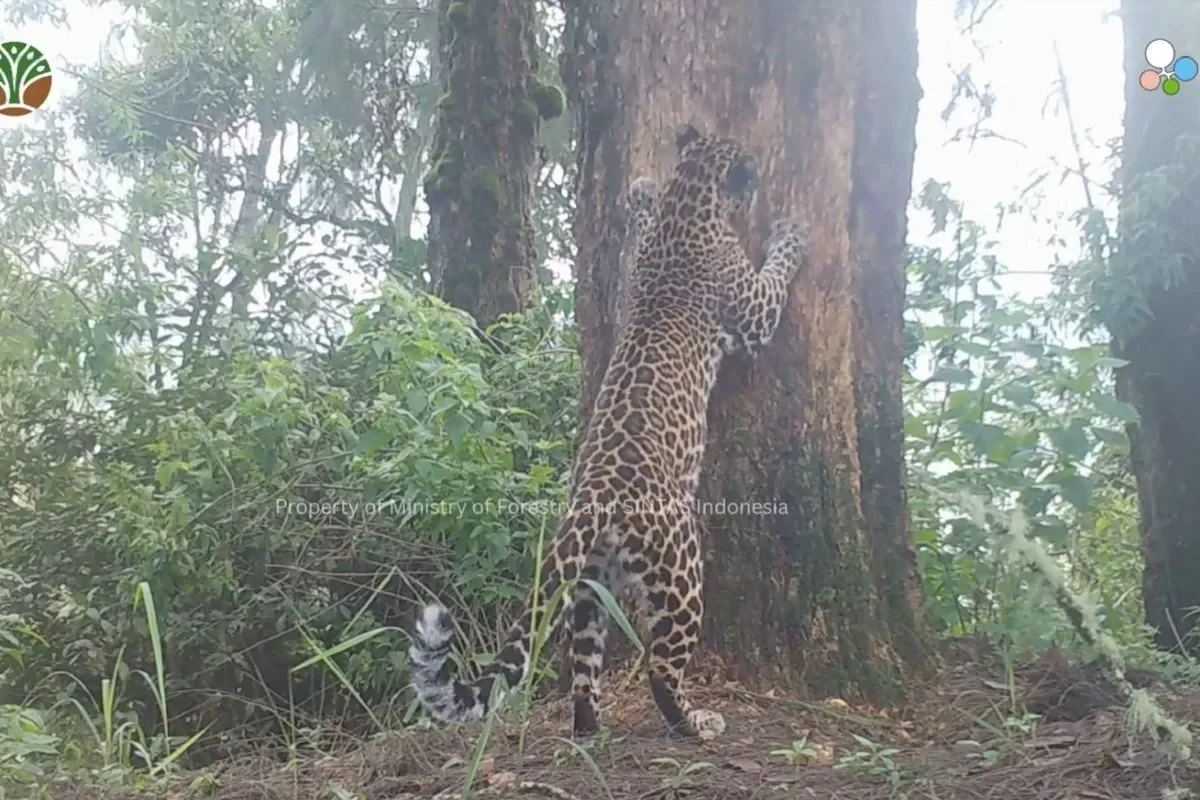
RRI.CO.ID, Jakarta - A collaborative conservation effort, the Java Wide Leopard Survey (JWLS), has successfully identified eight Javan leopards (Panthera pardus melas) within the Bromo Tengger Semeru National Park (TNBTS) in East Java..
This initiative, involving the Ministry of Forestry, PT Bank Central Asia Tbk (BCA), the TNBTS Center, and the SINTAS Indonesia Foundation, aims to provide data-driven management for the preservation of this endemic and endangered species.
EVP of Corporate Communication & Social Responsibility at BCA, Hera F. Haryn, said that the contribution, which began in 2024, is vital for supporting the government's conservation strategies.
"Since 2024, this contribution has strengthened data-based conservation management efforts while supporting the government in the preservation of the Javan leopard in Indonesia," Hera explained on Tuesday, May 5, 2026, as quoted by Antara.
The first phase of the survey, which concluded in mid-2025, utilized camera traps to identify the local population of the area. These findings include a total of eight identified individuals, providing a clearer picture of the species' presence in the region. Specifically, the population composition consists of one male, six females, and one cub.
A second phase of the survey is currently underway in 2026 to complete the comprehensive population mapping. This data is critical for drafting the Conservation Strategy and Action Plan (SRAK) for the Javan leopard.
Beyond physical identification, the program has focused on empowering local conservationists. To date, 84 participants have been trained in camera trap survey techniques, while 16 participants received specialized training in the management and analysis of the resulting data. These trainees represent various institutions, including the Directorate General of KSDAE and the East Java BBKSDA.
Director of the SINTAS Indonesia Foundation, Hariyo T. Wibisono, noted that human expansion over recent decades has forced many leopards closer to residential areas. However, he emphasized that their basic needs are simple: a safe habitat, sufficient roaming territory, and connectivity between forested areas.
Local wisdom echoes this sentiment. Tuangkat, an officer at the TNBTS Center, shared that indigenous perspectives view the leopard not as a threat, but as a respected part of the ecosystem.
“The leopard is not to be fought, but its existence is to be guarded. We believe that if the forest remains sustainable, they will not come down to the settlements," Tuangkat remarked. ***
News Recomendation
Loading latest news.....