



Banten Quarantine Destroys Invasive Weeds from Australian Wheat
- 22 Apr 2026 21:05 WIB
- Voice of Indonesia
Key Points
- Banten Quarantine identified an invasive weed, Asphodelus fistulosus, within 27 million kilograms of wheat imported from Australia.
- The weed is classified as a Category A1 Quarantine Plant Pest (OPTK).
- Approximately 150 kilograms of contaminants were separated and destroyed via pressurized incineration.
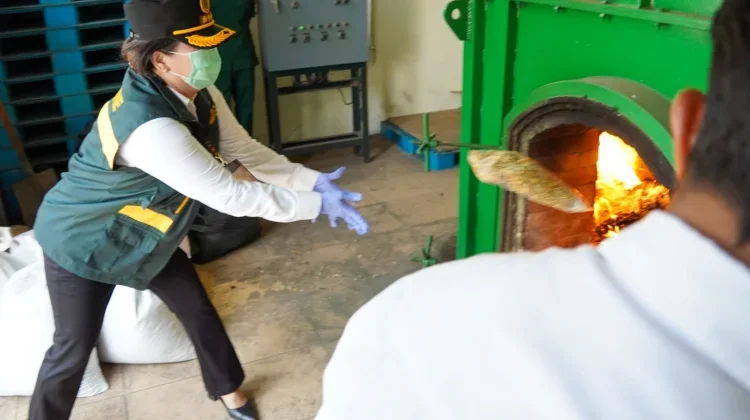
RRI.CO.ID, Cilegon - The Indonesian Quarantine Agency (Barantin), through the Banten Animal, Fish, and Plant Quarantine Agency, has destroyed a Category A1 Quarantine Plant Pest (OPTK). The organism, identified as the invasive weed Asphodelus fistulosus, was discovered within a shipment of imported wheat seeds from Australia.
The destruction was carried out using pressurized incineration at the Banten Quarantine facility in Cilegon on Wednesday, April 22, 2026.
“The Asphodelus fistulosus weed is classified as a Category A1 pest, meaning it is not yet present in Indonesia and poses a high risk if introduced or spread. Consequently, any commodity or carrier suspected of harboring such pests must undergo quarantine measures, including destruction,” said Head of Banten Quarantine, Duma Sari.
She explained that the weed was detected through rigorous plant quarantine inspections conducted on imported commodities entering Banten via the ports of Cigading and Merak.
Out of a total shipment of 27,000,230 kilograms of wheat, quarantine officers conducted a cleaning and sorting process. During this procedure, they identified contaminants consisting of Asphodelus fistulosus and other materials weighing approximately 150 kilograms. These findings were subsequently destroyed in accordance with prevailing regulations to prevent any potential environmental spread.
Duma emphasized that this action is a critical component of efforts to protect the national agricultural sector and food security from dangerous foreign organisms. The measure also aligns with Law No. 21/2019 concerning Animal, Fish, and Plant Quarantine, specifically regarding the prevention of the entry and spread of quarantine pests within Indonesian territory.
“Characteristically, this weed is known as an invasive species with high adaptability and rapid dispersal capabilities. Its presence can lead to intense competition with cultivated crops for nutrients, water, and light,” she explained.
Furthermore, she noted that the impact extends beyond reduced agricultural productivity to include increased weed control costs for both farmers and the administration. Invasive weeds also threaten the balance of ecosystems and can suppress local biodiversity.
The presence of quarantine pests can also significantly impact international trade. Export commodities found to be contaminated with such organism's risk facing technical barriers in destination countries, which could diminish the competitiveness of Indonesian products in the global market.
Duma reaffirmed that these decisive measures serve as a preventive strategy to protect the agricultural sector. This step reflects a commitment to strengthening the monitoring of carrier traffic and consistently implementing quarantine protocols. The ultimate goal is to protect biological resources, maintain food safety, and support Indonesia’s agricultural sovereignty. (Annaila Azzahra/Bambang MBKA)
News Recomendation
Loading latest news.....