



Jakarta Intensifies Cleanup of Invasive Sapu-sapu Fish Across Five Districts
- 17 Apr 2026 11:06 WIB
- Voice of Indonesia
Key Points
- Jakarta launched a large-scale operation across five districts to control the invasive sapu-sapu fish population threatening local ecosystems.
- The initiative is supported by the Ministry of Marine Affairs and Fisheries through regulatory updates and coordinated environmental management efforts.
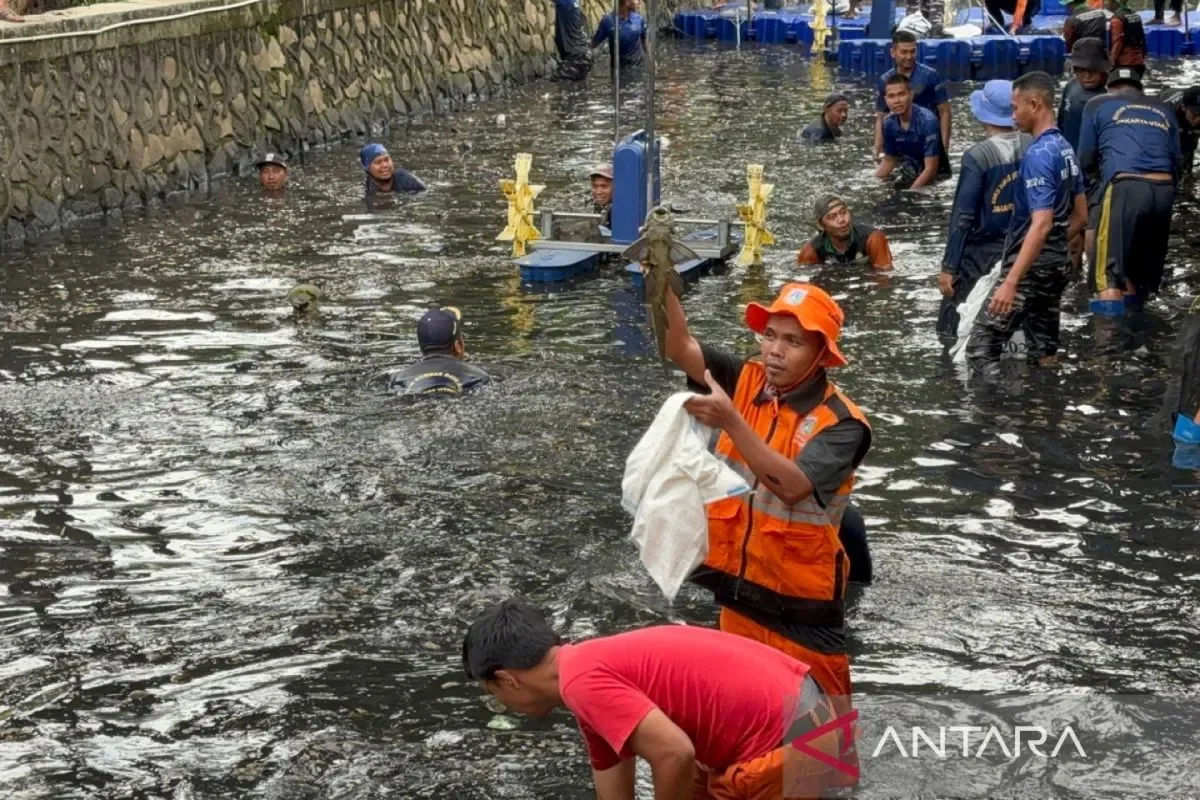
RRI.CO.ID, North Jakarta - The Provincial Administration of Jakarta launched a massive operation on Friday, April 17, 2026, to curb the population of the invasive sapu-sapu (armored catfish) across the city's waterways. In the Kelapa Gading area of North Jakarta alone, officials expect to haul in more than 200 kilograms of the fish by the end of the day.
Representing the provincial administration, Pramono noted that initial estimates had been exceeded within hours. "Initially, we estimated the catch at around 150 kg, but considering the latest progress, where we've collected more than 60 kg at the start, I'm confident the total will exceed 200 kg," he said while monitoring the process in North Jakarta, as quoted by Antara.
The operation is being conducted simultaneously across all five administrative cities of Jakarta, with varying levels of success reported by local authorities. In East Jakarta, teams have already managed a staggering catch of 763 kg of fish across 10 different sub-districts.
Meanwhile, the local administration in South Jakarta has set an even more ambitious target, aiming to capture up to five tons of the invasive species during a specialized population control event at Setu Babakan in Jagakarsa.
The sapu-sapu fish is increasingly viewed as a threat to local aquatic ecosystems due to its highly invasive nature and its tendency to dominate water bodies, often outcompeting native species.
The Ministry of Marine Affairs and Fisheries (KKP) is backing these local efforts with new regulatory frameworks. Director General of Aquaculture at KKP, Haeru Rahayu, emphasized that manual capture remains the most effective method for immediate population control.
“KKP is currently preparing the necessary 'software', a revised Ministerial Regulation based on Regulation No. 19/2020, to make it more applicable for controlling invasive species like the Sapu-Sapu fish,” Haeru explained.
He reaffirmed that the Ministry is ready to coordinate with all regional governments to tackle the environmental impact of these fish.
The city's War on sapu-sapu highlights a critical environmental turning point for Jakarta’s urban waterways. While these fish were once popular in the aquarium trade for their ability to clean algae, their release into the wild has turned them into an ecological liability.
Their armor-like scales and lack of natural predators in Jakarta's murky rivers allow them to reproduce unchecked, disrupting the sediment and destroying the nesting grounds of native fish.
What is particularly interesting is the scale of the target in South Jakarta (5 tons) compared to North Jakarta. This suggests that calmer, semi-natural basins like Setu Babakan have become massive breeding reservoirs compared to the flowing canals of Kelapa Gading.
The KKP’s move to revise Ministerial Regulation No. 19/2020 is a vital step, it moves the issue from a cleaning activity to a formal biosecurity protocol, potentially opening the door for more sophisticated management or even exploring industrial uses for the catch, such as fertilizer or non-food processed goods. ***
News Recomendation
Loading latest news.....