


East Jakarta Pushes Household Waste Sorting to Relieve Pressure on Bantargebang
- 07 Apr 2026 10:57 WIB
- Voice of Indonesia
Key Points
- East Jakarta waste management focuses on improving household waste sorting to reduce pressure on Bantargebang TPST.
- The Bantargebang TPST overcapacity issue has led to stronger recycling and waste diversion policies in Jakarta.
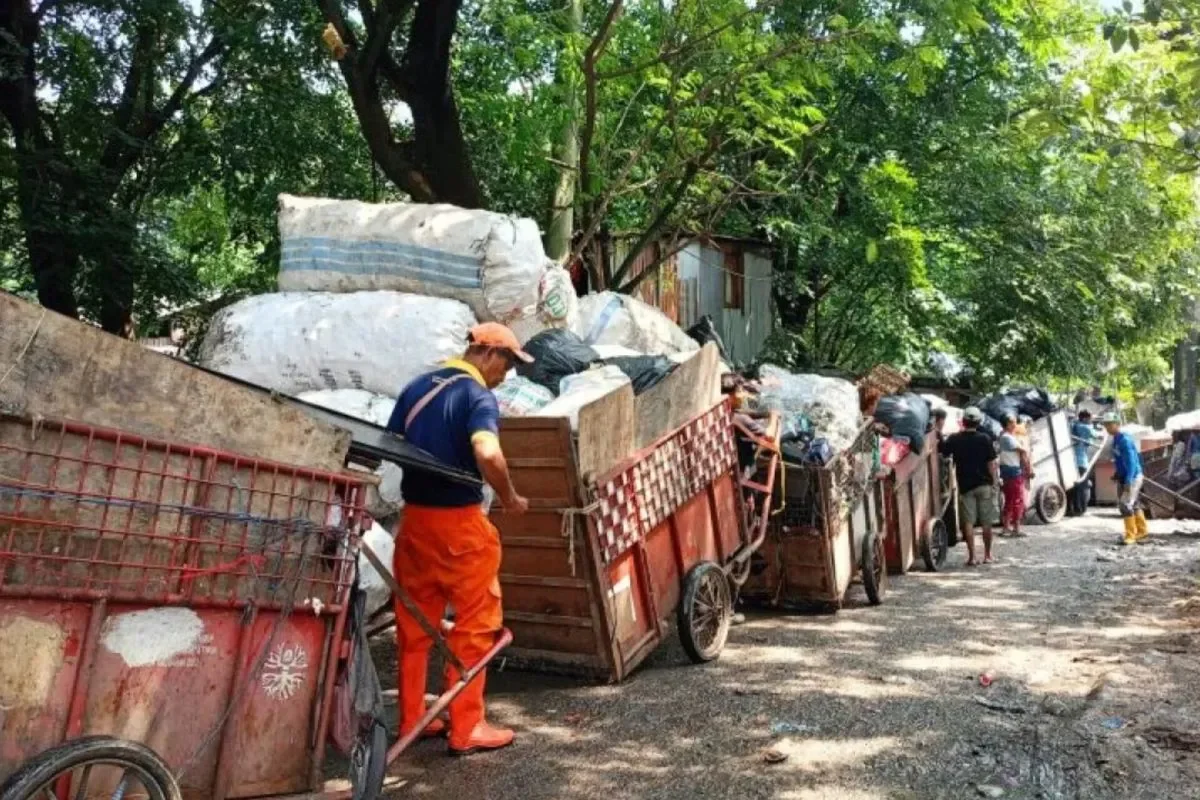
RRI.CO.ID, Jakarta - The East Jakarta City Administration is intensifying efforts to encourage waste sorting at the source, specifically within households, to reduce the overwhelming burden on the Bantargebang Integrated Waste Treatment Site (TPST) in Bekasi, West Java.
The initiative follows reports of overflowing temporary collection points (TPS), such as Rawadas in Duren Sawit, where waste recently began spilling onto public access roads following the post-Lebaran holiday surge.
"The administration is encouraging the community to start reducing waste volume and sorting from the source to manage disposal at TPST Bantargebang," said East Jakarta Mayor Munjirin at the Mayor's Office on Tuesday, April 7, 2026, as quoted by Antara.
To ensure the policy's effectiveness, the city has activated several strategic collaborations and task forces designed to streamline waste management. This initiative includes a partnership with the Plastic Recycling Center (PDUP) Ciracas, which focuses specifically on processing inorganic waste collected from the community.
Furthermore, the Bank Sampah Task Force, established under Mayor's Circular e-0005/SE/2026, now operates in every subdistrict to coordinate the flow of these inorganic materials from residents directly to recycling centers. All activities within this network are monitored through a digital reporting system, allowing officials to track the exact volume of diverted waste in real-time.
Currently, five districts in East Jakarta, Cipayung, Ciracas, Kramat Jati, Pasar Rebo, and Makasar, are already fully integrated with the Ciracas Central Waste Bank system.
This localized push is a direct response to directives from Jakarta Governor Pramono Anung regarding the critical overcapacity at Bantargebang. While the Provincial Environmental Agency (DLH) is working to normalize truck transport schedules this week, the long-term solution relies on reducing the "dump-and-forget" habit.
Mayor Munjirin emphasized that the commitment to shrinking waste volume must involve all stakeholders, from village heads (Lurah) to private sector partners. By optimizing the shifting system for garbage trucks and maximizing household sorting, the city aims to stabilize waste distribution to both Bantargebang and the RDF (Refuse-Derived Fuel) Plants without causing further discomfort to residents.
The city has successfully integrated five districts into a centralized waste bank system to ensure inorganic materials are processed effectively. Five districts in East Jakarta—Cipayung, Ciracas, Kramat Jati, Pasar Rebo, and Makasar—are now officially connected to the Ciracas Central Waste Bank.
This network allows for the coordinated collection of sorted inorganic waste from the community, which is then managed through the Plastic Recycling Center (PDUP) to prevent it from reaching the landfill. Local authorities are focusing on these specific areas to serve as a model for waste diversion that can eventually be scaled across the entire regency. ***
News Recomendation
Loading latest news.....