



Indonesia Targets 1.4M Hectares of Customary Forests by 2029
- 01 Apr 2026 15:09 WIB
- Voice of Indonesia
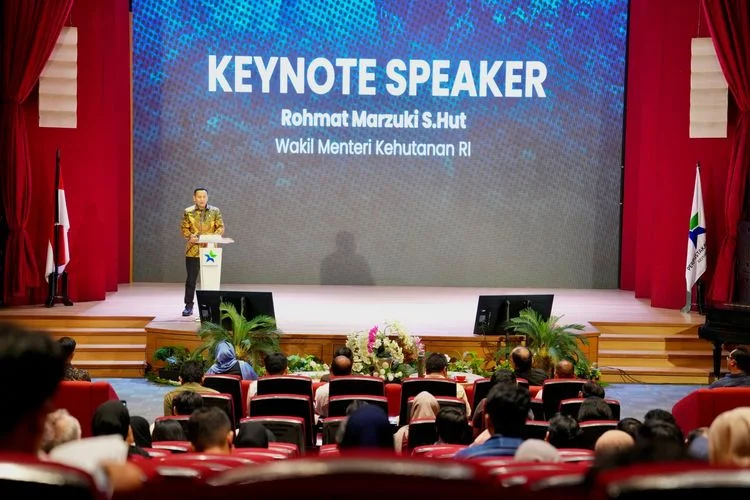
RRI.CO.ID, Jakarta - Indonesia targets 1.4 million hectares of customary forests by 2029 to strengthen climate action. The statement was delivered in Jakarta on Tuesday, March 31, 2026. It was presented during a talk show and photo exhibition titled “Indonesia’s Forests in the Hands of Communities.”
Vice Minister of Forestry, Rohmat Marzuki, affirmed community-centered forest management as a national priority. He said indigenous communities are key actors in preserving Indonesia’s forests sustainably. The event was organized by Forest Watch Indonesia.
He outlined the government’s ambitious target as part of inclusive forest governance transformation. The policy also contributes to global climate stability efforts led by Indonesia. It reinforces recognition of indigenous peoples’ rights over forest areas.
Before detailing the progress, Rohmat stressed the fundamental role of customary territories in forest ecosystems. He highlighted their social, cultural, and ecological importance. He then delivered the government’s main commitment.
“Customary territories are not merely management spaces, but part of strong social, cultural, and ecological systems. The target of establishing 1.4 million hectares of customary forests by 2029 is a mandate to strengthen the role of indigenous peoples in sustainable forest management and global climate action,” he said.
The Ministry of Forestry has designated 169 customary forests covering approximately 366,955 hectares nationwide. These forests span 43 regencies and 20 provinces across Indonesia. Around 88,949 households are directly involved in managing these areas.
To accelerate progress, the Indonesian government established a task force through Ministerial Decree Number 121 of 2026. The task force works across sectors, involving ministries, local governments, academics, and civil society organizations. It focuses on ensuring legal certainty and expanding community-based forest management.
Rohmat also highlighted the government’s push for a restorative economy approach within customary forests. This approach balances economic benefits with ecosystem recovery efforts. He then explained the expected impact on community welfare.
“We want to ensure customary forests are not only ecologically sustainable, but also able to improve welfare. Support is provided through financing access, forest-based businesses, and opening market access for indigenous communities,” he added.
Indonesia aims to reduce emissions by 43.20 percent with international support by 2030. The forestry sector plays a major role in achieving this national climate target. Social forestry programs have reached 8.3 million hectares, involving over 1.4 million households.
News Recomendation
Loading latest news.....