



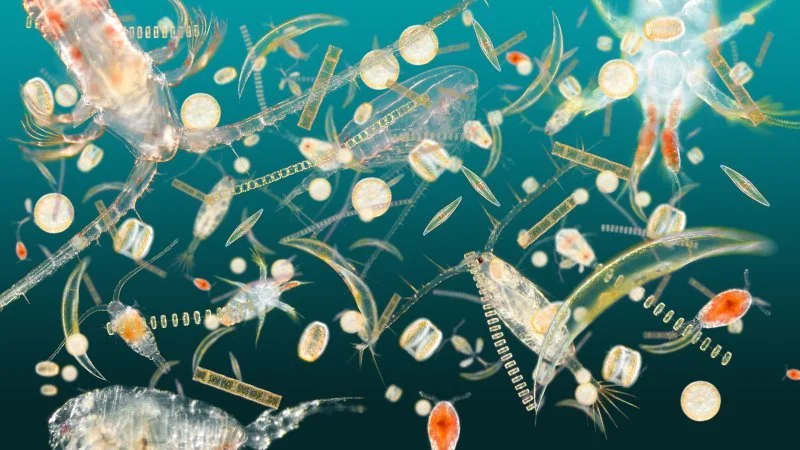
RRI.CO.ID, Jakarta - The High Seas Treaty, which took effect at the beginning of the year, aims to protect biodiversity in international waters and prevent the exploitation of marine life. The treaty is a landmark agreement that seeks to preserve the vast and largely unknown world of marine life, including plankton, which plays a central role in sustaining life on Earth.
Plankton, tiny organisms that drift through the ocean, are the first living organisms to appear on the planet and have given rise to all other forms of life. They regulate the Earth's climate by absorbing carbon dioxide and releasing oxygen into the atmosphere. Despite their importance, most plankton species remain invisible to the naked eye and are still poorly understood.
Scientists have identified nearly 150 billion new plankton genes over the past decade, fueling growing interest from industry, which hopes to extract molecules that could be used in future medicines. However, almost all patents linked to marine genetic resources are held by companies in the world's 10 richest countries, accounting for 98 percent of all such patents.
This concentration of ownership is deeply concerning, with many fearing that it will lead to a form of "marine neocolonialism" where the private sector in developed countries exploits resources that belong to the whole world. The treaty aims to address this issue by ensuring that profits generated from marine genetic resources are shared more fairly.
In marine neocolonialism, France, marine scientists are working to better understand plankton and protect it. Researchers are collecting samples of phytoplankton and zooplankton, filtering them, and freezing them in liquid nitrogen for later analysis.
The potential benefits of plankton-based innovations are vast, ranging from anti-cancer drugs and superfoods to cosmetics and construction materials. However, studying and developing these innovations requires major investment in infrastructure, high-tech equipment, and training for young researchers.
The treaty represents a crucial step forward in protecting marine life and ensuring that its benefits are shared by all. However, implementing the treaty's measures will be a challenge in an already tense geopolitical environment.
Countries that have signed the treaty must now agree on how to apply its measures in practice, ensuring that the benefits of marine genetic resources are shared fairly and that the world's oceans are protected for future generations.
Source; RFI.fr
News Recomendation
Loading latest news.....