



Indonesia, one of the Most Biologically Rich Nations
- 03 Mar 2026 10:46 WIB
- Voice of Indonesia
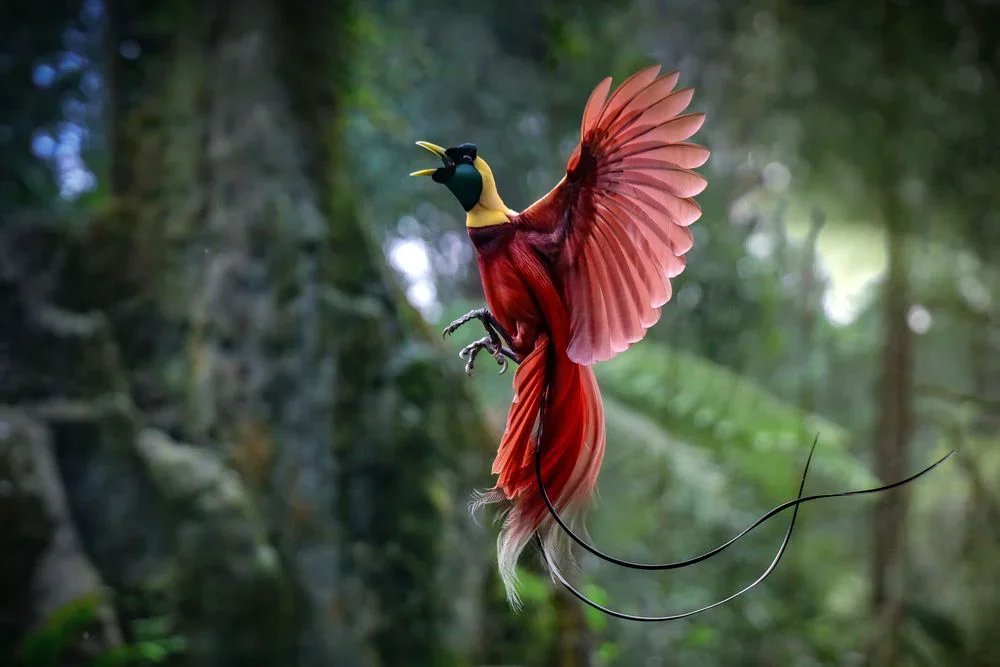
RRI.CO.ID, Jakarta - The World Conservation Monitoring Centre (WCMC) under the United Nations Environment Programme (UNEP) stated that Indonesia is among the 17 megadiverse countries that host the majority of the Earth’s species and exhibit exceptionally high levels of endemism. This recognition underscores Indonesia’s position as one of the most biologically rich nations on the planet.
The term biodiversity hotspot refers to regions with extraordinary species richness, particularly endemic species, that are simultaneously under significant environmental threat. In this context, Indonesia is not only rich in biodiversity but also critically important in global conservation efforts.
Geographically, Indonesia lies in the tropical zone between Asia and Australia and is situated between the Indian and Pacific Oceans. Its location places it within a unique biogeographical transition area marked by the Wallace Line and the Weber Line, biogeographical boundaries that separate Asian and Australasian species distributions and create the distinctive region known as Wallacea.
This geographical complexity contributes to Indonesia’s remarkable species diversity. The country is home to 1,592 bird species—the second-highest number in the world—alongside 781 reptile species, 270 amphibian species, and 515 different mammals.
Indonesia’s botanical richness is equally impressive, with approximately 25,000 flowering plant species, about 55 percent of which are endemic. Such figures highlight not only the scale of biodiversity but also the uniqueness of species that evolved in isolation across the archipelago’s thousands of islands.
Among its many endemic species are the Bawean deer, the Rock Island snake-necked turtle, and the iconic proboscis monkey, each representing distinct evolutionary paths shaped by geography. These species, found nowhere else on Earth, strengthen Indonesia’s reputation as a key evolutionary crucible for scientific research and conservation studies.
Beyond species numbers, Indonesia’s diverse ecosystems—from tropical rainforests and mountain ranges to mangroves and coral reefs—support intricate ecological networks. However, deforestation, climate change, and land conversion continue to threaten these biodiversity assets, making sustainable conservation efforts increasingly urgent for the future of global biodiversity.
News Recomendation
Loading latest news.....