



Indonesia Studies Free Public University Education Nationwide
- 22 Sep 2026 12:58 WIB
- Voice of Indonesia
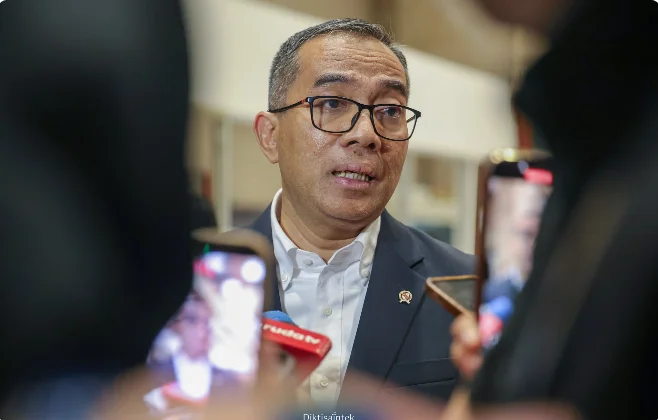
RRI.CO.ID, Jakarta - The Indonesian government is preparing strategic measures to follow up on President Prabowo Subianto’s directive concerning free public education through the university level. The Ministry of Higher Education, Science, and Technology is currently calculating funding requirements as part of a study to develop a measurable and sustainable policy framework.
Minister of Higher Education, Science, and Technology, Brian Yuliarto, said the ministry had begun assessing the standard funding requirements per student at public universities across Indonesia. The assessment is intended to provide the government with a clearer picture of the budget needed to potentially implement free higher education nationwide.
“President Prabowo actually instructed us some time ago to conduct a study on this matter. We have also started calculating the standard needs per student for all public universities, and we have completed the calculations,” Brian said after attending a working meeting with Commission X of the House of Representatives in Jakarta on Monday, September 21, 2026.
The ministry is also mapping the conditions of individual public universities, including their respective needs and student populations. The results will be reported to the President as a basis for considering the appropriate policy scheme and implementation timeline.
Brian said the government would assess whether free public university education could be implemented nationwide at once or would need to be introduced gradually. “If it can be implemented directly, that would be good, but if it is not yet sufficient or feasible, we will also prepare stages for 2027, 2028, and 2029,” he said.
The ongoing calculations are intended to ensure that any future policy is supported by adequate data and reflects the actual needs of universities and students. The government is also considering the sustainability of higher education institutions while assessing the funding requirements for such a policy.
As part of efforts to expand access to higher education, Kemdiktisaintek is also reviewing existing support mechanisms, including the Indonesia Smart College Card (KIP Kuliah), which provides assistance to students from disadvantaged economic backgrounds. Brian said the government’s priority was to ensure that students who face financial barriers could still access higher education.
“The point is, we want to optimize this and ensure that access to higher education can be available to those who genuinely cannot afford it,” Brian said. Government support for disadvantaged students is already provided through various affirmative schemes, with students in the lowest economic groups receiving scholarship assistance and more than 28 percent of students at public universities receiving affirmative support with very low or no tuition contributions.
The Ministry will continue refining its calculations and mapping before submitting the study’s results to the President. The process is expected to help determine whether free public university education can be implemented nationwide based on actual institutional needs, student numbers, state financing capacity, and a feasible implementation timeline.
News Recomendation
Loading latest news.....