



PISA 2025: Indonesia’s Literacy and Science Scores Improve
- 10 Sep 2026 14:02 WIB
- Voice of Indonesia
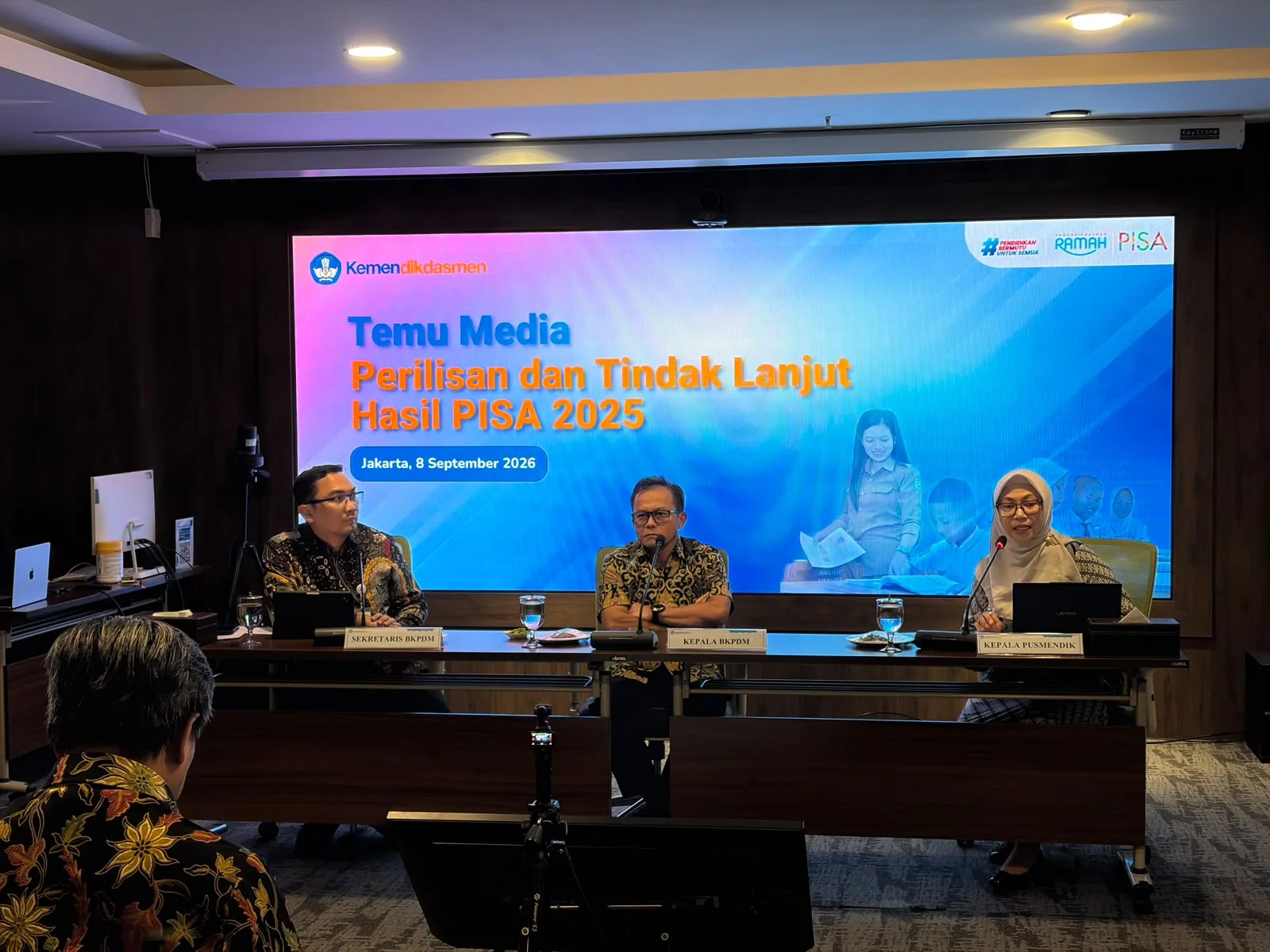
RRI.CO.ID, Jakarta - Indonesia’s education performance showed a positive trend in the 2025 Programme for International Student Assessment (PISA), with improvements in students’ reading literacy and science scores. Indonesia’s science score rose by six points, from 383 in PISA 2022 to 389, while its reading score increased from 359 to 365.
Head of Education Policy Agency of the Ministry of Primary and Secondary Education, Toni Toharudin, said the improvement reflected Indonesia’s relatively stable education performance amid declining science, reading, and mathematics scores across OECD countries over the past 25 years.
“Amid the declining trend in science, reading, and mathematics scores across OECD countries over the past 25 years, Indonesia’s education performance has remained relatively stable, with improvements in both literacy and science,” Toni said in an official statement on Wednesday, September 9, 2026.
PISA, conducted by the Organisation for Economic Co-operation and Development (OECD), assesses the ability of 15-year-old students to apply their reading, mathematics, and science knowledge and skills to real-life situations. In 2025, more than 760,000 students from 91 countries and economies participated in the assessment.
In addition to the higher scores, Indonesia also recorded an increase in its Coverage Index, which reflects the expansion of access to education, from 0.46 in 2023 to 0.90 in 2026. The government considers the achievement an indication of significant expansion in access to education across Indonesia.
“This is evidence of significant expansion in access to education across Indonesia, including since Indonesia fully transitioned from paper-based testing (PBT) to computer-based testing (CBT) starting with PISA 2018,” he conveyed.
PISA 2025 also highlighted positive results in students’ environmental awareness and curiosity. Some 92 percent of Indonesian students believed they could have a positive impact on the environment, while 80 percent said they were curious about many different things, higher than the OECD average of 73 percent.
As a follow-up, the Ministry of Primary and Secondary Education will strengthen teacher competencies, improve learning quality, align the national assessment framework with PISA competencies, and strengthen the role of families and parents in supporting learning.
News Recomendation
Loading latest news.....