



Deputy Minister Highlights Benefits of Technology in Education
- 13 Apr 2026 19:54 WIB
- Voice of Indonesia
Key Points
- Digital Interactive Boards have been shown to make learning more engaging and help students improve comprehension.
- The government is focused on ensuring equal quality of education and infrastructure across all schools, including preparations for the upcoming Academic Ability Test (TKA).
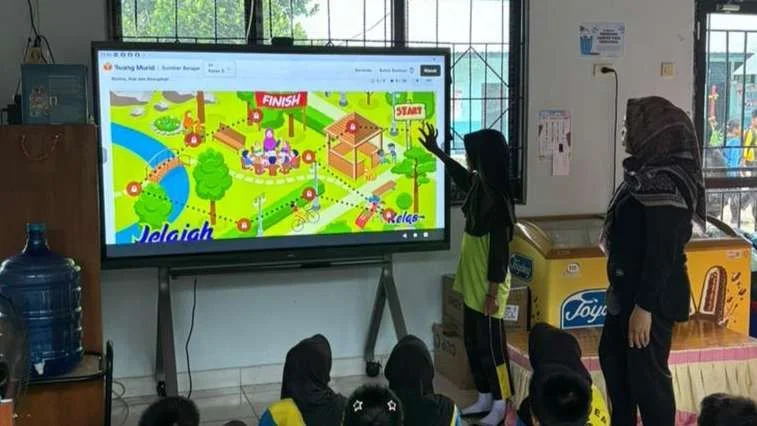
RRI.CO.ID, Mataram - The use of technology in teaching and learning was a major highlight for Deputy Minister of Elementary and Secondary Education (Wamendikdasmen), Fajar Riza Ul Haq, during his visit to Dwijendra Elementary School in Mataram, West Nusa Tenggara (NTB), on Monday, April 13, 2026.
Fajar emphasized that the government does not differentiate between private and public schools, stressing its commitment to equitable distribution of educational quality and infrastructure.
“I deliberately visited this private school first to show that the government stands above all groups and communities,” he said while observing classroom activities.
During his visit, he directly inspected the use of digital interactive boards (PIDs) distributed by the government to schools to make learning more engaging and interactive.
“I checked how the children were using the Digital Interactive Boards to make their learning process more engaging. Thankfully, the students at Dwijendra Elementary School are enthusiastic learners. I see their literacy skills improving and their ability to comprehend texts becoming stronger,” he said, as quoted by Antara.
According to Fajar, the technology has proven effective in boosting students’ enthusiasm for learning and enhancing their literacy. He noted that the devices are also crucial in preparing students for the upcoming Academic Ability Test (TKA).
“I came specifically to inspect preparations for the TKA, which will be held on April 20. We hope that this digital interactive board will further improve our children’s academic abilities,” he explained.
The visit reflects the government’s commitment to advancing technology-based educational transformation across schools, including private institutions. Fajar reiterated that the government is focused on improving the overall quality of education through equitable facilities and infrastructure.
Meanwhile, Made Slamet, chairman of the Dharma Laksana Foundation that oversees Dwijendra Elementary School, expressed appreciation for the government’s attention to private schools. He said technological assistance, such as the PID, helps teachers deliver material more effectively.
“We are utilizing government assistance according to its intended purpose,” he said, adding that the deputy minister appeared satisfied with the school’s readiness for the TKA.
Made, who is also a lawmaker of Commission V of the NTB Regional Legislative Council (DPRD), stressed that the government’s equal treatment of private and public schools should be emulated by local administrations.
“The government no longer distinguishes between public and private schools. I believe this should be followed by regional administrations so there is no impression of unequal attention if we want to improve the overall quality of education,” he said. ***
News Recomendation
Loading latest news.....