



Lawmaker Speaks on Book Price Inequality Across Indonesia
- 09 Mar 2026 20:07 WIB
- Voice of Indonesia
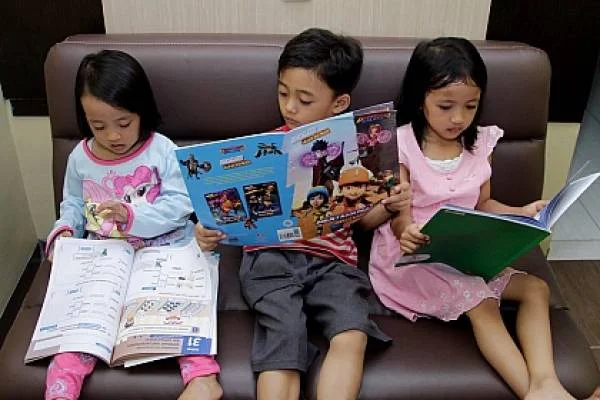
RRI.CO.ID, Jakarta - A lawmaker of Commission X of the House of Representatives (DPR RI), Abdul Fikri Faqih, strongly criticized the high cost of books in Indonesia, saying access to education has shifted from a basic right to a “luxury” for the public, particularly in regions outside Java.
He emphasized that persistent complaints about book prices indicate that Law No. 3/2017 on the Book System is not being implemented. The law, he said, was intended to ensure the availability of quality and affordable books across the country, from Aceh to Papua.
“Textbooks are produced by the government through the Book Center at the Ministry of Elementary and Secondary Education. If the community complains about high prices, it goes against Law No. 3/2017. We need to evaluate this to make sure the law is being followed,” Fikri said in a written statement in Jakarta on Monday, March 9, 2026, as quoted on Parlementaria.
The PKS politician also highlighted the systemic impact of book prices on national literacy rates, noting that when books are difficult to access, public interest in reading declines.
He added that the government’s approach to educational digitalization policies remains unclear compared to countries such as Australia and Finland. “We have reasons for the digital era, but our policies are still unclear. Unlike Australia, which strictly prohibits social media in schools, we don’t take that stance. The only option is physical books,” he said.
Fikri also underlined concerns from parents and educational psychologists about the negative impact of excessive gadget use on children’s development. He argued that children’s potential could decline due to dependence on social media.
“If the Minister of Education’s solution is ‘in‑depth learning,’ then books are the primary means of achieving it. If books are still expensive, the government is obliged to provide subsidies. If books are not evenly distributed, then they must be distributed fairly, even to remote areas of Papua,” he said.
Currently, high logistics costs and long distribution chains often make the cost of sending books outside Java more expensive than the books themselves. Fikri said this issue must be addressed immediately through government fiscal policy. ***
News Recomendation
Loading latest news.....