



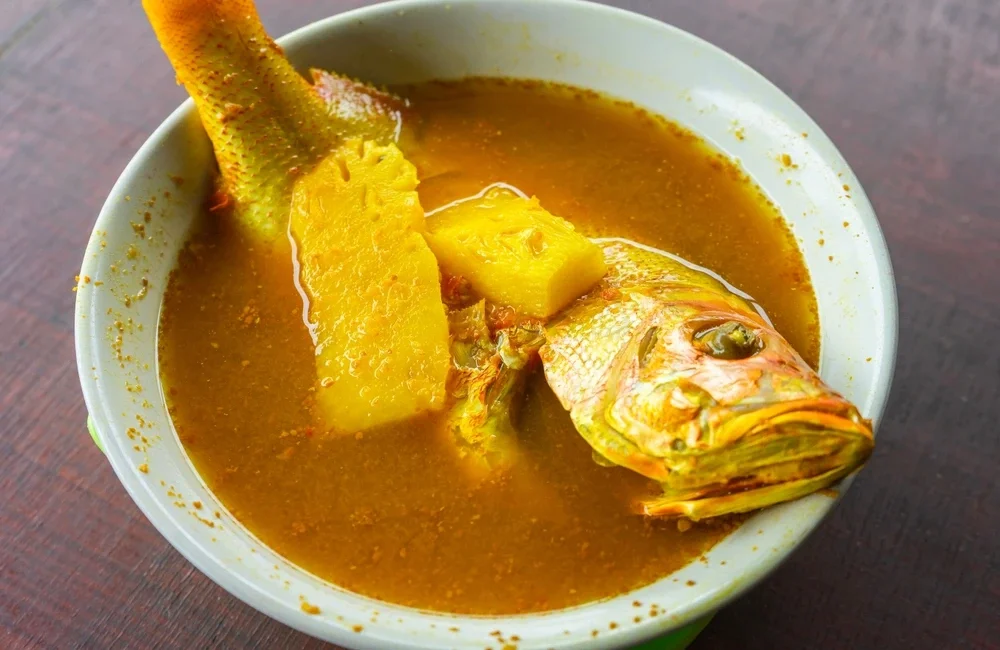
RRI.CO.ID, Jakarta - Amidst the onslaught of fast-paced, homogenized global culinary trends, a traditional fish soup from the Belitung Islands of Indonesia endures as an authentic culinary heritage.
Gangan, as the dish is known, is a fish soup with yellow broth cooked without coconut milk, with sour, sweet, and spicy flavors combined in one bowl. Its continued survival amidst modernization serves as a prime example of how local cuisine can preserve its identity while holding the potential to make its mark on the global gastronomic stage.
Gangan's distinctive yellow color comes from turmeric combined with local pineapple, giving it a naturally sour taste that differs from the tamarind commonly used in similar dishes around the world. The pineapples used are not just any pineapples, but rather fruit picked after three to three and a half months growth to produce an optimal balance of flavors.
This combination of spices places Gangan in a category of spice- and fruit-based soup dishes that are rarely found in fish soup culinary traditions in other regions, making it potentially a unique Indonesian contribution to the world culinary treasure.
The main ingredient of Gangan is generally ketarap fish, a species of hard-skinned fish that lives in the kaolin-rich waters around Belitung. This unique habitat is believed to influence the fish's texture and naturally savory flavor, even without added seasonings.
The tough skin of the fish, when prepared with the right cooking techniques, actually turns crispy and edible, a culinary characteristic rarely found in fish dishes in other countries, and it has the potential to attract the attention of international culinary connoisseurs who like to experiment with food textures.
More than just a daily dish, Gangan occupies a central position in various social traditions of the Belitung people, including in wedding ceremonies, major holidays, and the communal eating tradition known as Bedulang. In this tradition, a large bowl of Gangan is usually placed in the center of the tray, surrounded by other side dishes as the centerpiece of the dining table.
This pattern reflects a universal phenomenon in many cultures around the world, where a soup-based dish becomes a symbol of togetherness and collective identity of a community, just as other traditional soups in various countries play a similar role in their social rituals.
The tourism industry also plays a role in introducing Gangan to a wider audience. The dish is now readily available not only in local homes but also in restaurants, eateries, and hotels across Belitung. Some hotels even serve a version of Gangan with the fish filleted to make it easier for international tourists to eat without having to deal with bones, an adaptation that shows how traditional cuisine can adapt to global tastes without losing its original flavor essence.
This kind of adaptation phenomenon confirms that local dishes like Gangan have great potential to become part of the world culinary map, in line with the global trend that increasingly values the authenticity and uniqueness of regional flavors. Amidst the homogenization of culinary delights brought about by globalization, the existence of dishes like Gangan serves as a reminder that the richness of local flavors can actually have universal appeal, provided they are properly preserved and introduced to the world.
News Recomendation
Loading latest news.....