



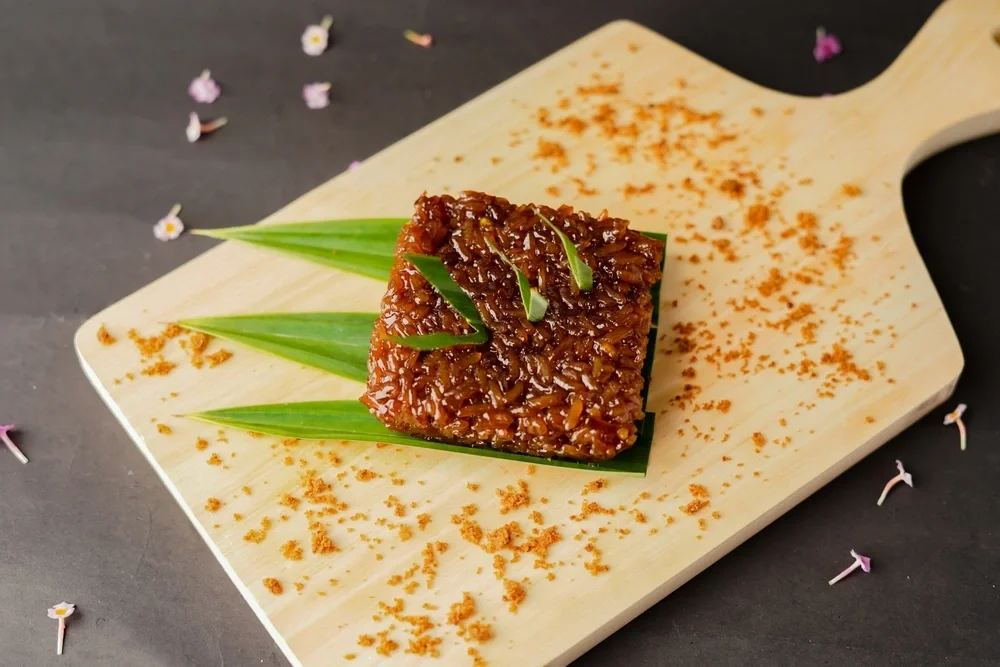
RRI.CO.ID, Jakarta - Amid a constant wave of modern snacks, a traditional treat made from glutinous rice and palm sugar known as baje continues to hold its place as part of a longstanding culinary identity in Makassar. The cake is made from a simple mixture of glutinous rice, coconut milk, and palm sugar, steamed until cooked, then shaped into small rectangular pieces and wrapped in dried banana leaf. It is precisely this simplicity of ingredients that has allowed the cake to keep being made and consumed across time.
The survival of a traditional snack amid global food trends often depends on its ability to adapt without losing its original identity. Baje offers a clear example of how a food built on local ingredients can remain relevant precisely by preserving an authentic production process, rather than chasing passing instant trends.
This pattern of adaptation can be seen in the emergence of several variations of the cake over time. One of them, known as baje batan, uses finely ground glutinous rice, producing a smoother texture compared to the coarser texture of the original version. Despite the textural difference, the signature sweet flavor remains unchanged, showing how small innovations can broaden a food's appeal without altering its essence.
Beyond baje batan, other variations such as baje badong and baje canggoreng further enrich the range of snacks built on glutinous rice and palm sugar. This diversity of shape and texture reflects a broader pattern seen in the evolution of traditional foods around the world, where inherited recipes continue to undergo small adjustments to stay appealing to new generations without losing their culinary identity.
This phenomenon is not unique to one place. Many snacks based on glutinous rice and palm or cane sugar can be found across Southeast Asia, each carrying a distinct local touch while sharing the same underlying principle: turning readily available ingredients into long lasting, richly flavored snacks.
In addition to its culinary significance, the preparation of baje during traditional ceremonies and family gatherings strengthens community ties, acting as an edible symbol of hospitality and shared heritage among local artisans.
The continued presence of cakes like baje shows that culinary heritage does not always need to compete with modernity, but can exist alongside it. As long as its production methods keep being passed down and its variations continue to evolve organically, this kind of traditional snack stands a real chance of enduring as part of a global food landscape that values diversity of flavor and the stories behind it.
News Recomendation
Loading latest news.....