



Nasi Jamblang, Cirebon’s Teak Leaf-Wrapped Legacy of Flavor and History
- 09 Jul 2026 17:35 WIB
- Voice of Indonesia
Key Points
- Originating from Jamblang Village, Cirebon, 'Nasi Jamblang' traditionally utilizes porous teak leaves as wrappers.
- Modern diners enjoy a diverse buffet-style spread featuring dozens of traditional Indonesian side dishes.
- Local street vendors keep Nasi Jamblang highly affordable to honor its working-class roots.
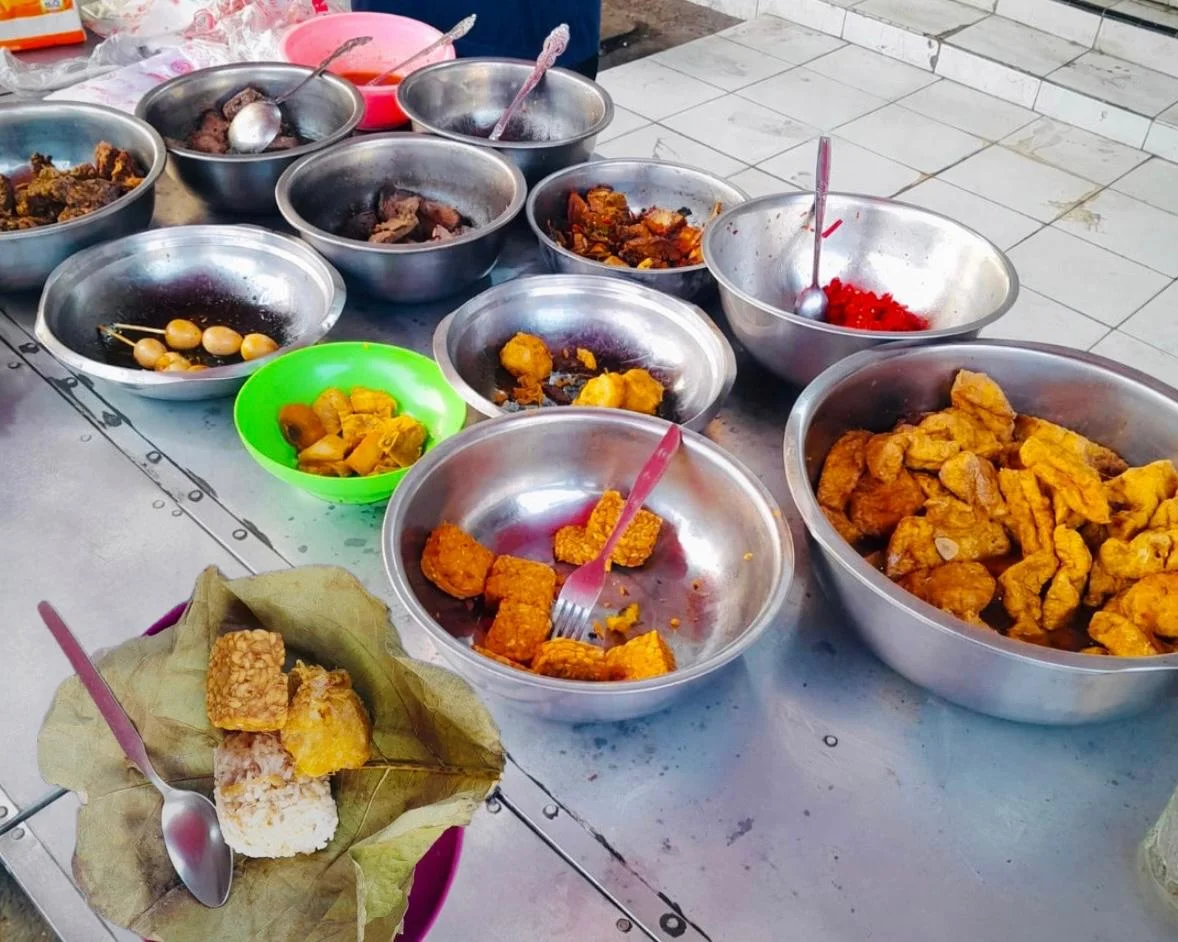
RRI.CO.ID, Cirebon - A visit to Cirebon, West Java, is never complete without tasting the legendary Nasi Jamblang (Sega Jamblang) or Jamblang rice -- a dish that blends fragrant rice with a wide selection of side dishes, all wrapped in teak leaves.
More than just a meal, it is a culinary tradition that carries the history of Cirebon’s workers and remains a timeless favorite for locals and travelers alike.
Originating in Jamblang Village, about 10 kilometers west of Cirebon city center, the dish dates back to the Dutch colonial era in the 1800s, when it was first prepared for forced laborers building the Daendels Road from Anyer in Serang Regency, Banten, to Panarukan, Situbondo Regency, East Java.
Teak leaves were chosen as wrappers because their porous texture kept rice fresh and fluffy longer than banana leaves. Over time, Nasi Jamblang evolved from a simple workers’ meal into a celebrated culinary icon.
Today, diners enjoy a buffet-style spread with dozens of side dishes such as sambal goreng (spicy fried chili paste), fried tofu, beef or liver stew, potato fritters, fried eggs, fried tempeh, and salted fish.
Its most iconic dish is balakutak hideung -- squid or cuttlefish cooked in its own ink, producing a thick black sauce reminiscent of East Java’s rawon (Indonesian beef soup)
Despite its variety, Nasi Jamblang remains affordable, with prices starting from IDR 5,000 (USD 0,28) depending on the chosen side dishes.
This affordability reflects its roots as a meal for port laborers and street workers along Jl. Pekalipan, Cirebon, which today has transformed into a bustling culinary hub.
At night, Jl. Pekalipan becomes a lively street food center, offering a wide range of local delicacies and drawing both residents and tourists.
Endah, a tourist from Yogyakarta shared her impression. “When visiting Cirebon, besides trying empal gentong (savory Indonesian curry-like beef soup) for lunch, I eat Nasi Jamblang for breakfast," she said while enjoying her meal near Cirebon Station.
"The side dishes are varied, perfect for breakfast since the portion isn’t too heavy, and the price is very affordable depending on the choices,” Endah added.
Beyond its flavors, Nasi Jamblang embodies resilience and community spirit, carrying forward the legacy of Cirebon’s workers into a dish that continues to unite generations. ***
News Recomendation
Loading latest news.....