



Key Points
- Sate Klatak is a legendary Yogyakarta dish celebrated for its minimalist approach.
- Its most defining innovation is grilling meat on bicycle spokes.
- Originating in Bantul in the 1940s, the dish is now a widespread culinary symbol.
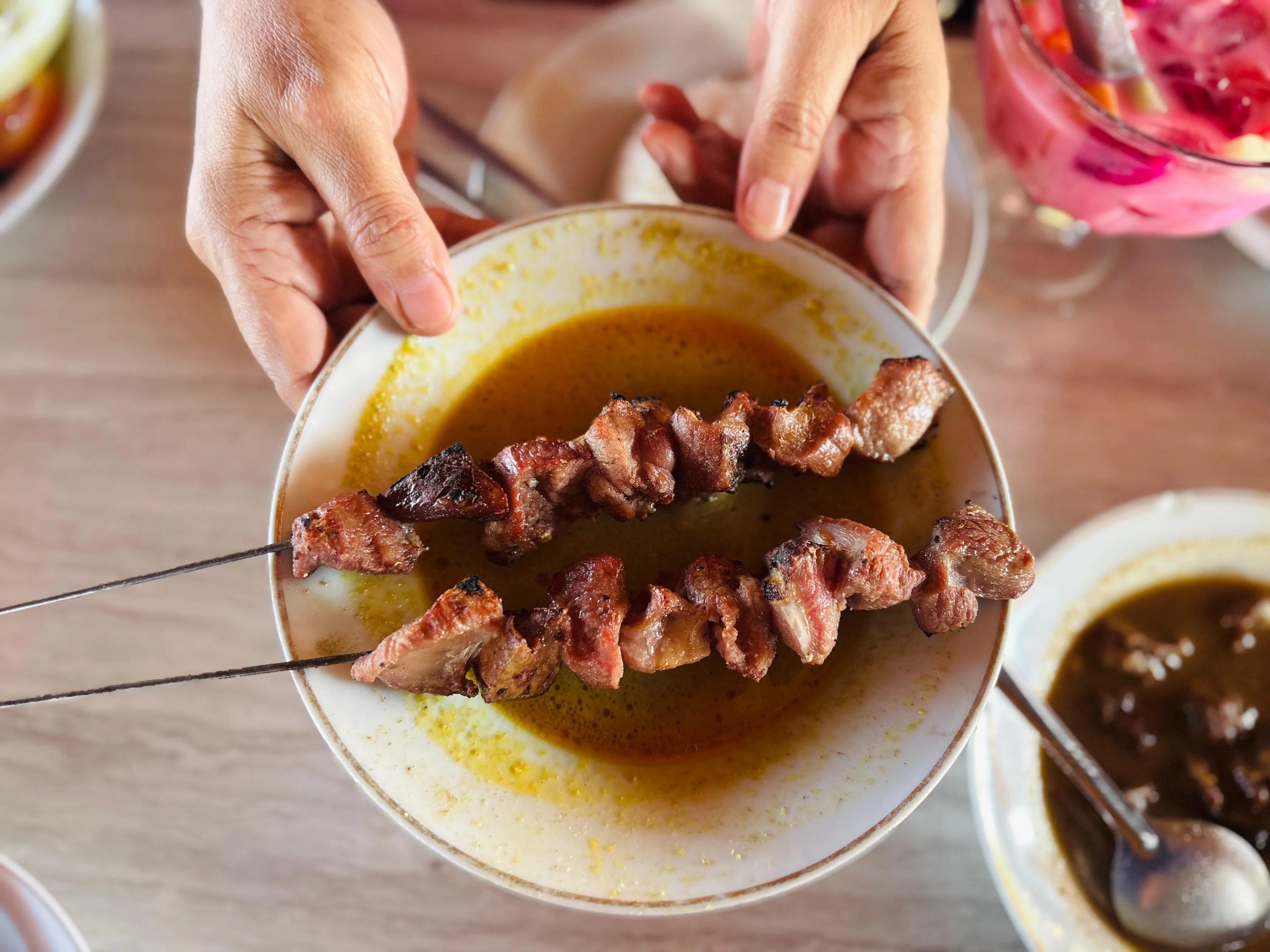
RRI.CO.ID, Yogyakarta - Sate Klatak has become one of Yogyakarta’s most iconic dishes, celebrated for its simplicity and authenticity. Unlike other goat satay varieties rich in peanut sauce or sweet soy, it relies only on salt and pepper, allowing the natural flavor of young goat meat to shine.
Quoting on disbud.bantulkab.go.id, the dish first gained fame in Pleret, Bantul, with its name believed to come from the crackling sound of fat dripping onto hot charcoal or from the Javanese word kelatak, meaning simple seasoning. This philosophy reflects the Javanese tradition of valuing quality ingredients over complex spices.
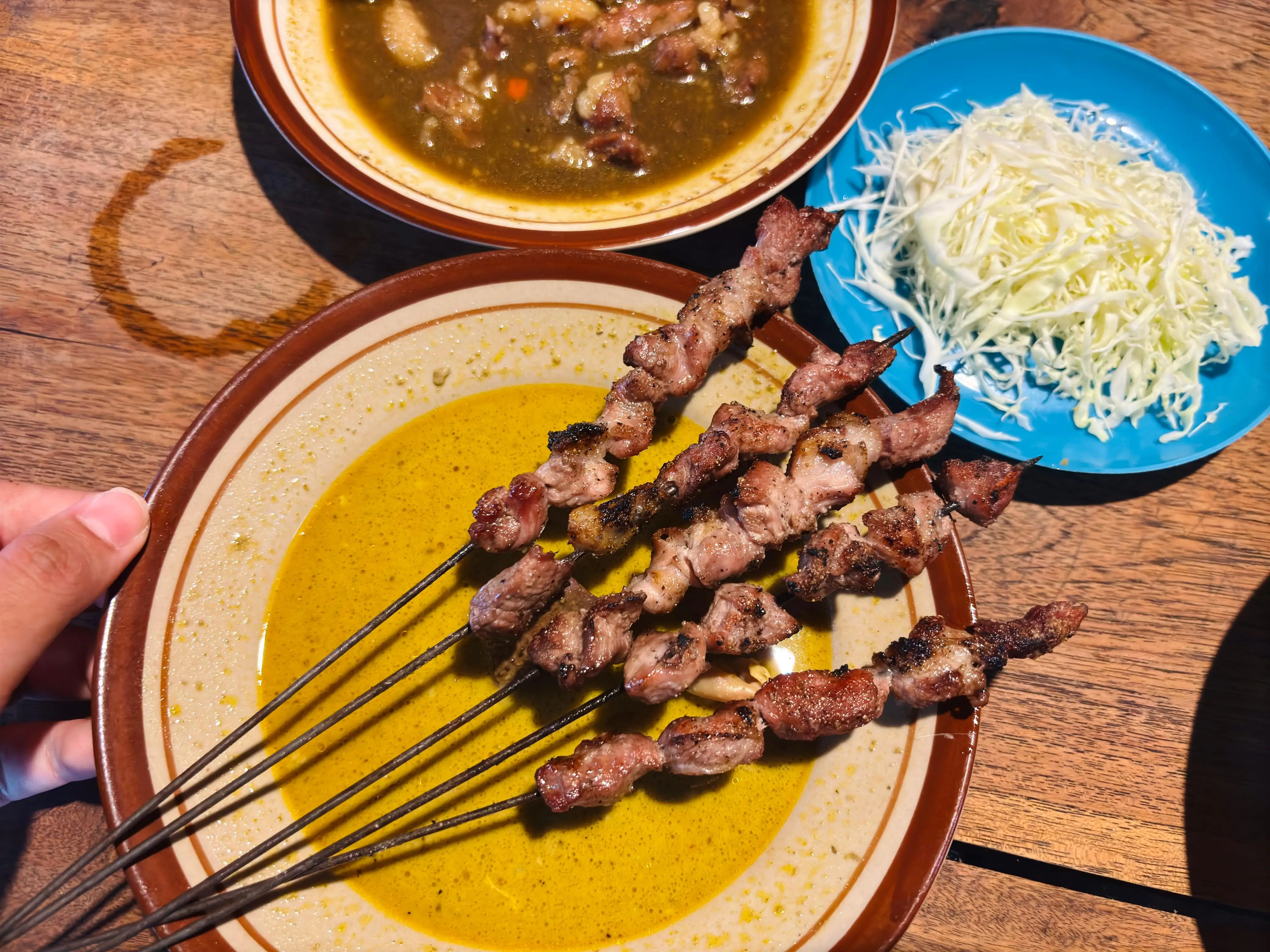
Its most distinctive feature is the use of bicycle spokes as skewers, which conduct heat evenly and allow larger cuts of meat to cook perfectly. This innovation ensures the satay is tender inside while smoky and flavorful outside.
Sate Klatak is typically served with rich gulai broth, steamed rice, and fresh shallots with bird’s eye chili, creating a balance of savory, spicy, and refreshing notes. The straightforward preparation results in a dish that is both rustic and profound.
The culinary hub of Sate Klatak lies along Jl. Imogiri Timur, Bantul, where legendary stalls such as Pak Pong and Pak Bari continue the tradition. The dish traces its roots back to Mbah Ambyah, who began selling goat satay in Jejeran in the 1940s, later carried on by his descendants.
Over time, Sate Klatak spread beyond Bantul and is now found across Indonesia. Its enduring appeal lies in proving that great food does not require complexity, just quality meat and thoughtful technique.
Historical accounts suggest multiple versions of its origin, with some crediting Mbah Ambyah’s stall in Jejeran traditional market as the birthplace in the 1940s. His grandson Pak Bari later continued the tradition in the 1990s, while other relatives such as Pak Pong, Mak Adi, and Bu Jazim expanded the dish’s reach.
The name is also linked to the sound of coarse salt burning on hot coals, producing the klatak-klatak crackle. This detail adds cultural depth to the dish’s identity and reinforces its rustic charm.
Today, Sate Klatak is not only a Bantul specialty but a national culinary symbol. It remains a must-try dish for visitors to Yogyakarta, embodying tradition, innovation, and the enduring charm of local food heritage.
Adding a personal touch, Tyas, a visitor from Jakarta, shared her experience while dining at the newly opened Sate Klatak Pak Pong 2 branch. “This time I ordered sate klatak, tongseng, and tengkleng kambing. I’ve been to Pak Pong several times, and now I’m trying the new branch. I love how tender the satay is, with big cuts of meat, and the place is clean and spacious,” she said.
She also offered recommendations for fellow culinary enthusiasts. “Besides Pak Pong, I also enjoy eating at Sate Klatak Mak Adi. It’s definitely recommended when visiting Jogja,” Tyas added, highlighting her fondness for the dish and its growing popularity among visitors.
The price of Sate Klatak varies depending on the stall and location, generally ranging between IDR 25,000 (USD 1,39) and IDR 40,000 (USD 2,22) per portion. A typical serving includes two large skewers of goat meat, served with gulai broth, and accompanied by rice.
Sate Klatak is more than just a culinary delight. It is a living heritage that bridges generations, blending tradition with innovation. For visitors to Yogyakarta, tasting Sate Klatak is not only about enjoying a meal, but also about experiencing the cultural soul of Bantul, where simplicity transforms into unforgettable flavor. ***
News Recomendation
Loading latest news.....