



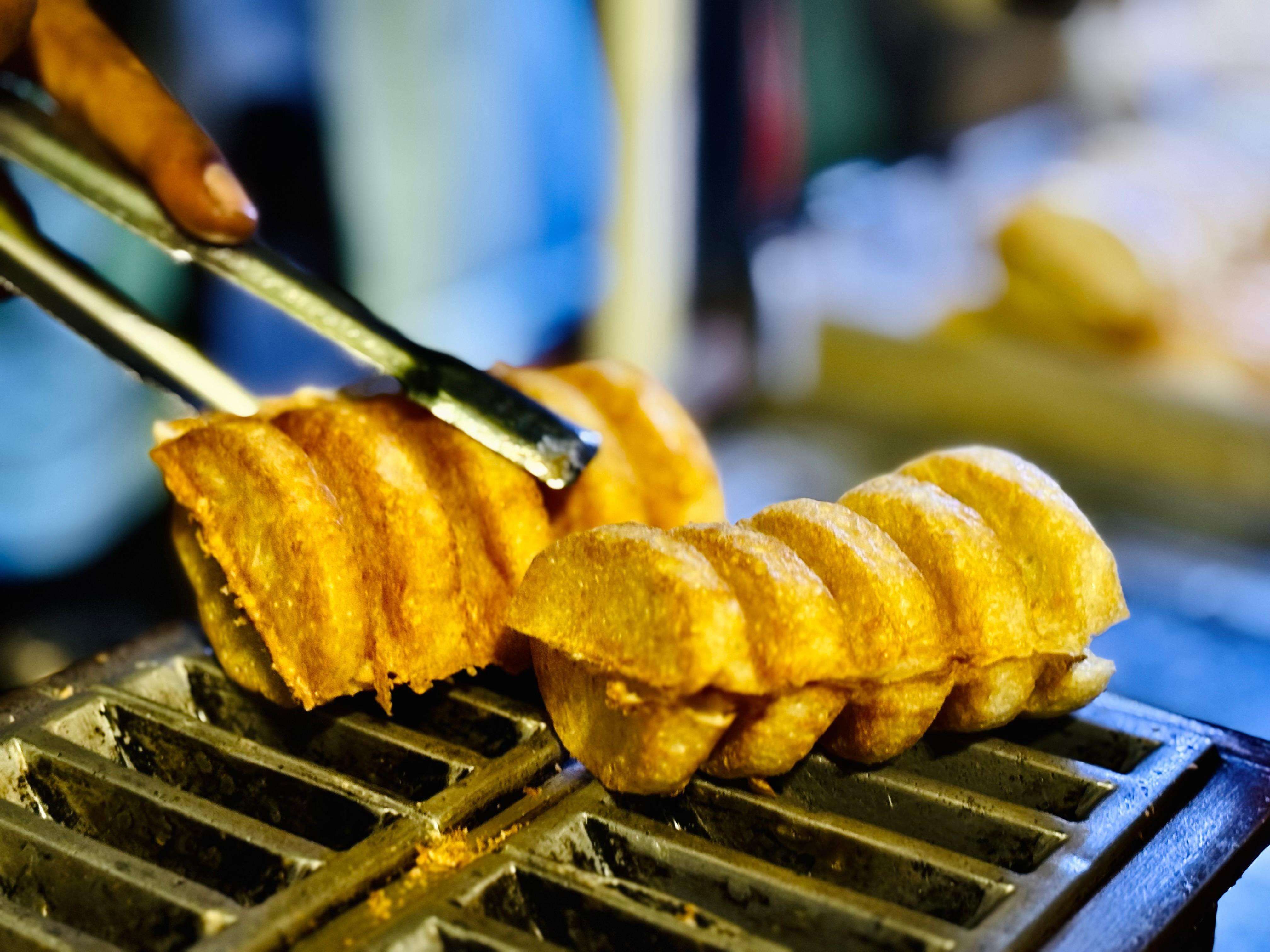
RRI.CO.ID, Bandung - The legendary Bandros cake has shaped Bandung’s traditional snacking culture since the early 1900s, standing as a culinary symbol of West Java’s heritage.
Renowned for its artisanal balance, a crispy golden shell encasing a savory coconut-filled interior, Bandros offers a sensory experience that has remained remarkably unchanged for more than a century. Its enduring presence in Bandung’s food scene reflects not only its flavor but also its role in preserving the city’s historic culinary identity for future generations.
Rooted in Sundanese tradition, the name Bandros derives from the local word meaning “pounded or hit”, a nod to the age-old technique of pounding ingredients to achieve its signature texture. The snack’s aroma of freshly baked dough continues to enchant the community, making it a staple of West Javanese mornings.
Though it shares a crescent shape with pukis, a soft and sweet Indonesian pancake, Bandros distinguishes itself through a savory batter of wheat flour, rice flour, salt, and grated coconut. A light sprinkle of sugar adds subtle contrast, best enjoyed while the cake is still warm.
This humble delicacy transcends regional boundaries, appearing under different names across the archipelago: pancong in Jakarta, gandos in Central and East Java. Despite these variations, its core recipe remains consistent, underscoring how one snack can unite diverse communities under a shared culinary tradition.
Bandros first emerged during the Dutch East Indies era, when wheat flour was introduced to Bandung and the broader Priangan highlands. At the time, wheat-based foods were luxuries reserved for the elite.
Local creators responded by crafting Bandros as an affordable alternative, blending rice flour - the Sundanese staple - with coconut, salt, sugar, and coconut oil. Designed to be small, economical, and filling, it quickly became a popular breakfast dish, often paired with tea.
This innovation democratized access to flavorful snacks, bridging social divides and embedding Bandros into the daily diet of West Javanese households.
Today, Bandros remains widely accessible, sold by vendors from mobile carts and roadside stalls across Bandung. Authentic versions can be found in iconic locations such as Jalan Braga, Bandung City Square (Alun-Alun), Jalan Saparua, Jalan Cihapit, Dago, and Cihampelas. In tourist hubs like Jalan Braga, a serving of this historic cake remains affordable, typically priced around IDR 20,000 (USD 1.18).
More than just a snack, Bandros endures as a cultural bridge - linking past and present, local and national - while continuing to delight palates with its timeless crispy-meets-soft charm. ***
News Recomendation
Loading latest news.....