



A Plate of Cultural Acculturation on Betawi's Ase Porridge
- 15 Jan 2026 19:51 WIB
- Voice of Indonesia
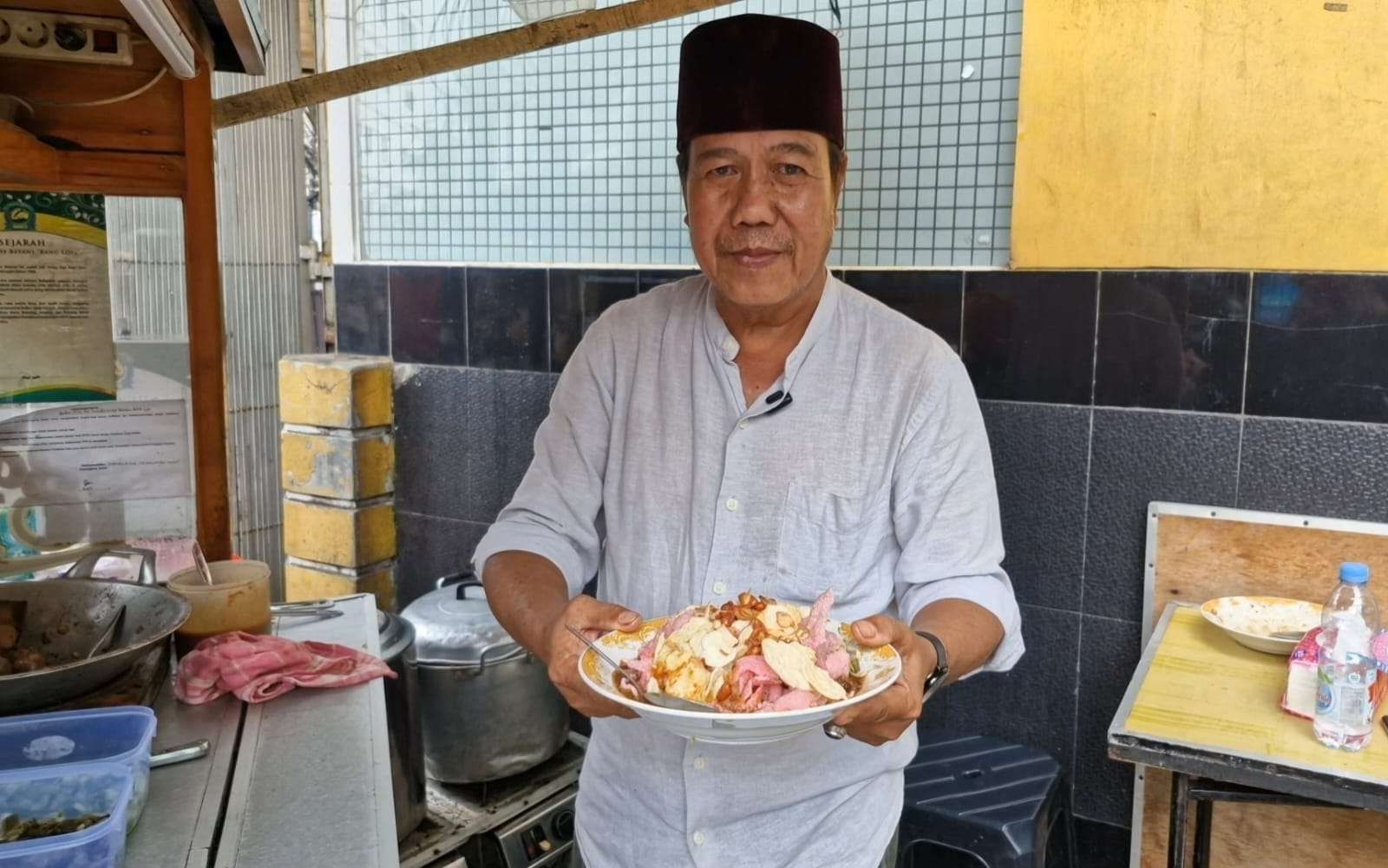
KBRN, Jakarta: There are many Betawi culinary delights that are familiar to Jakartans, from kerak telor (egg crust) to bir pletok (ginger ale). However, the Betawi people have a unique dish among these varieties that is becoming increasingly rare: bubur ase (ase porridge).
Not far from the Hotel Indonesia Roundabout in Central Jakarta, at Jalan Kebon Kacang 9 in Tanah Abang, stands a stall owned by M. Lutfi Fani, also known as Bang Lopi. He has been selling bubur ase for decades.
"Ase" is short for 'Asinan Semur', which means 'pickled vegetables with meet stew broth.' It's different from regular chicken porridge with curry. It is eaten with pickled vegetables and semur sauce, which is typical of meat broth," said Bang Lopi at his stall on Tuesday, January 13, 2026.
The pickled vegetables consist of mustard greens, cucumber, and bean sprouts, which provide a refreshingly sour taste. The aroma of spices from the stewed broth, filled with meat and tofu, wafts through the air.
According to Bang Lopi, the fillings for bubur ase are varies among Betawi communities. Some add anchovies, while his pickles include radish and chives. A plate of bubur ase isn't complete without red crackers, emping (gnetum crackers), peanuts, and fried onions.
"This recipe has been passed down through three generations of my family. My grandmother used to cook it; now, my wife does. The message is simple: don't be afraid of spices," said Bang Lopi.
His customers come from various backgrounds. Some are teenagers drawn by food bloggers' reviews, while others are loyal because the taste is just right.
"I'm a native Betawi. I've been eating bubur ase since I was little. It's delicious because it's pickled and boldly spiced, a very Betawi taste from Tanah Abang," said Helmi, a customer at Bang Lopi's stall on Tuesday, January 13, 2026.
Imbong Hasbullah, the Secretary-General of the Betawi Cultural Institute, explained the role of this dish in the cultural acculturation of the Betawi people.
"The Betawi people are creative. Bubur, or porridge, is influenced by the Chinese, while semur or stew, is influenced by the Dutch. It may be rare in the East, but it's very popular in Central Betawi, like in Tanah Abang, and now it's also available in the Cipulir area," said Imbong in his office on Tuesday, January 13, 2026.
According to Imbong, this fusion isn't just a culinary experiment. It reflects how the Betawi people have transformed outside influences into a new local identity.
Acculturation is evident in various other culinary delights, such as nasi kebuli, a dish rooted in Arab culture, and various cakes influenced by Chinese traditions. These dishes have been accepted and adapted into the daily lives of the Betawi people since ancient times.
"People often don't realize that they've been eating Betawi food for breakfast, such as nasi uduk, nasi ulam, and asinan (pickled vegetables). There's also pindang bandeng (milkfish), kue talam (taro cake), dodol, and setup (cocktail-like beverages). Betawi cuisine is rich with cultural influences, including Chinese, Dutch, Arab, and European," said Imbong.
From its inception, Betawi has been a global region. Intense cultural interaction has made Betawi cuisine flexible and able to withstand changing times. Currently, bubur ase (ase porridge) is registered as an intangible cultural heritage of Indonesia by the Ministry of Culture, alongside 94 other cultural products from Jakarta Province. (Misni Parjiati/Bambang MBKA)
News Recomendation
Loading latest news.....