



BRIN Maps Seaweed Value Chain to Boost High-Value Processing
- 01 Okt 2026 14:45 WIB
- Voice of Indonesia
Key Points
- BRIN is mapping Indonesia’s seaweed value chain to accelerate high-value downstream processing and technology-driven innovation.
- The initiative explores applications in food, pharmaceuticals, cosmetics, bioplastics and renewable energy while reducing industrial waste.
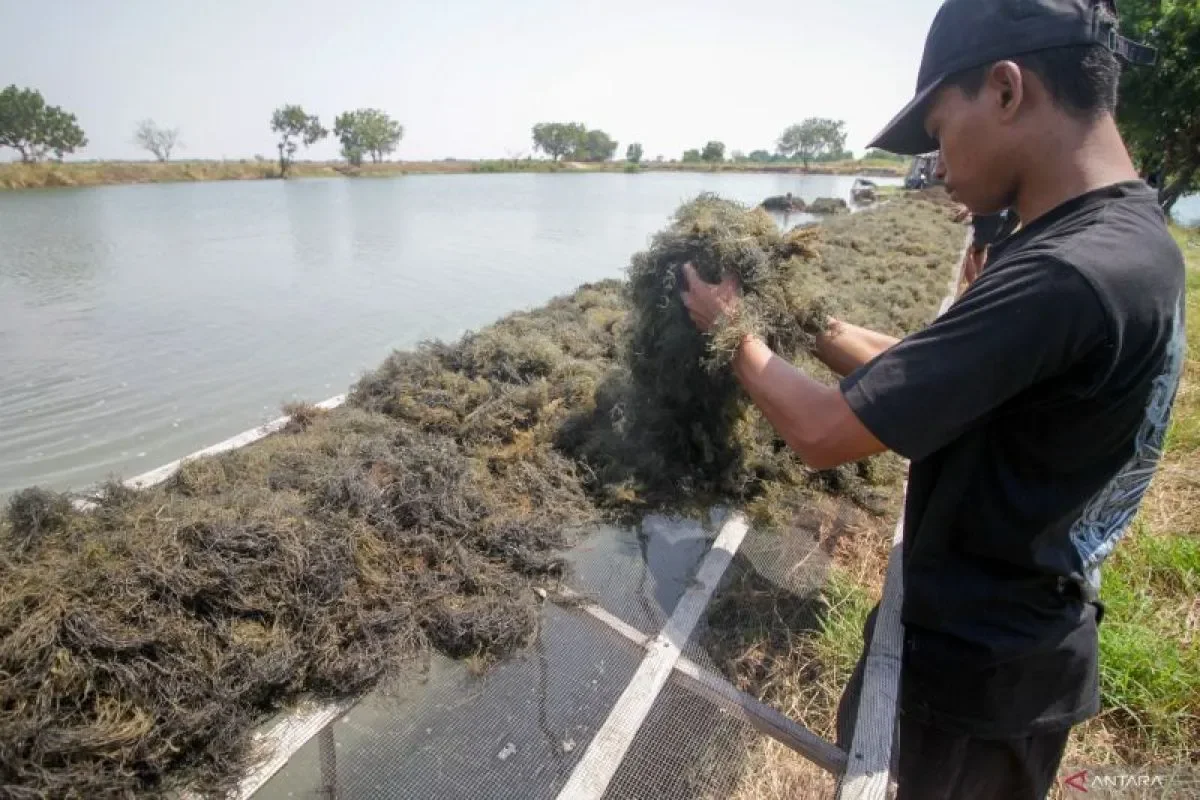
RRI.CO.ID, Tangerang Selatan - The National Research and Innovation Agency (BRIN) of Indonesia is mapping the entire seaweed industry value chain from upstream to downstream to accelerate transformation from a resource-based economy toward a capability-based economy driven by high-value technology and innovation.
Organized by BRIN's Research Center for Sustainable Industrial and Manufacturing Systems (PRSIMB), the initiative was discussed during a Focus Group Discussion (FGD) at the B.J. Habibie Science and Technology Park in Serpong, South Tangerang, on Monday, September 28, 2026.
Group Leader for Fishery and Seaweed Product Valuation at BRIN, Ari Kabul Paminto, emphasized that natural resources must serve as initial inputs rather than end products, requiring structured technological intervention to maximize economic returns.
"We must transform from a resource-based economy that merely exploits raw materials to a capability-based economy that relies on technological mastery and high-value innovation," Ari said during the discussion, as quote on BRIN's official website.
Data from the Indonesian Seaweed Association (ARLI) indicates that while Indonesia possesses 57 processing facilities with an installed capacity of 197,650 tons of dried raw material annually, roughly 80 percent of carrageenan production remains limited to semi-refined (ATC) products.
PRSIMB Head Nugroho Adi Sasongko noted that the mapping project aims to pinpoint growth opportunities across high-value downstream applications, including functional foods, pharmaceuticals, cosmetics, bioplastics, biostimulants, agar, and alginate.
To eliminate industrial waste, Indonesian Seaweed Industry Association (ASTRULI) Vice Chairman Pontas Tambunan advocated for a biorefinery cascading approach. The method enables multi-stage extraction where primary compounds yield high-value products, while residual biomass is repurposed into renewable energy inputs such as biogas and Refuse Derived Fuel (RDF).
BRIN is supporting the value chain mapping with technology and intellectual property (IP) valuations using Cost Method, Market Approach, and Discounted Cash Flow (DCF) frameworks through its proprietary analytics tool, BRINavigasi.
The final evidence-based insights are expected to guide strategic investments and national policy recommendations for the marine manufacturing sector. ***
News Recomendation
Loading latest news.....