



Indonesia Seeks Domestic Demand as US Solar Tariffs Reach 114 Percent
- 01 Okt 2026 05:14 WIB
- Voice of Indonesia
Key Points
- US tariffs of up to 114 percent on Indonesian solar panels are prompting the government to strengthen domestic demand.
- A planned 100 GW solar power program could create millions of jobs, though weak project uptake and supply-chain challenges remain.
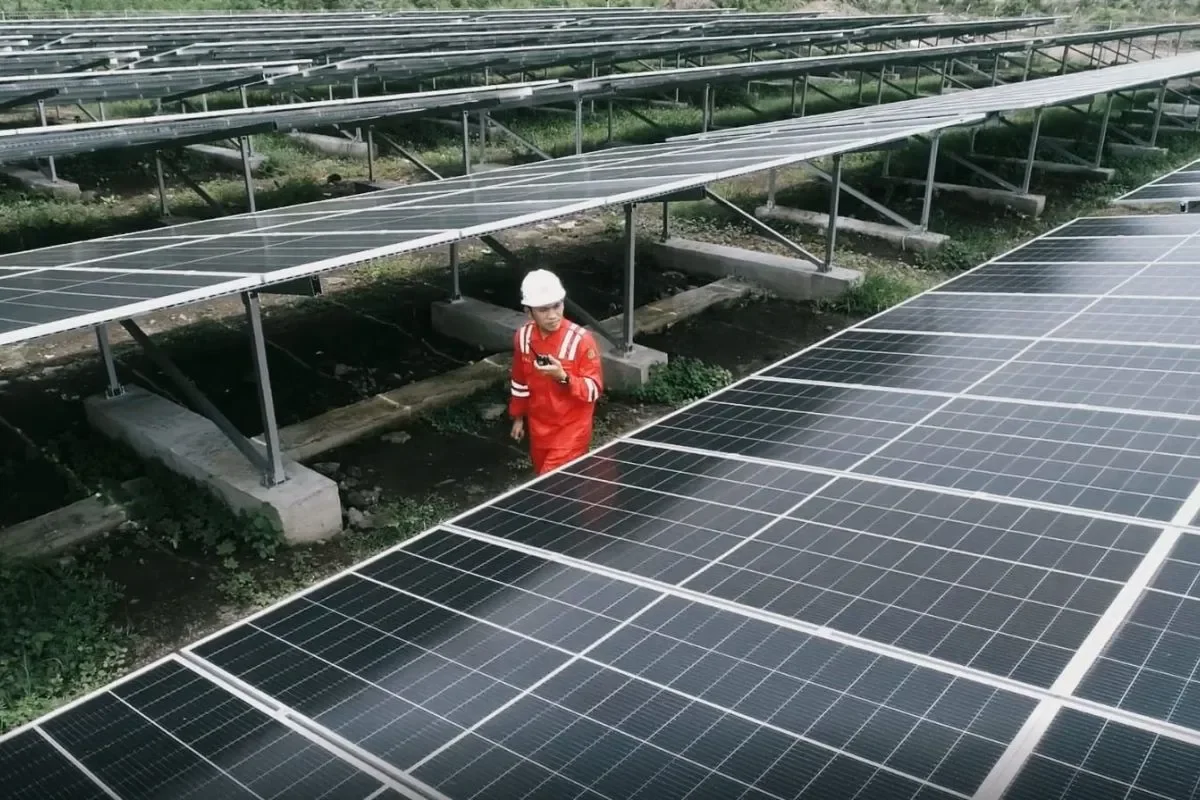
RRI.CO.ID, Jakarta - Indonesian solar panel exports to the United States are facing new pressures after Washington imposed additional tariffs of up to 114 percent.
The government sees the move as an opportunity to strengthen the domestic market and absorb more solar panel production at home.
Deputy for Energy and Mineral Resources Coordination at the Coordinating Ministry for Economic Affairs, Elen Setiadi, said the situation presents an opportunity to strengthen the domestic solar panel market.
"Our solar panel industry previously exported to the United States. However, some time ago, because additional tariffs of up to 114 percent were imposed, this potential and opportunity can actually be absorbed domestically," Elen said in Jakarta on Wednesday, Sept. 30, 2026, as quoted by Antara.
According to Elen, the national solar module industry has developed production capacity of around 11 gigawatts (GW) per year. That capacity could be utilized to support the acceleration of solar power plant development, including the government's 100 GW solar power plant program.
The 100 GW program is projected to create 5.5 million green jobs, reduce emissions by around 140 million tons of CO2, and generate savings of up to IDR 74 trillion per year.
| Baca juga: The Fed Rate Hike Shakes Markets |
Elen said solar power plant development must go hand in hand with efforts to strengthen the domestic solar panel industry so that increased generating capacity also creates added value within the country.
The Coordinating Ministry for Economic Affairs records 34 domestic solar module manufacturers with combined annual production capacity of 10,994 megawatt-peak (MWp).
The maximum capacity of domestically produced modules reaches around 720 watt-peak (Wp) per module, with an average Domestic Component Level (TKDN) of 40-55 percent.
However, the industry still faces several challenges, including the low realization of solar power plant projects and minimum TKDN requirements that still allow the use of imported solar modules.
In addition, the government noted that rooftop solar power plant quotas remain limited, while not all applications from the industrial sector for rooftop solar installations have been accommodated.
According to Elen, strengthening the domestic market must also be accompanied by supply chain development to reduce dependence on global markets, particularly for raw materials such as wafers and ingots.
The government has proposed non-fiscal incentives to encourage the use of locally produced solar modules, including larger rooftop solar power plant quotas for users of domestic products.
"If we can achieve our 100 GW target, we will be able to further develop our industry, and our current potential has already reached 11 GW," Elen said.
The government is also encouraging partnerships between local and global companies to support investment, technology transfer, and strengthen the national solar panel industry's supply chain. ***
News Recomendation
Loading latest news.....