



Govt Strengthens Fiscal & Financial Sector Resilience to Face Global Risks
- 29 Sep 2026 17:30 WIB
- Voice of Indonesia
Key Points
- The government is reinforcing fiscal and financial resilience against escalating geopolitical tensions, energy price shocks, and supply chain disruptions to safeguard economic growth.
- Fiscal policy must act as a shock absorber while remaining prudent and growth-oriented, supported by a deep, inclusive, and well-governed financial sector equipped with proper buffers and risk management.
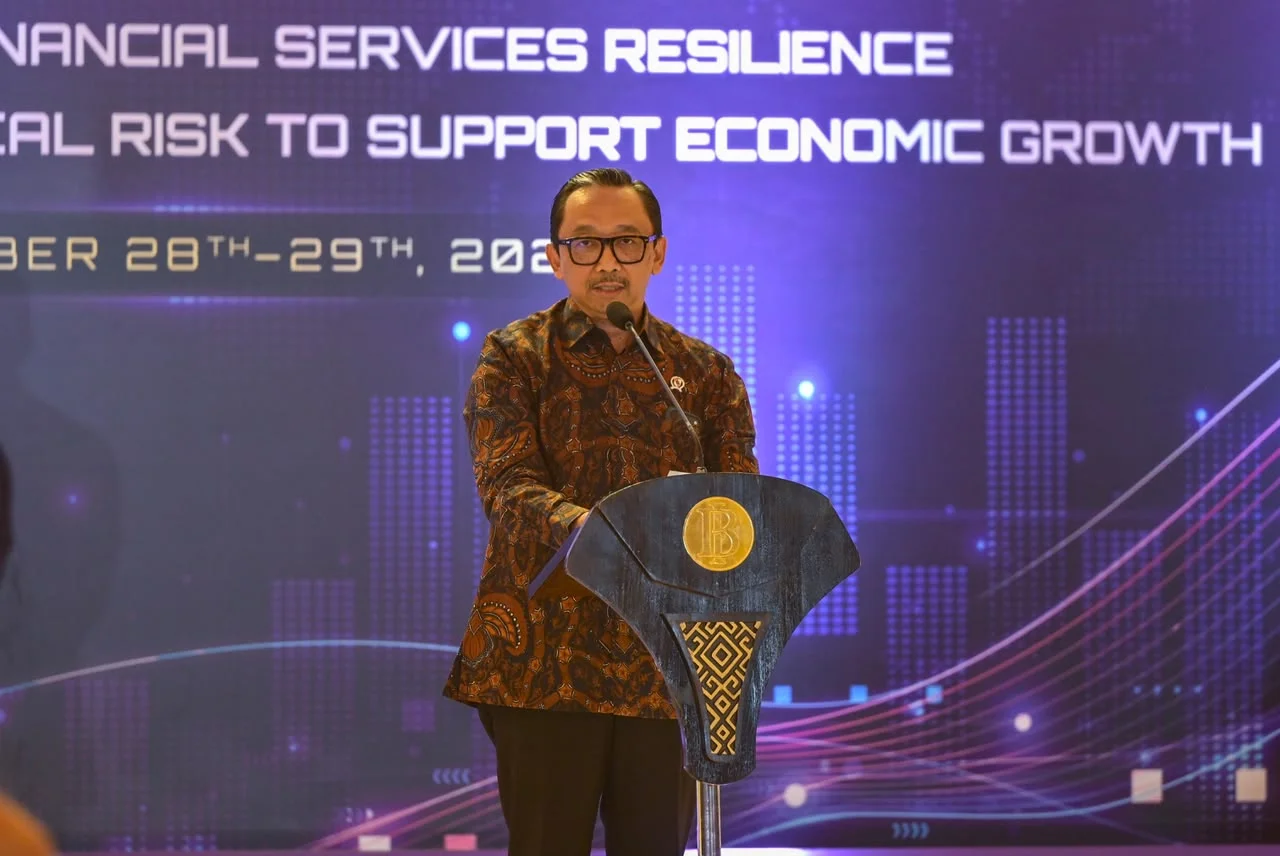
RRI.CO.ID, Jakarta – The government continues to strengthen fiscal and financial sector resilience so that the Indonesian economy is not only capable of weathering various global shocks, but also maintaining growth momentum. This strengthening is increasingly vital amidst escalating geopolitical risks, technological disruptions, financial fragmentation, and the growing complexity of global supply chains.
Vice Minister of Finance Juda Agung conveyed this while delivering a keynote speech at the Central Banking Services Festival (CB Fest) 2026 in Jakarta on Monday, 28 September 2026. Under the theme “Strengthening Financial Services Resilience Amid Escalating Geopolitical Risk to Support Economic Growth,” the forum brought together central banks, policymakers, financial institutions, academics, and strategic partners to discuss reinforcing financial sector resilience to support economic growth.
Juda explained that current global risks are increasingly interconnected. Geopolitical tensions, for example, can disrupt oil supplies and drive up energy prices, which subsequently impact inflation, global interest rates, capital flows, exchange rates, financing costs, and economic growth.
Therefore, the challenge is no longer merely maintaining stability during uncertainty, but rather building institutional capacity to absorb shocks, adapt, and continue performing economic functions. In the face of these conditions, fiscal policy needs to continue functioning as a shock absorber while safeguarding growth momentum.
“Fiscal strategy must remain adaptive, prudent, and growth-oriented, protecting the current economy while safeguarding future fiscal sustainability,” Juda stated.
Meanwhile, financial sector resilience serves as a vital foundation for economic growth. The financial system must remain stable and efficient, while also deepening and becoming more inclusive to provide diverse sources of financing and channel capital toward productive activities.
Digital transformation and artificial intelligence must also be accompanied by robust governance and risk management. According to the Vice Minister of Finance, efficiency does not always equate to resilience, meaning the financial system still requires buffers, alternative channels, and contingency arrangements to ensure service continuity and maintain confidence in the financial system.
News Recomendation
Loading latest news.....