



EV Ecosystem Must Reach 80% Domestic Content: House
- 27 Sep 2026 10:10 WIB
- Voice of Indonesia
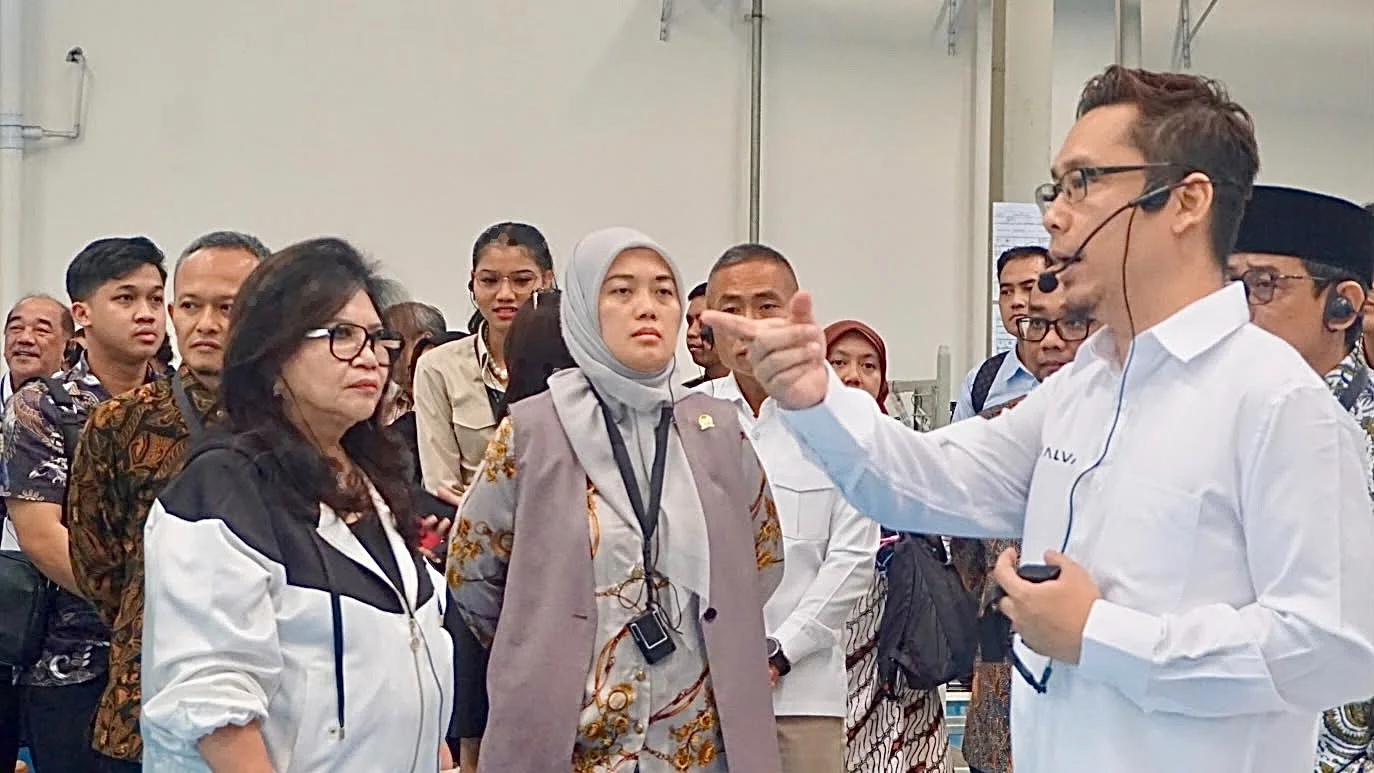
RRI.CO.ID, Cikarang – Member of the Indonesian House of Representatives (DPR) Evita Nursanty has warned that the country’s vehicle electrification program should not simply become a market trend without clear direction. She said the transition toward an electric vehicle (EV) ecosystem must quickly reduce dependence on imported key components while lowering fuel-related costs for lower-income communities.
Evita, of the largest parliamentary party Indonesian Democratic Party of Struggle (PDI-P), highlighted the vulnerability of Indonesia’s local automotive production structure due to the lack of domestic supplies of basic materials. The lawmaker said accelerating the operation of Indonesia Battery Corporation (IBC) factories was essential to increasing the level of domestic components.
"The problem they are actually facing now is raw materials: batteries and plastics. We still import those. So we are pushing for IBC, the battery producer, to be realized and start production as soon as possible, so that the TKDN (level of domestic components) target can increase from 60 percent to 80 percent," Evita said during a DPR visit to the facility of Ilectra Motor Group (ALVA) at Delta Silicon Industrial Park in Bekasi Regency, West Java, on Wednesday, September 23, 2026.
In addition to strengthening the upstream industry, Evita stressed that the successful adoption of green energy would depend heavily on ensuring savings for lower-income communities. The reduction in operating costs, she added, must also be accompanied by reliable after-sales service infrastructure accessible across Indonesia.
“If we focus simply on the benefits for the people, especially lower-income communities, gasoline used to be very expensive. With electric motorcycles, there are efficiency gains," Evita said, as quoted from dpr.go.id on Thursday, September 24, 2026.
"I read ALVA’s presentation, and they already have after-sales service at 130 locations. At present, they are still concentrated in Java, Makassar, and Bali. Of course, we hope that in the near future they will cover the national scale," she continued.
Responding to the calls for greater upstream independence and readiness of downstream services, CEO of ALVA Purbaja Pantja acknowledged that the electrification sector still requires strong domestic investment. The company, he said, is continuing to reduce inefficiencies by adopting advanced technology-based quality management standards to maintain product durability.
"For components related to electrical systems or batteries, the national industry still needs strengthening in terms of technology, economies of scale, and investment. Our facilities have also been developed using a smart manufacturing approach based on Industry 4.0 and have obtained ISO 9001 certification for quality management," Purbaja said
"What we want to ensure here is that the processes are running properly,” he added.
News Recomendation
Loading latest news.....