



Indonesia Has Economic Opportunities Behind Decarbonization
- 27 Agt 2026 20:10 WIB
- Voice of Indonesia
Key Points
- Rather than acting as a barrier to growth, moving toward a low-carbon economy opens up new business opportunities in efficiency, green financing, and cleaner technology.
- The government is supporting green transition efforts with fiscal incentives, and companies, especially in shipping, need to turn these policies into sustainable strategies and stronger market competitiveness.
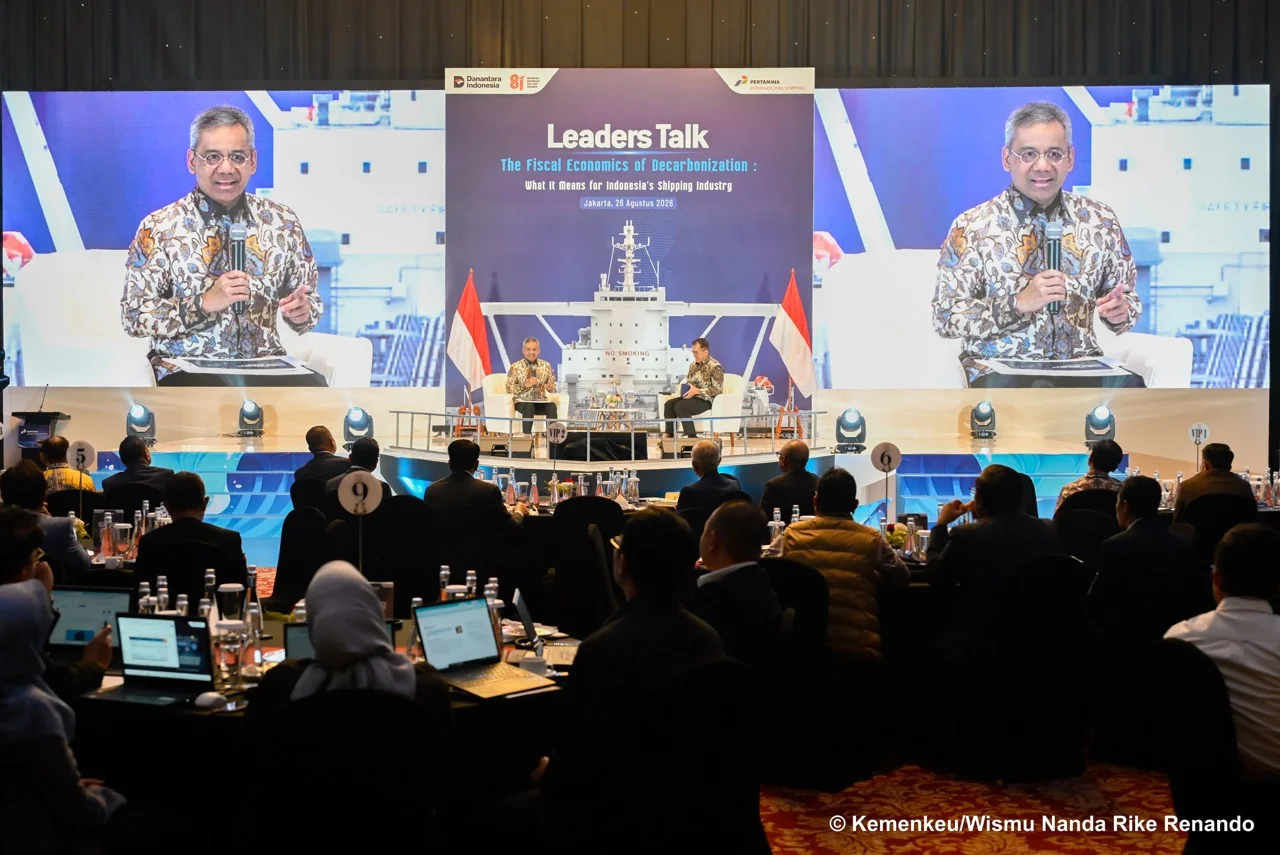
RRI.CO.ID, Jakarta – Vice Minister of Finance Suahasil Nazara emphasized that decarbonization is not merely a challenge for industry, but also opens up new economic opportunities through efficiency, financing, investment, and improved competitiveness. Nazara shared this statement during the Pertamina International Shipping Leaders Talk titled “The Fiscal Economics of Decarbonization: What It Means for Indonesia's Shipping Industry” in Jakarta, Wednesday, August 26, 2026.
According to Nazara, businesses need to understand the policy direction toward a low-carbon economy as part of the changing global economic landscape. He stated that decarbonization is not an obstacle to economic activity, but a potential opportunity.
“The decarbonization that we have declared, understand, and believe we must carry out, because we want to leave behind a better world, is not a barrier to growth or economic activity. Instead, it actually represents potential for new economic activities,” he explained.
Furthermore, Nazara mentioned that the government continues to build this ecosystem through various fiscal policy instruments, including carbon pricing, tax incentives for low-emission technology, de-risking schemes, as well as sustainable financing such as Green Sukuk, Blue Bonds, and SDG Bonds. On the other hand, he noted that the development of the domestic carbon market still needs strengthening. Indonesia has had a Carbon Exchange since 2023, but it requires continuous encouragement to achieve better liquidity, integrity, and price discovery mechanisms.
“Carbon produced in Indonesia should ideally also be sold in Indonesia, and the demand in Indonesia is by no means lacking,” the Vice Minister of Finance expressed.
Specifically regarding the shipping industry, he encouraged companies to translate decarbonization policies into business strategies and competitive advantages. Companies need to recognize opportunities from low-emission technology investments, operational efficiency, green financing, and the growing customer demand for low-carbon transportation services.
“The agenda at the corporate level is how to translate policy signals into competitive advantages,” he said.
News Recomendation
Loading latest news.....