



Govt Pushes Agroforestry Adoption to Boost Cocoa Productivity
- 27 Agt 2026 16:30 WIB
- Voice of Indonesia
Key Points
- Indonesian government promotes agroforestry to sustain cocoa productivity and farmer income.
- Agroforestry provides farmers additional products and income sources.
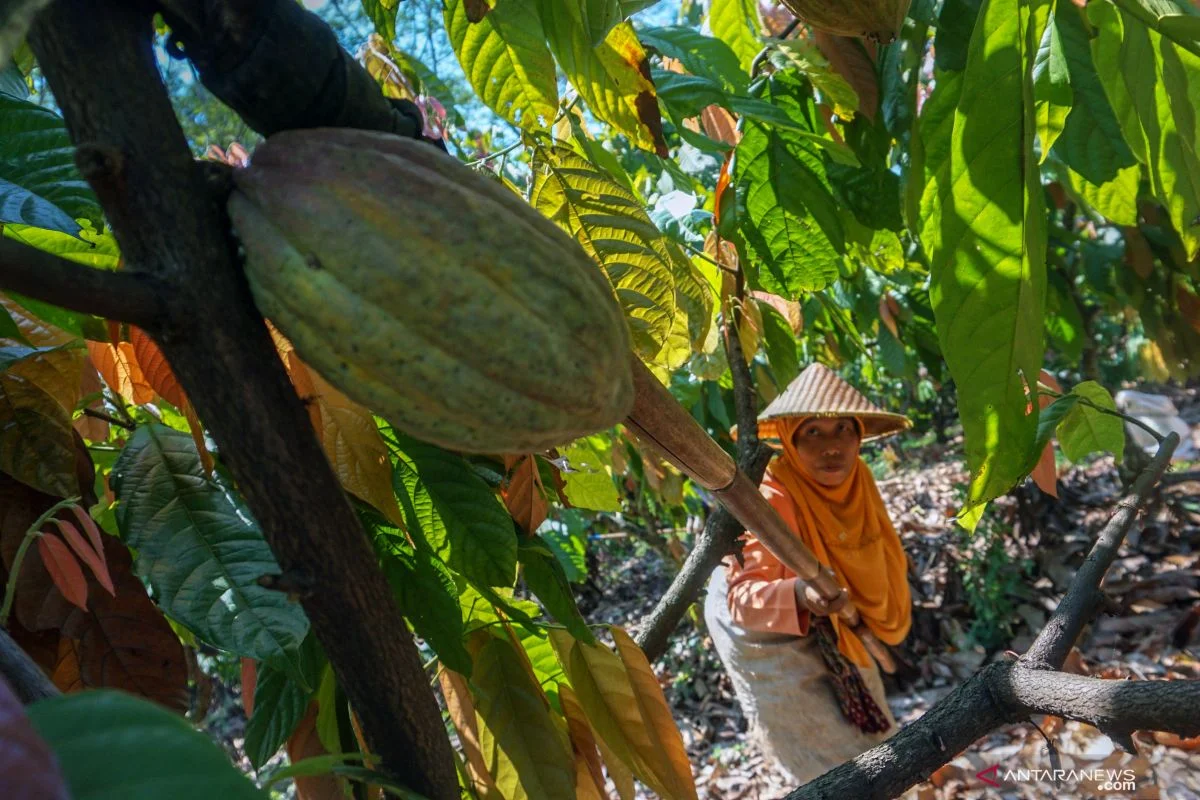
RRI.CO.ID, Jakarta - Indonesia’s cocoa production resilience is increasingly challenged by climate change, prompting the government to promote agroforestry as a strategy to maintain productivity and strengthen farmers’ incomes.
Assistant Deputy for Sustainable Forest Management at the Coordinating Ministry for Food Affairs, Sugeng Harmono, said climate change, biodiversity loss, and environmental degradation are placing growing pressure on the cocoa sector. He said these conditions threaten productivity, supply security, and farmers’ livelihoods.
He said agroforestry offers a significant approach to addressing these challenges. By integrating trees and other plants within cocoa landscapes, agroforestry helps create farm conditions that are more adaptive to climate change while strengthening soil and water functions.
The approach also gives farmers opportunities to produce additional products and income sources, reducing vulnerability for those who rely solely on cocoa. At the landscape scale, agroforestry contributes to carbon sequestration, soil protection, biodiversity conservation, and ecosystem stability.
“Agroforestry should not be viewed merely as an environmental practice or simply a way to add trees to cocoa farms; it must be part of a strategy that links productivity, farmer resilience, and landscape sustainability,” Sugeng said.
He added that shifts in temperature, rainfall patterns, and the risk of extreme weather mean cocoa‑related challenges can no longer be addressed solely at the farm level.
Cocoa resilience, he explained, must reflect production systems and landscapes' ability to remain productive, ecologically functional, and economically viable. The government therefore emphasizes four aspects: productivity, landscape resilience, the viability of farmers’ businesses, and strengthening the value chain.
Increasing productivity requires knowledge, innovation, investment, technology, and support services. Meanwhile, sustaining farmers’ businesses requires economic incentives, financing, services, and market access.
“Productivity without viable farmer businesses will not be sustainable. Market access without a resilient landscape will remain vulnerable, and environmental sustainability without economic incentives will be difficult to scale up,” he said.
Under the 2025–2029 National Medium‑Term Development Plan (RPJMN), the government aims to increase cocoa production to around 635,000 metric tons by 2029. Achieving this target requires strengthening production and the value chain while developing resilient, sustainable cocoa landscapes.
Data from the ministry show that about 99 percent of Indonesia’s cocoa plantations are managed by smallholder farmers. Current productivity ranges from 0.7 to 0.9 metric tons per hectare, below the potential of high‑yielding varieties, which can reach 1.5 to 2 metric tons per hectare.
Agroforestry is also part of the Ministry of Agriculture’s cocoa farm rehabilitation program scheduled for 2026 in South Manokwari Regency, West Papua. The program will prepare 2,000 hectares of land, consisting of 1,200 hectares for cocoa and 800 hectares for conservation areas.
Sugeng added that regional cooperation is essential, as cocoa‑producing countries face similar challenges. The exchange of knowledge, investment, innovation, and market access is expected to produce solutions tailored to regional conditions and increase benefits for farmers. ***
News Recomendation
Loading latest news.....