



BI Expected to Hold Interest Rates at Upcoming RDG: Economist
- 19 Agt 2026 17:54 WIB
- Voice of Indonesia
Key Points
- Economists expect Bank Indonesia to hold the BI‑Rate at 5.75 percent at the upcoming RDG.
- Stable inflation, weakening US indicators, the Fed’s stance, and BI’s smooth leadership transition are seen as key reasons to maintain the benchmark rate.
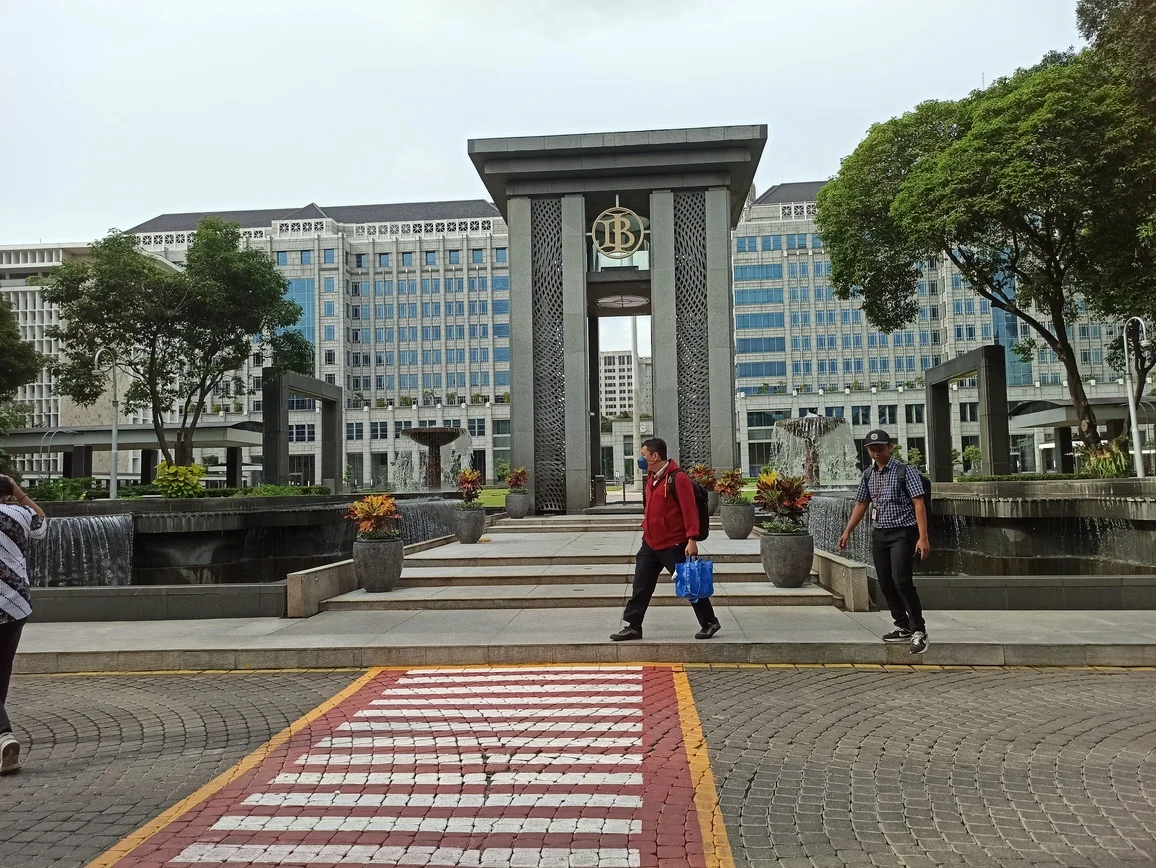
RRI.CO.ID, Jakarta - Economists expect Bank Indonesia (BI) to maintain its benchmark interest rate at 5.75 percent at the August 2026 Board of Governors’ Meeting (RDG). The current level is seen as appropriate for preserving economic stability and maintaining policy flexibility.
Permata Bank’s Head of Macroeconomic & Financial Market Research, Faisal Rachman, said the return of inflation below 3 percent and improving capital inflows are the main supporting factors.
“In the future, we still expect BI to maintain the BI‑Rate for the remainder of 2026, although we cannot rule out the possibility of a hike if global conditions unexpectedly deteriorate significantly,” Faisal said in a statement in Jakarta on Wednesday, August 19, as quoted by Antara.
Indonesia’s inflation in July eased to 2.88 percent year‑on‑year (yoy), down from 3.34 percent in June, giving BI room to avoid raising rates immediately.
Faisal added that expectations of a faster interest rate hike by the US Federal Reserve (the Fed) are fading, supported by weakening indicators across US inflation, the labor market, and the real sector. However, geopolitical risks in the Middle East and a global economic slowdown continue to pose challenges.
Meanwhile, the Institute for Economic and Social Research at the University of Indonesia (LPEM FEB UI) warned that inflationary pressures could rise again in the coming months. The El Niño phenomenon and the peak of the dry season in August–September 2026 may affect commodity prices.
External pressures are expected to ease temporarily as geopolitical tensions in the Middle East remain relatively contained. The Fed also kept its policy rate at 3.50–3.75 percent during the Federal Open Market Committee (FOMC) meeting in late July.
Domestically, BI’s leadership transition following Perry Warjiyo’s resignation did not trigger prolonged market volatility. Policy continuity under Acting Governor Destry Damayanti helped maintain investor confidence.
“The combination of the Fed holding its policy rate and BI’s relatively smooth leadership transition has spurred capital inflows into Indonesia,” said LPEM FEB UI Financial and Macroeconomic Economist Teuku Riefky.
| Baca juga: Rupiah and IHSG Weaken, Gold Prices Ease |
LPEM FEB UI recorded USD 0.28 billion in capital inflows from late July to August 13, consisting of USD 0.24 billion in government securities and USD 0.04 billion in the capital market.
These inflows have pushed down government securities yields. Over the past two weeks, the 10‑year yield fell by 11 basis points (bps) to 7.21 percent, while the 1‑year yield dropped by 25 bps to 6.65 percent.
“The larger decline in short‑term government bond yields compared to long‑term ones indicates a widening yield curve, signaling growing investor confidence in Indonesia’s short‑term economic outlook,” Riefky said.
During the same period, the rupiah appreciated by 1.11 percent from IDR 18,078 to IDR 17,876 per USD. However, the currency’s performance throughout 2026 still lags behind several neighboring countries and other emerging markets.
LPEM FEB UI assesses that current conditions do not yet justify another BI‑Rate hike to support the rupiah, especially since BI has already raised the benchmark rate by 100 bps in recent months.
“Therefore, BI should maintain its benchmark interest rate at 5.75 percent at the upcoming RDG to preserve room for future rate hikes,” Riefky said, adding that maintaining the BI‑Rate would also prevent additional pressure on the real sector, as higher rates increase financing costs for businesses. ***
News Recomendation
Loading latest news.....