



Non-Oil Trade Surplus Offsets June Trade Deficit Pressure
- 07 Agt 2026 05:23 WIB
- Voice of Indonesia
Key Points
- The Ministry of Trade reported a USD 3.04 billion non-oil and gas trade surplus in June 2026.
- Indonesia booked a cumulative trade surplus of USD 3.58 billion in the first half of 2026.
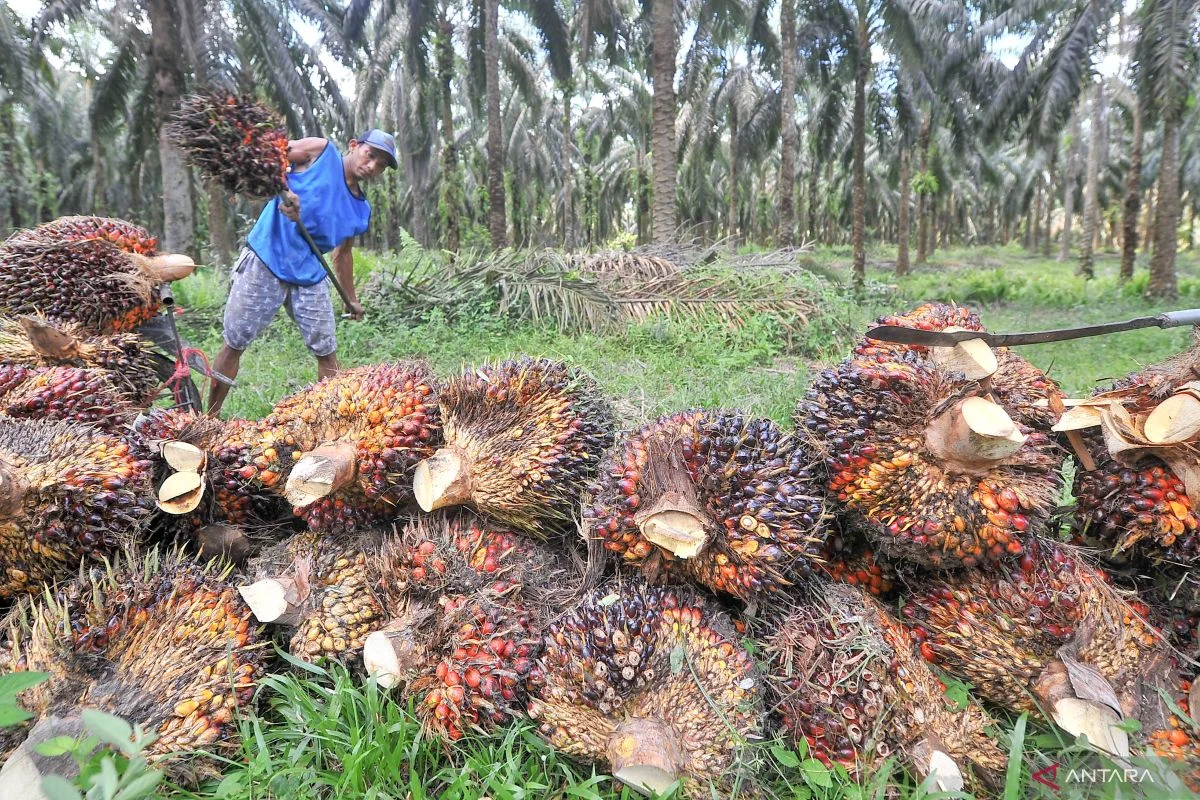
RRI.CO.ID, Jakarta – Indonesia’s non-oil and gas trade surplus of USD 3.04 billion in June 2026 remained the main pillar supporting the national trade balance.
The surplus helped offset the oil and gas trade deficit of USD 3.49 billion. Although Indonesia recorded a USD 450 million trade deficit in June, stronger non-oil and gas exports helped narrow the gap.
Trade Minister Budi Santoso said the resilience of non-oil and gas exports continues to serve as an important foundation for Indonesia’s trade performance amid global economic uncertainty. This was reflected in Indonesia’s export growth in June 2026, which rose 9.72 percent from the previous month.
“The strengthening of non-oil and gas exports demonstrates that the competitiveness of Indonesian products remains intact. The government will continue expanding market access, enhancing trade promotion, and optimizing trade agreements to further improve export performance,” Minister Budi said.
Cumulatively, Indonesia booked a trade surplus of USD 3.58 billion in the first half of 2026. The surplus was supported by non-oil and gas trade worth USD 19.35 billion, while the oil and gas sector recorded a deficit of USD 15.77 billion.
The United States posted the largest non-oil and gas trade surplus with Indonesia in the first half of 2026, amounting to USD 10.44 billion, followed by India at USD 6.73 billion and the Philippines at USD 4.02 billion.
The main commodities contributing to the surplus were animal and vegetable fats and oils (HS 15) at USD 17.55 billion, mineral fuels (HS 27) at USD 13.61 billion, and iron and steel (HS 72) at USD 8.61 billion.
Indonesia’s export value in June 2026 reached USD 25.46 billion, up 9.72 percent month-on-month (MoM) and 8.84 percent year-on-year (YoY). The increase was driven mainly by non-oil and gas exports, which reached USD 24.39 billion -- up 8.68 percent MoM and 9.46 percent YoY.
This June performance strengthened overall export growth in the first half of 2026. Cumulatively, Indonesia’s exports reached USD 140.81 billion, up 4.13 percent compared with the first half of 2025. Non-oil and gas exports totaled USD 134.58 billion, growing 4.90 percent over the same period.
The manufacturing sector reinforced its position as the backbone of Indonesia’s exports, contributing 82.02 percent of total export value in the first half of 2026. It was followed by the mining sector at 11.71 percent, oil and gas at 4.43 percent, and agriculture at 1.84 percent.
Manufacturing was the only sector to record positive export growth, rising 7.37 percent from USD 107.57 billion in the first half of 2025 to USD 115.50 billion in the same period of 2026. The other sectors experienced declines: agriculture contracted 22.55 percent, oil and gas fell 10.11 percent, and mining dropped 5.12 percent.
Among non-oil and gas commodities, aluminum (HS 76) recorded the highest export growth in the first half of 2026, surging 73.93 percent. It was followed by nickel (HS 75), which grew 62.27 percent; organic chemicals (HS 29), up 31.93 percent; and copper (HS 74), up 29.03 percent.
China remained the largest destination for non-oil and gas exports, with a value of USD 34.56 billion, accounting for 25.68 percent of the total. The United States followed at USD 15.82 billion (11.76 percent), and India at USD 9.25 billion (6.87 percent).
Together, these three countries contributed 44.31 percent of Indonesia’s non-oil and gas exports. Non-oil and gas exports to Hong Kong rose sharply by 39.12 percent, followed by Cambodia at 31.42 percent and Thailand at 19.35 percent. Several regions -- including Central Asia, East Asia, West Africa, Eastern Europe, and Southern Africa -- also recorded strong export performance.
Minister Budi said the June and first-half export achievements show that Indonesian products continue to maintain competitiveness in international markets.
“The export growth in June is a positive signal as we enter the second half of 2026. We will continue strengthening penetration into major markets while opening opportunities in non-traditional markets to ensure sustainable export growth,” he said.
Indonesia’s imports in June 2026 reached USD 25.91 billion, up 4.41 percent MoM and 34.27 percent YoY. The monthly increase was driven by a 5.18 percent rise in non-oil and gas imports and a 0.96 percent increase in oil and gas imports.
Cumulatively, total imports in the first half of 2026 reached USD 137.24 billion, up 18.69 percent from the same period last year. The increase was supported by a sharp rise in oil and gas imports, which grew 38.71 percent to USD 22.00 billion, and non-oil and gas imports, which rose 15.50 percent to USD 115.23 billion.
Raw materials and intermediate goods continued to dominate Indonesia’s import structure, accounting for 71.37 percent of total imports in the first half of 2026. Capital goods contributed 19.94 percent, while consumer goods accounted for 8.69 percent.
“This composition shows that Indonesia’s imports remain driven by the need to support production and investment activities,” Minister Budi said.
All import categories recorded growth compared with the first half of 2025. Raw material imports rose 18.38 percent to USD 97.95 billion, capital goods increased 20.50 percent to USD 27.36 billion, and consumer goods grew 17.13 percent to USD 11.93 billion.
Minister Budi said the rise in imports should be viewed proportionally, as it reflects increased demand for raw materials, capital goods, and overall economic activity. “Import growth indicates rising production and trade activity,” he said.
“The government will continue maintaining a balance between meeting domestic industrial needs and strengthening exports to ensure a healthy and sustainable trade balance,” he added.
Among non-oil and gas commodities, the highest import growth in the first half of 2026 occurred in aircraft and parts (HS 88), which surged 655.65 percent; salt, sulfur, stone, and cement (HS 25), up 87.69 percent; and ores, slag, and ash (HS 26), up 57.07 percent.
China remained the largest source of non-oil and gas imports, with a value of USD 48.82 billion, accounting for 42.37 percent of the total. Japan followed at USD 6.41 billion (5.56 percent), and Australia at USD 5.71 billion (4.96 percent).
Countries with the highest import growth included Mexico, which rose 227.73 percent; France, up 177.74 percent; and Spain, up 81.67 percent. ***
News Recomendation
Loading latest news.....