



Indonesia’s Ministry and Food Control Agency Accelerate Food Permits
- 28 Jul 2026 14:08 WIB
- Voice of Indonesia
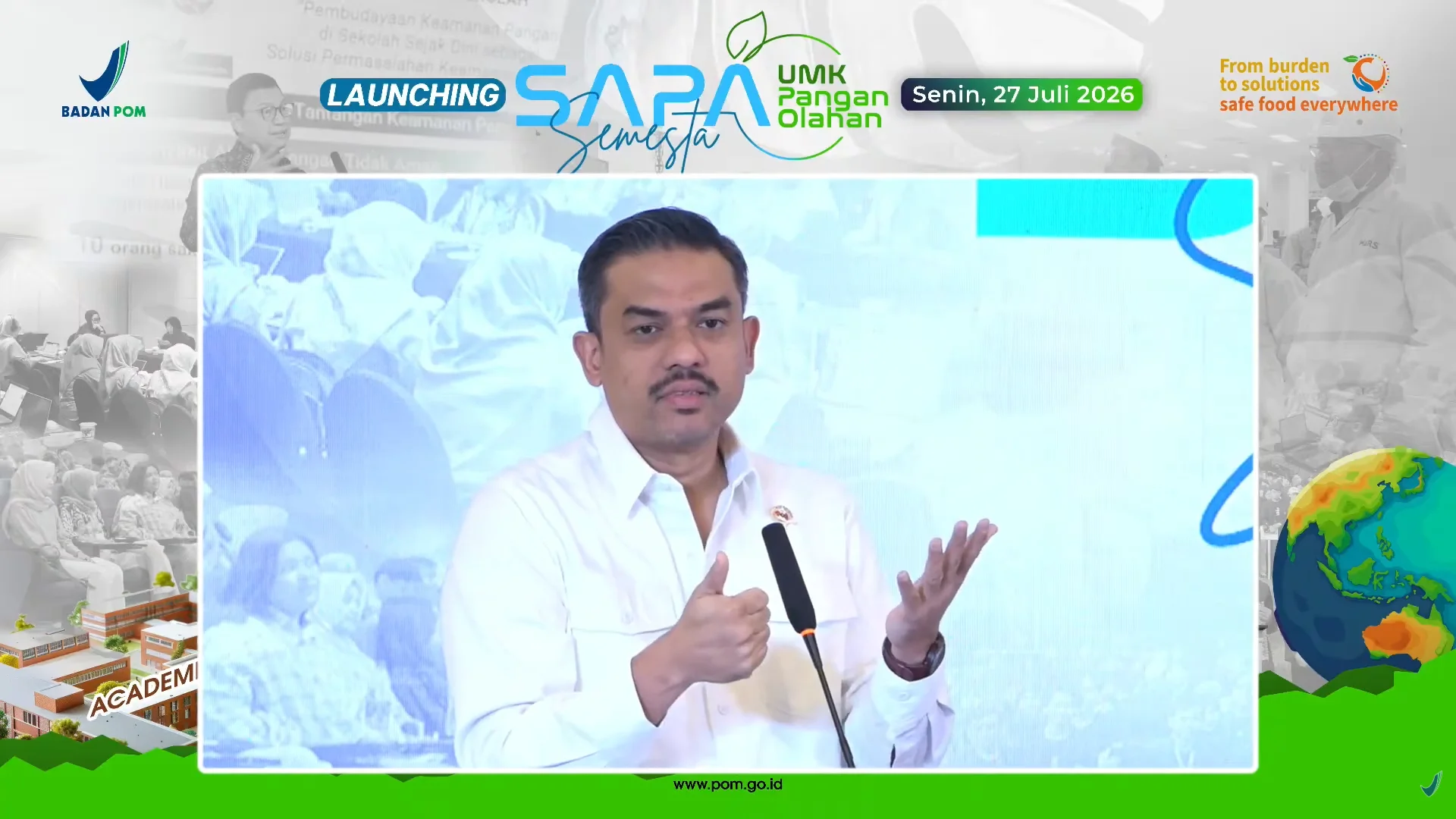
RRI.CO.ID, Jakarta - Indonesia’s Ministry of Micro, Small, and Medium Enterprises and National Agency of Drug and Food Control (BPOM) are accelerating processed food permits for micro enterprises. The statement was delivered during the SAPA SEMESTA UMK Pangan Olahan launch in Jakarta on Monday, July 27, 2026.
The program was launched by BPOM and the Ministry of Micro, Small, and Medium Enterprises at the BPOM RI Complex. The initiative uses a gradual licensing scheme to help food micro enterprises meet safety standards.
The step is expected to expand licensing services and encourage more micro enterprises to grow. Minister of Micro, Small, and Medium Enterprises, Maman Abdurrahman, said licensing acceleration requires simpler mechanisms.
| Baca juga: MRT Jakarta Builds More Than Just Subways |
He underscored that easier access must still follow applicable rules and food safety standards. He said the government needs a system that supports enterprises based on their business capacity.
"We seek a pattern without putting aside the rules or mechanisms of BPOM’s interests. We can also build a mechanism or system that can facilitate micro, small, and medium enterprises, because we know micro enterprises cannot be regulated the same as small enterprises. Small enterprises also cannot be regulated the same as medium enterprises. Medium enterprises also cannot be treated the same as large enterprises," Maman said.
Meanwhile, Head of the National Agency of Drug and Food Control (BPOM), Taruna Ikrar, said BPOM is committed to expanding assistance services. He said BPOM is preparing adaptive licensing regulations for micro enterprises.
"We will issue a new regulation so that micro enterprises can move up levels. How can they move up levels? For micro enterprises, their capital is below one billion. Small enterprises already have two billion to five billion. Medium enterprises have five billion to ten billion, and above ten billion are already large. With this calculation, if we help improve their kitchens and other aspects, they can obtain a domestic food permit or MD," Taruna Ikrar conveyed.
Taruna Ikrar added that the licensing scheme is compared to an education level system. The scheme allows enterprises to improve gradually based on their capacity without immediately meeting the highest requirements.
He also said improving micro enterprise levels could increase national economic contributions. The contribution is projected to rise from around Rp6,000 trillion to Rp10,000 trillion annually, supporting the Indonesian government’s economic growth target.
The integration of SAPA SEMESTA with SAPA UMKM is expected to accelerate assistance and licensing services. The collaboration aims to strengthen processed food micro enterprises and improve their competitiveness.
News Recomendation
Loading latest news.....