



Coconut Downstreaming Key to Economic Transformation: Govt
- 22 Jul 2026 17:37 WIB
- Voice of Indonesia
Key Points
- Indonesia accelerates coconut downstream strategy to boost value added and strengthen its position in international trade.
- National coconut output in 2025 projected at 15 billion, equal to 23 percent of global production.
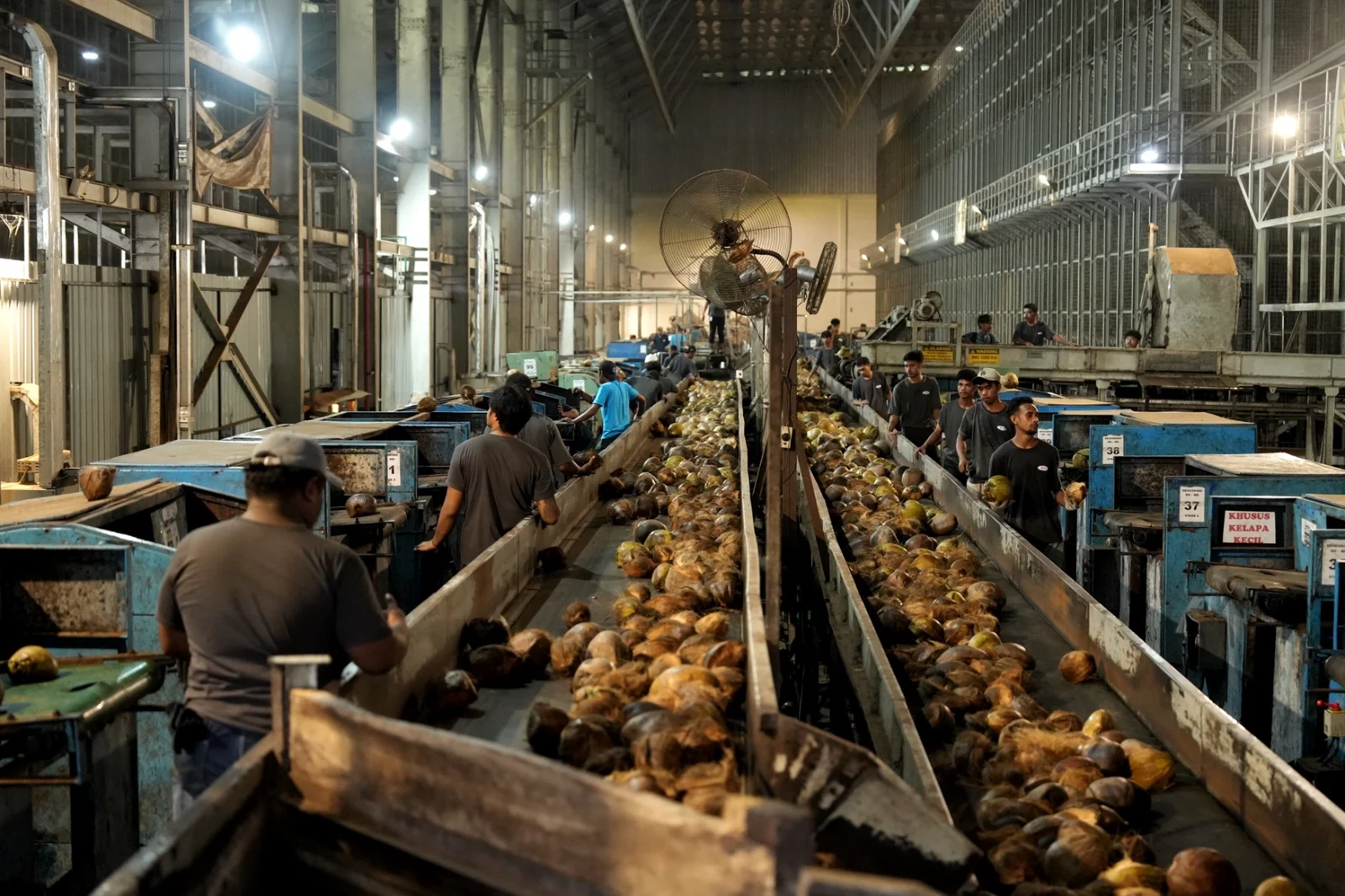
RRI.CO.ID, Jakarta - Indonesia is accelerating its coconut downstream processing strategy to boost value added and strengthen its position in international trade. The government aims to ensure the commodity is no longer exported merely as raw material, but also as high‑value processed products.
National Development Planning Minister and Bappenas head Rachmat Pambudy stressed that developing the coconut downstream industry is part of the country’s economic transformation agenda. The initiative is expected to propel Indonesia into becoming a leading exporter of coconut‑based products in the global market.
“Not only do we aim to achieve a net export surplus, but we also seek to become the leading exporter of coconut‑based products with a downstream industry extending to the final stages, so that we can achieve the highest possible value added,” Minister Rachmat said during the webinar Downstream Processing: Boosting the National Coconut Industry’s Value Added and Competitiveness in Jakarta on Wednesday, July 22, 2026, as quoted by Antara.
He explained that coconut downstream processing has been included in the National Long‑Term Development Plan (RPJPN) 2025–2045. To support its implementation, Bappenas has prepared the 2025–2045 Coconut Downstream Processing Roadmap and designated coconut as a national strategic commodity.
Industrial development will be carried out by creating an ecosystem supported by financing, research, innovation, standardization, and incentives. The government is also strengthening production capacity, human resources, energy supply, and supply chains to make the industry more competitive.
In the medium term, policies will focus on increasing productivity, diversifying products, and optimizing utilization of the coconut industry. These steps are considered crucial as global demand for coconut‑based products continues to rise across the food, beverage, health, cosmetics, textile, and energy sectors.
Data from the Indonesian Coconut Processing Industry Association (HIPKI) projects national coconut production in 2025 to reach 15 billion coconuts, representing around 23 percent of global output.
The export value of the coconut industry is expected to reach USD 2.48 billion. About 60 percent of production will be processed into derivative products such as copra, desiccated coconut, and coconut milk, while 26.7 percent will still be exported in raw form. ***
News Recomendation
Loading latest news.....