



JCI Opens Lower at 6,191 as Investors Await BI Announcement
- 18 Jun 2026 11:59 WIB
- Voice of Indonesia
Key Points
- JCI opened down 56.68 points, or 0.91 percent, at 6,191 on Thursday, June 18, 2026.
- Uncertainty over US interest rates and anticipation of Bank Indonesia’s meeting results weighed on market sentiment.
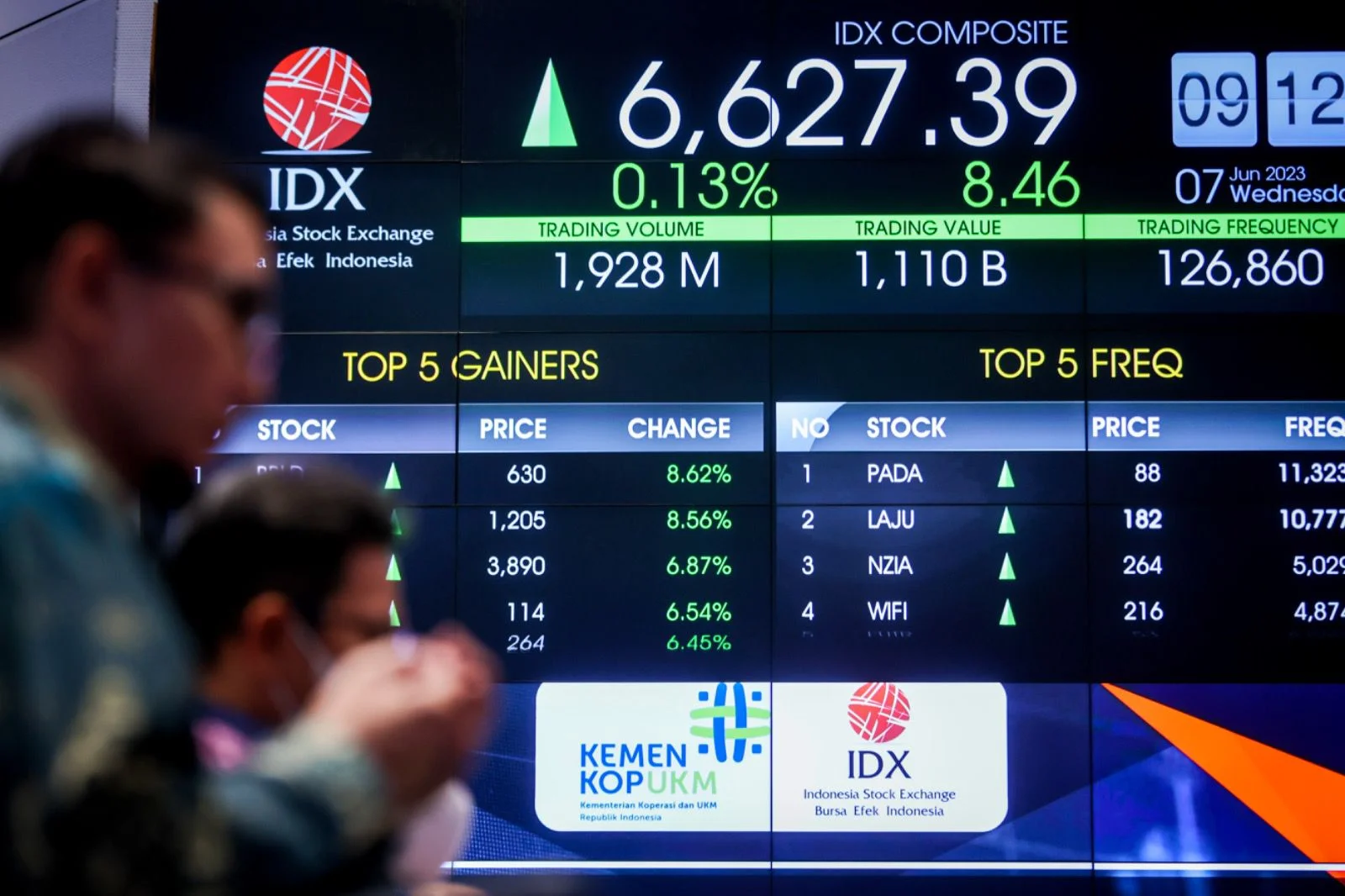
RRI.CO.ID, Jakarta - The Jakarta Composite Index (JCI) fell to 6,191 at the opening of trading on the Indonesia Stock Exchange (IDX) on Thursday, June 18, 2026. The index dropped about 56.68 points, or 0.91 percent, from the previous close of 6,220.
The analyst team at Pilarmas Investindo Sekuritas projects that the JCI could weaken, with support and resistance levels in the 6,170–6,400 range. Market participants are also awaiting the outcome of Bank Indonesia’s (BI) Board of Governors’ meeting, which is expected to influence sentiment.
“We expect BI will raise its benchmark interest rate by 25 basis points (bps) to 5.75 percent. This is a follow-up measure to strengthen rupiah stability and ensure foreign capital continues to flow into the domestic market,” the Pilarmas team stated.
They added that external pressures remain elevated. Uncertainty over US interest rate policy continues to weigh on global markets, alongside the risk of imported inflation that must be contained.
The prospect of persistently high US interest rates remains a challenge for emerging economies, including Indonesia. “Therefore, a competitive yield spread must be maintained to prevent excessive capital outflows from domestic stock and bond markets,” they said.
Domestically, the rate hike is seen as reinforcing BI’s monetary policy credibility in controlling exchange rate volatility. A 25-bps increase could generate positive sentiment for the rupiah and bond market, boosting investor confidence.
| Baca juga: Oil Prices Rise to $108 Per Barrel |
However, the policy may raise funding costs for businesses and slow bank credit growth. Interest-rate-sensitive sectors are likely to face greater pressure as borrowing costs rise and consumer purchasing power weakens, for example, real estate, automotive, and non-essential consumer goods.
For the banking sector, the impact is mixed. Large banks could benefit from higher net interest margins (NIM), while credit growth may slow as debtors become more cautious about expansion. Meanwhile, the commodities sector and export-oriented companies remain relatively resilient.
Although risky, a rate hike is still deemed necessary to maintain rupiah stability and preserve investor confidence in Indonesia’s economic fundamentals.
With macroeconomic stability intact, there will be greater room for monetary easing in the future -- particularly as external pressures, such as global geopolitical conflicts, begin to ease. (Gusti Panji)
News Recomendation
Loading latest news.....