



Indonesia's Rail Freight for Palm Oil Rises Nearly 8 Percent in 2026
- 06 Jun 2026 12:33 WIB
- Voice of Indonesia
Key Points
- Indonesia’s state railway operator transported 268,728 tons of plantation commodities in January-May 2026, up 7.78 percent year-on-year, driven largely by crude palm oil and palm-based products.
- The growth highlights the increasing role of rail freight in supporting Indonesia’s export supply chains, improving logistics efficiency, and strengthening links between production areas, industry hubs, and ports.
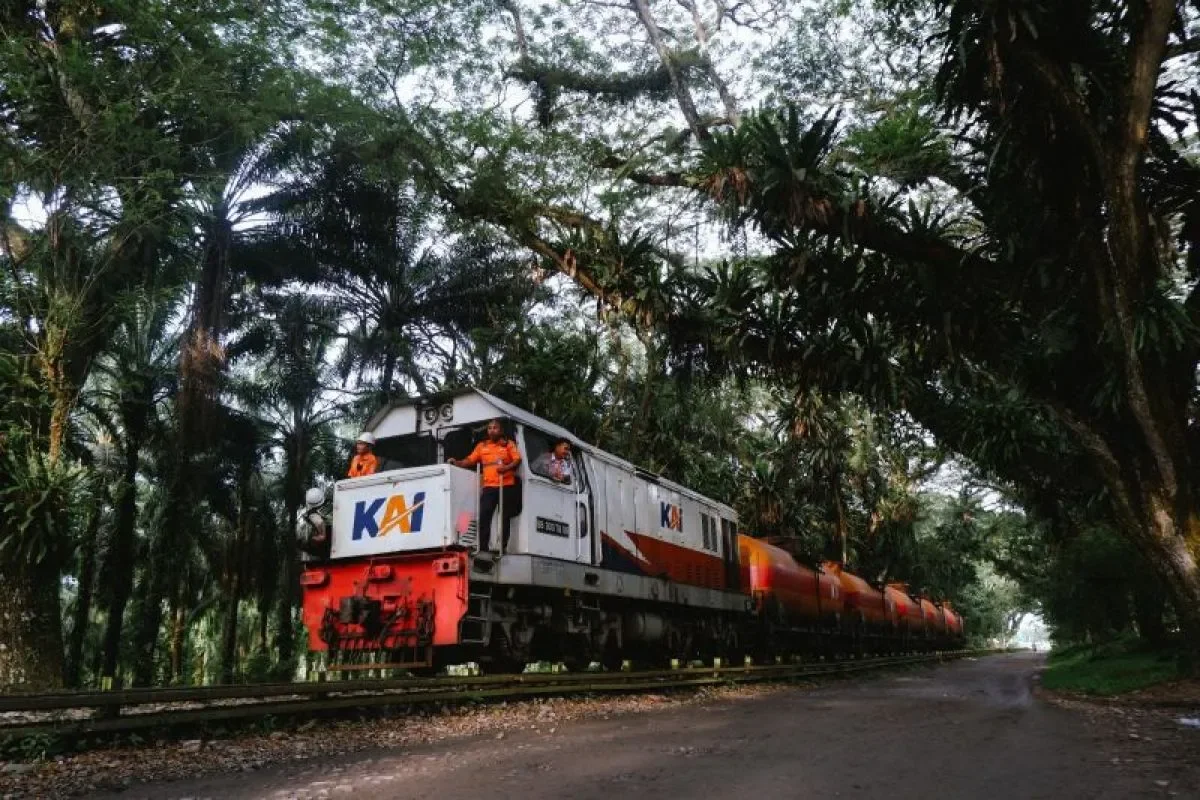
RRI.CO.ID, Jakarta - Indonesia’s railway sector is playing a growing role in the country’s commodity supply chain, with plantation freight volumes increasing strongly in the first five months of 2026, driven primarily by palm oil and its derivatives.
State-owned railway company PT Kereta Api Indonesia (KAI) transported 268,728 tons of plantation commodities between January and May 2026, an increase of 7.78 percent from 249,327 tons recorded during the same period last year.
Most of the freight consisted of crude palm oil (CPO) and processed palm-based products, one of Indonesia’s key export commodities that supports manufacturing, trade, and foreign exchange earnings.
The increase reflects rising demand from businesses for transportation capable of moving large volumes of goods consistently and efficiently. Rail transport has become an important link connecting production centers with processing facilities and export ports.
KAI Vice President of Corporate Communication Anne Purba said the growth demonstrates increasing confidence in rail-based logistics as part of Indonesia’s strategic commodity supply chain.
“Plantation commodities, particularly palm oil, make a significant contribution to economic activity in many regions," Anne said, on Saturday, June 6, 2026, as quoted by Antara.
"Efficient distribution is essential to maintaining industrial raw material supplies and strengthening the competitiveness of Indonesian commodities in global markets,” she added.
The railway network plays a particularly important role across Sumatra, Indonesia’s main palm oil-producing region, where smooth commodity distribution supports local economic activity, employment, and broader supply chain operations.
KAI said rail transport also offers logistical advantages through its large carrying capacity, helping move high-volume commodities more efficiently while reducing pressure from heavy trucks on road networks.
According to Anne, the continued growth of plantation freight is a positive sign for Indonesia’s logistics sector, as stronger connectivity between production areas, industrial zones, and ports helps improve economic efficiency and reinforces the country’s position as one of the world’s leading plantation commodity producers.
KAI said it will continue expanding its logistics services to support productive sectors of the economy and strengthen Indonesia’s export-oriented supply chains. ***
News Recomendation
Loading latest news.....