



Indonesia’s PMI Declines in April as Geopolitical Tensions Hit Industry
- 05 Mei 2026 15:05 WIB
- Voice of Indonesia
Key Points
- The Purchasing Managers’ Index (PMI) in April 2026 fell to 49.1 from 50.1 in March, signaling a slowdown in manufacturing activity.
- Industry Ministry spokesperson Febri Hendri Antoni Arief said global turmoil was the main driver of this pressure, particularly in supply chains, commodity prices, and logistics costs.
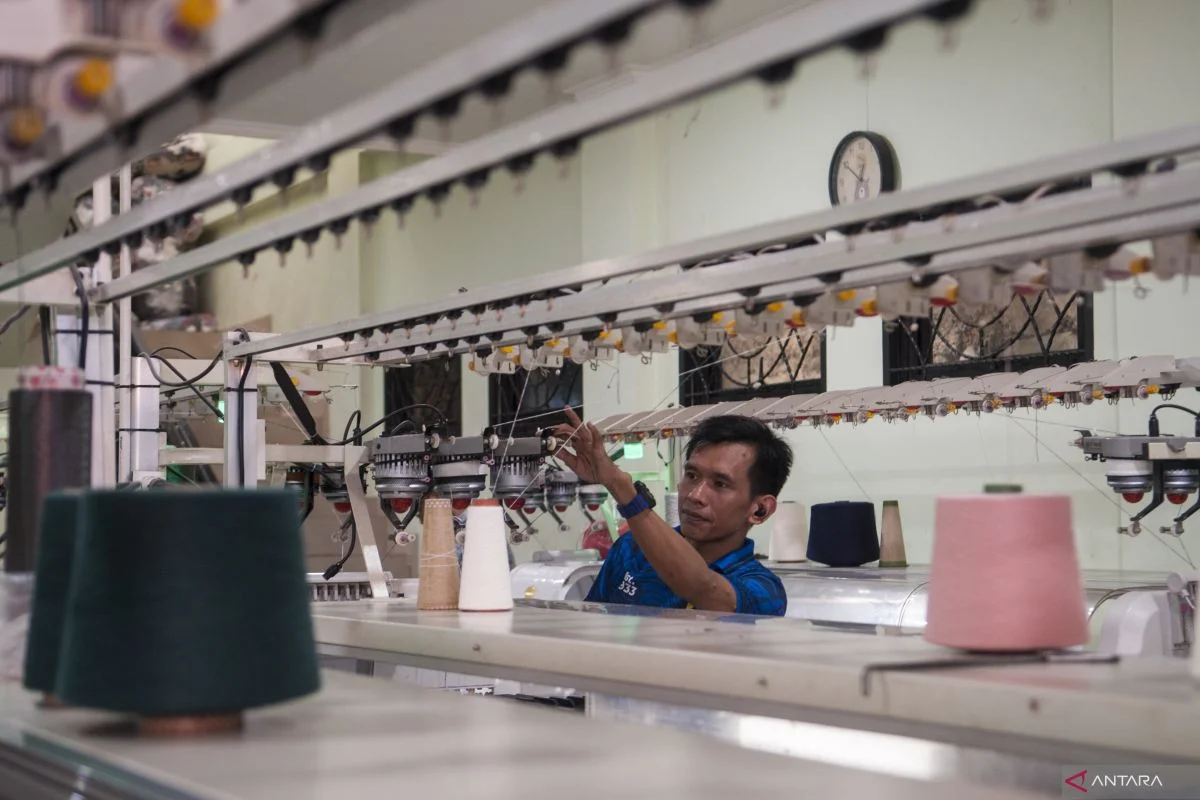
RRI.CO.ID, Jakarta - Global geopolitical pressures are beginning to weigh on Indonesia’s industrial activity, with the latest manufacturing indicators showing a slowdown that has pushed the sector back into contraction.
Indonesia’s manufacturing performance in April 2026 was reflected in the Purchasing Managers’ Index (PMI), which fell to 49.1 from 50.1 in March. The decline signals contraction in production activity, driven by supply chain disruptions and rising operational costs.
Industry Ministry spokesperson Febri Hendri Antoni Arief said global turmoil was the main factor behind the pressure, particularly in supply chains, commodity prices, and logistics costs. “This has a direct impact on national industrial production activities,” he said in Jakarta on Monday, May 5, as quoted on the ministry’s official website.
The government is responding by strengthening supply chain coordination, including bringing together affected industry players such as the plastics sector. It is also promoting the Local Currency Transaction (LCT) scheme to reduce reliance on foreign currencies and mitigate exchange rate risks.
The ministry is accelerating strategic policies such as import substitution, greater use of domestic products, and diversification of raw material sources and export markets. Support measures include industry mentoring, strengthening SMEs, and accelerating digital transformation to improve efficiency.
“Ultimately, all these efforts aim to build resilience and self-reliance in the national industry and maintain production utilization, so that we can achieve the government’s top priority: protecting industrial workers from layoffs,” Febri said.
He added that the government is preparing new incentives to strengthen industrial protection amid global uncertainty. “This is expected to reinforce the industrial supply chain against global pressures and effectively safeguard workers,” he said.
Data from S&P Global shows similar pressures across Southeast Asia, though with varying degrees of contraction. Vietnam and Malaysia recorded mild contractions with PMIs of 50.5 and 51.6, respectively, while the Philippines saw a deeper contraction at 48.3.
With a PMI reading of 49.1, Indonesia falls into the moderate contraction category, in line with weakening trends in some ASEAN nations. “However, this also serves as a crucial signal to strengthen the domestic industrial structure to make it more resilient to external shocks,” Febri explained.
The Industrial Confidence Index (IKI) survey shows industry players remain optimistic about production prospects over the next six months, with confidence at 70.1 percent. However, the index slipped 1.7 percent from the previous month. ***
News Recomendation
Loading latest news.....