



Govt Boosts Handicraft Industry Competitiveness via Product Diversification
- 04 Mei 2026 12:27 WIB
- Voice of Indonesia
Key Points
- National handicraft exports reached USD 806.63 million in 2025, marking a 15.46 percent increase from the previous year and continuing a positive trend into 2026.
- Industry Minister Agus Gumiwang Kartasasmita emphasized that product diversification is the key to strengthening competitiveness in the handicraft sector.
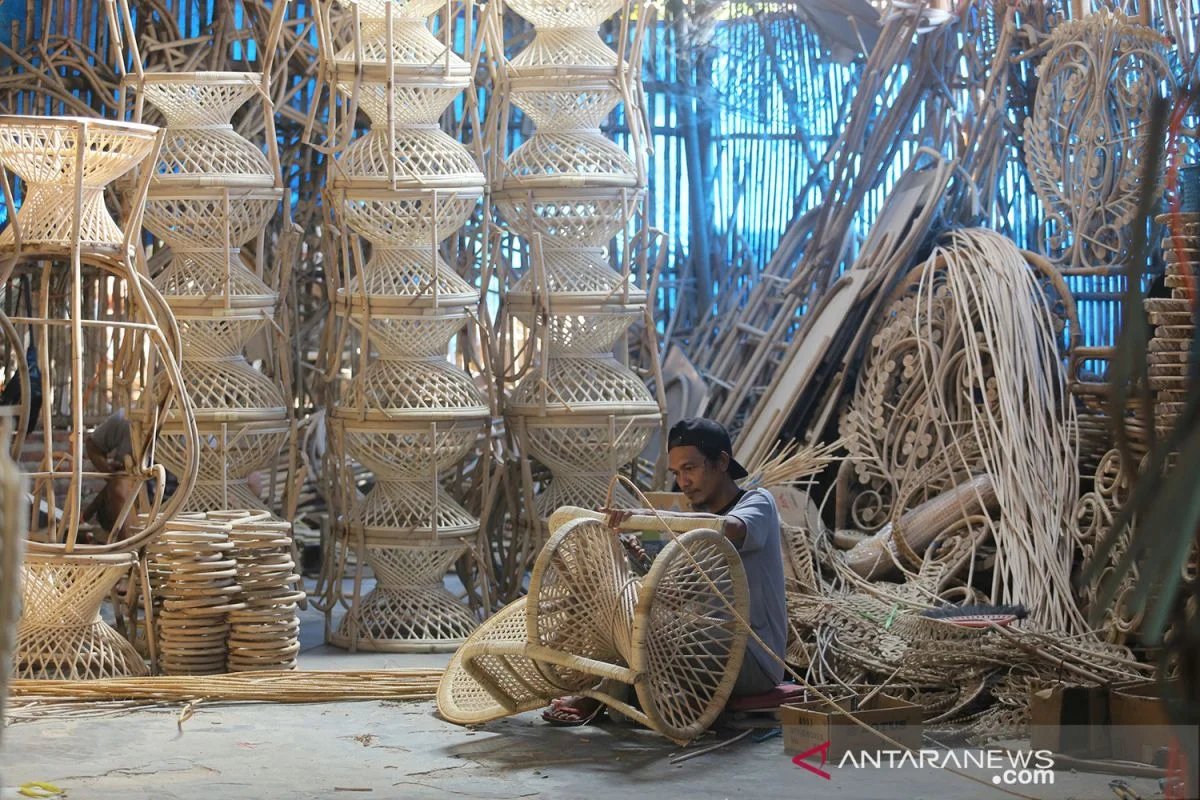
RRI.CO.ID, Jakarta - Industry Minister Agus Gumiwang Kartasasmita said diversification is key to strengthening competitiveness in the handicraft sector, stressing that product innovation is essential to meet evolving market demand.
The national handicraft industry has consistently contributed to foreign exchange earnings and remains strategic, having absorbed a large workforce.
“Consumers and buyers increasingly favor handicraft products that are specific and unique, yet functional. Product diversification is therefore crucial to make Indonesian handicrafts more competitive,” Minister Agus said in Jakarta on Sunday, May 3, 2026.
He noted that market dynamics require industry players to adapt and innovate. Diversification, he explained, allows local products to reach broader market segments.
“Product diversification means expanding the range of products horizontally while using nearly the same raw materials and production processes. This strategy broadens market segments and target audiences without building new production lines from scratch,” he said.
The Ministry’s Data and Information Center reported national craft exports reached USD 806.63 million in 2025, up 15.46 percent from the previous year. The positive trend continued in January 2026, with shipments valued at USD 52.38 million.
Director General of the Small, Medium, and Miscellaneous Industries (IKMA), Reni Yanita, said the industry’s potential remains significant. “We need to encourage SMEs to keep innovating so they can compete globally,” she said.
IKMA is providing technical assistance for creative industry players in Cirebon Regency from April 14–17, 2026, as part of the National Handicraft Council’s (Dekranas) anniversary celebrations. Cirebon was chosen for its diverse, high‑quality export crafts, though local businesses still need guidance to confidently adopt diversification strategies.
Reni added that artificial intelligence can help artisans analyze global market trends, while digital technology will ease the development of new creative ideas. “SMEs must also strengthen marketing strategies through digital platforms so their products can compete domestically and reach international markets,” she said.
Director of SME Chemicals, Textiles, and Crafts, Budi Setiawan, urged local administrations to improve facilities, in line with Cirebon’s Industrial Development Plan (RPIK) 2025–2045. The regulation designates rattan and woodcraft industries as pillars of regional economic strength.
A six‑month intensive training program has helped artisans improve financial management. “One leather craft SME, supported by the Akademia Creative Cirebon (ACC) program, has successfully marketed its products to Russia. This proves that sustained mentoring can open export market access for local SMEs,” Budi said. (Gusti Panji/Lasti Martina)
News Recomendation
Loading latest news.....