



Indonesia, Germany Boost Strategic Trade Partnership
- 01 Mei 2026 14:06 WIB
- Voice of Indonesia
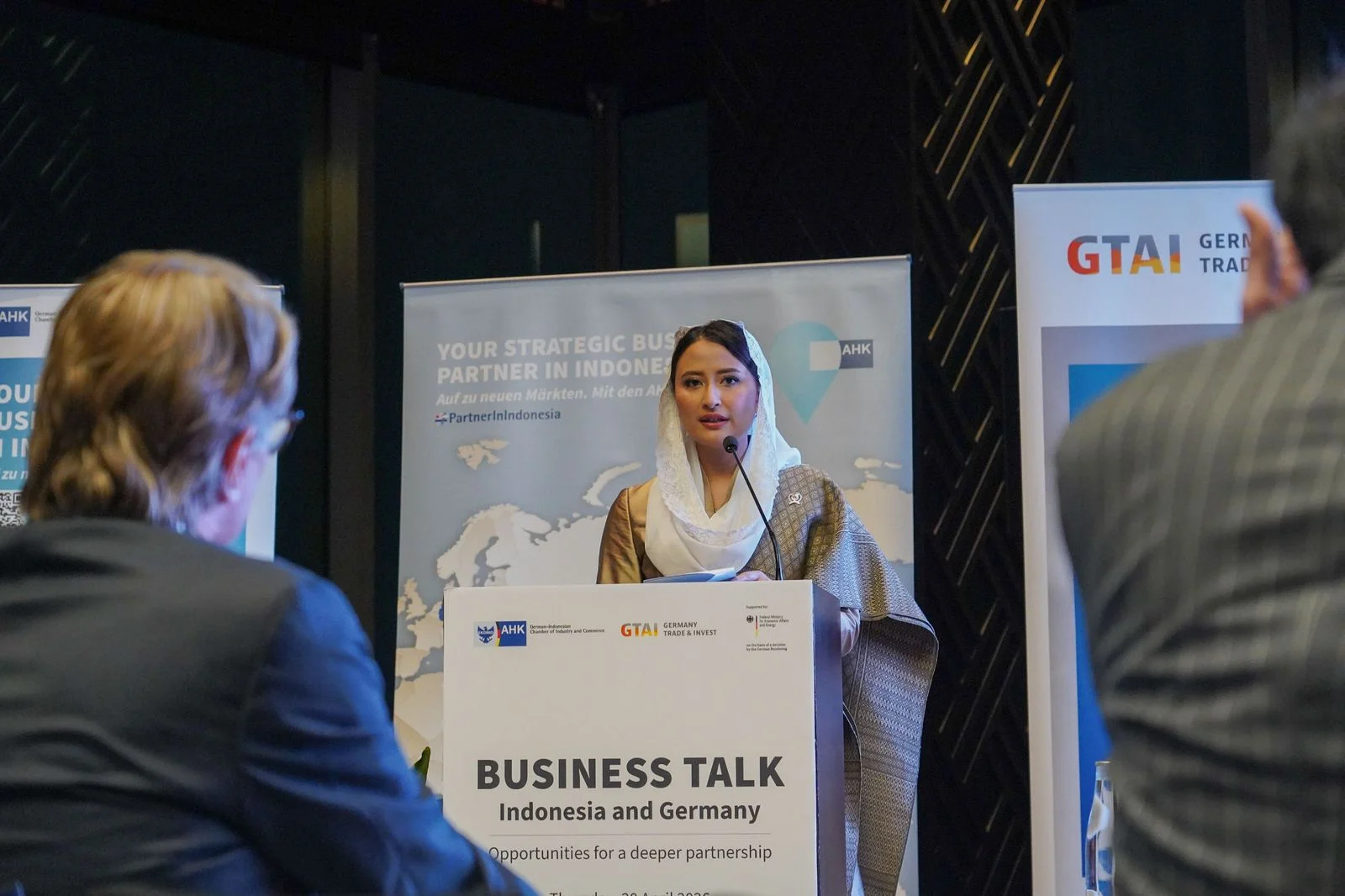
RRI.CO.ID, Jakarta - Indonesia and Germany play important roles in their respective regions. Germany is one of the major economic powers in the European Union, while Indonesia is a key driver in Southeast Asia.
Vice Minister of Trade, Dyah Roro Esti Widya Putri, conveyed this at the Evening Reception with Business Talk: Germany and Indonesia, Opportunities for a Deeper Partnership, held in Jakarta on Thursday, April 30, 2026.
“Indonesia and Germany will continue to regard each other as priority strategic partners in their respective regions. Therefore, both countries need to further strengthen relations and seek collaborative steps to increase two-way trade for mutual progress,” Vice Minister Roro said, as quoted by official statement.
She explained that Germany is one of Indonesia’s main strategic partners. To bolster the partnership, Indonesia has established two key trade representative offices in Germany: the Trade Attaché Office in Berlin and the Indonesian Trade Promotion Center (ITPC) in Hamburg.
In exports, Indonesia’s printing machinery industry has become one of the foundations of the partnership, with shipments to Germany reaching more than 281 million U.S. dollars in 2025. Indonesia’s exports of coffee, tea, and spices to Germany also rose significantly to 243 million U.S. dollars, growing by 175 percent.
Meanwhile, German steel pipes and tubes became Germany’s main export products to Indonesia in 2025, reaching 215 million U.S. dollars, up 225 percent from the previous year. These figures show that the trade structures of Indonesia and Germany complement each other.
“By taking advantage of this momentum, we should further enhance trade cooperation, including through the Indonesia-European Union Comprehensive Economic Partnership Agreement, or I-EU CEPA, which has entered the final stage of legal review. We are optimistic the process will be completed on schedule, signed by the end of 2026, and implemented in early 2027,” Roro said.
Roro further added that I-EU CEPA would provide legal certainty and strategic incentives to strengthen cooperation in trade, investment, and green industry. The agreement is also expected to help micro, small, and medium enterprises (MSMEs) access broader market opportunities.
The agreement also offers German businesses opportunities to expand collaboration in energy, raw materials, and green industry, while optimizing Indonesia’s market potential through available facilities.
The Indonesia-Germany strategic partnership has also expanded into professional services exports. This is marked by collaboration between the Ministry of Trade and the Ministry for the Protection of Indonesian Migrant Workers to place 4,000 Indonesian professionals in Germany’s hospitality, retail, and healthcare sectors.
“This initiative, a follow-up to the Joint Trade Mission for Professional Services in Berlin, is concrete proof that cooperation between the two countries has transformed into a comprehensive partnership that includes talent mobility and human capital development,” she said.
In addition, German Bundestag member Thomas Bareiß said Indonesia and Germany have maintained strong relations for more than 60 years, based on mutual trust, shared economic interests, and people-to-people exchanges. He noted that around 300 German companies currently operate in Indonesia, ranging from small and medium-sized enterprises to large corporations.
“With the upcoming I-EU CEPA, we are confident that trade and investment relations between the two countries will grow stronger,” Bareiß said. Total Indonesia-Germany trade in January—February 2026 reached 860.6 million U.S. dollars, with Indonesia’s exports to Germany at 331.1 million U.S. dollars and imports from Germany at 529.5 million U.S. dollars.
News Recomendation
Loading latest news.....