



National Pulp and Paper Contributes 3.73 Percent to GDP: Govt
- 07 Apr 2026 19:41 WIB
- Voice of Indonesia
Key Points
- The Indonesian Ministry of Industry recorded that the pulp and paper industry contributes 3.73 percent to the non-oil and gas manufacturing GDP.
- Industry Minister Agus Gumiwang Kartasasmita noted that the pulp and paper industry’s contribution to GDP highlights its strategic role as one of the main pillars of national manufacturing.
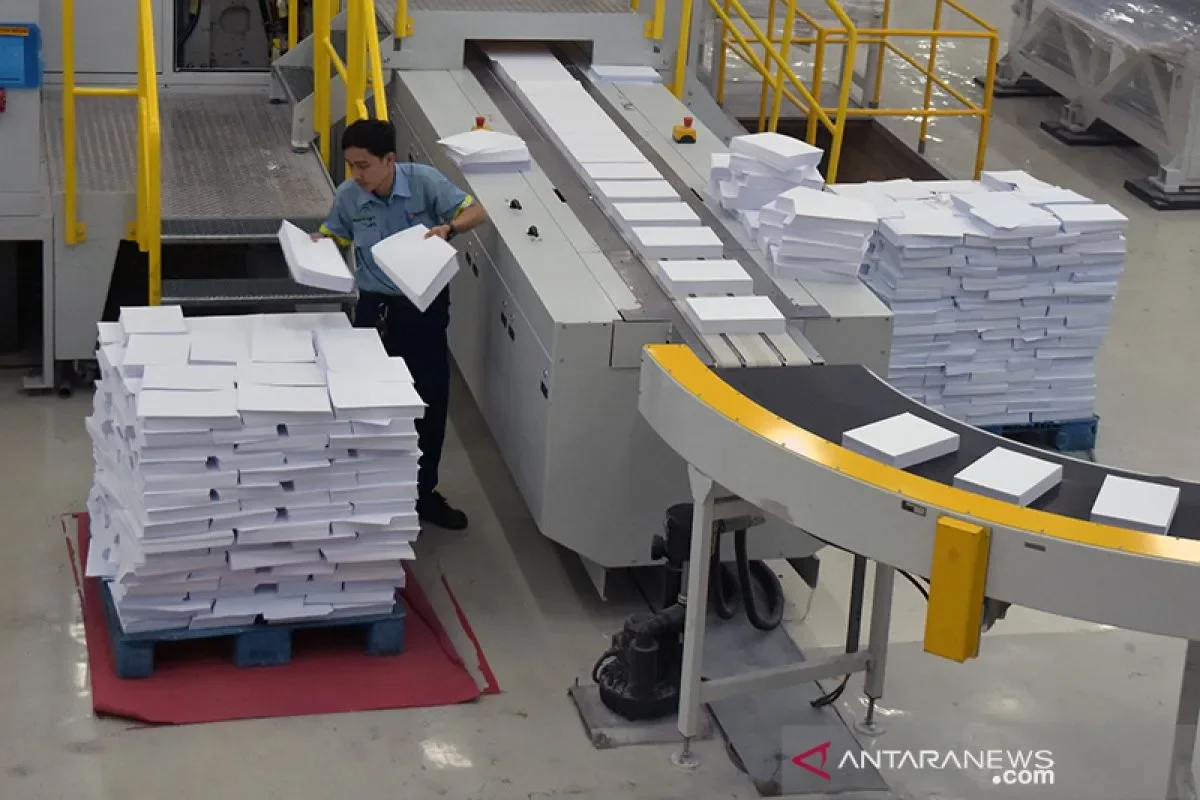
RRI.CO.ID, Jakarta - Indonesia’s pulp and paper industry continues to demonstrate its strategic role as a pillar of value-added manufacturing, contributing significantly to the national economy.
Beyond meeting domestic demand, the sector is also strengthening exports amid promising global prospects for paper-based packaging, particularly in food and beverage, fashion, and electronics.
Data from 2025 show that the pulp and paper industry contributed 3.73 percent to non-oil and gas manufacturing GDP. Export values reached USD 3.60 billion for pulp and USD 4.57 billion for paper.
The industry is supported by 113 companies and employs more than 280,000 direct workers and 1.2 million indirect workers. Globally, Indonesia ranks seventh in pulp and sixth in paper production, while in Asia it holds second and fourth place, respectively.
Industry Minister Agus Gumiwang Kartasasmita emphasized the sector’s importance. “The contribution of this industry to non-oil and gas manufacturing GDP highlights its strategic role as one of the main pillars of national manufacturing. The employment of more than 1.4 million workers also reflects its broad impact on the national economy,” he said in Jakarta on Tuesday, April 7, 2026, as quoted on the ministry's official website.
Acting Director General of Agro-Industry, Putu Juli Ardika, noted that the downstream pulp and paper sector has a strong multiplier effect. “This industry produces a wide range of quality products such as pulp, industrial paper, tissue, specialty paper, and rayon/viscose, which are widely utilized across industrial sectors,” he said at the Indonesian Pulp and Paper Association (APKI) Halal Bihalal event in Jakarta.
Global market trends continue to favor paper-based packaging. Paperboard currently accounts for 31.8 percent of the global packaging market, while flexible packaging is valued at more than USD 270 billion and is projected to grow 5–6 percent annually through 2032. Rising demand from the food, beverage, and e-commerce sectors, coupled with the shift from plastic to eco-friendly materials, is driving growth.
The domestic industry is also diversifying raw materials, developing alternatives such as banana fiber, lemongrass, empty oil palm fruit bunches, and kenaf to strengthen sustainability. These innovations support the transition toward natural fiber-based products.
Challenges remain, including limited domestic supply of recycled paper, import policies for industrial salt used in Chlor-Alkali Plants, the upcoming 2026 halal certification requirement, and external regulations such as the European Union Deforestation Regulation (EUDR). “Despite these challenges, the national pulp and paper industry continues to show positive development, while prioritizing green industry principles and the circular economy,” Putu said.
The government is reinforcing competitiveness through mandatory Indonesian National Standards (SNI) for food packaging paper and cardboard, effective July 24, 2025, and support for waste-processing innovations such as Refuse-Derived Fuel (RDF).
Indonesia’s participation as Partner Country at INNOPROM 2026 in Russia is also expected to open opportunities in the Eurasian market.
Putu hopes that APKI will continue to serve as a government partner in advancing the industry. “Through stronger synergy, we can optimize our potential to create paper products that meet market demand, are eco-friendly, and increasingly diverse,” he concluded. ***
News Recomendation
Loading latest news.....