



Bekasi Tofu and Tempeh Makers Shrink Sizes Amid Soaring Costs
- 07 Apr 2026 16:14 WIB
- Voice of Indonesia
Key Points
- Tofu and tempeh artisans in Bekasi are struggling due to a sharp rise in the price of imported soybeans and plastic packaging, triggered by global economic instability.
- To stay operational without raising selling prices, producers are shrinking product sizes and implementing rotational layoffs for up to 50% of their workforce.
- Producers attribute these rising costs to international factors, specifically geopolitical conflicts in the Middle East affecting imported materials.
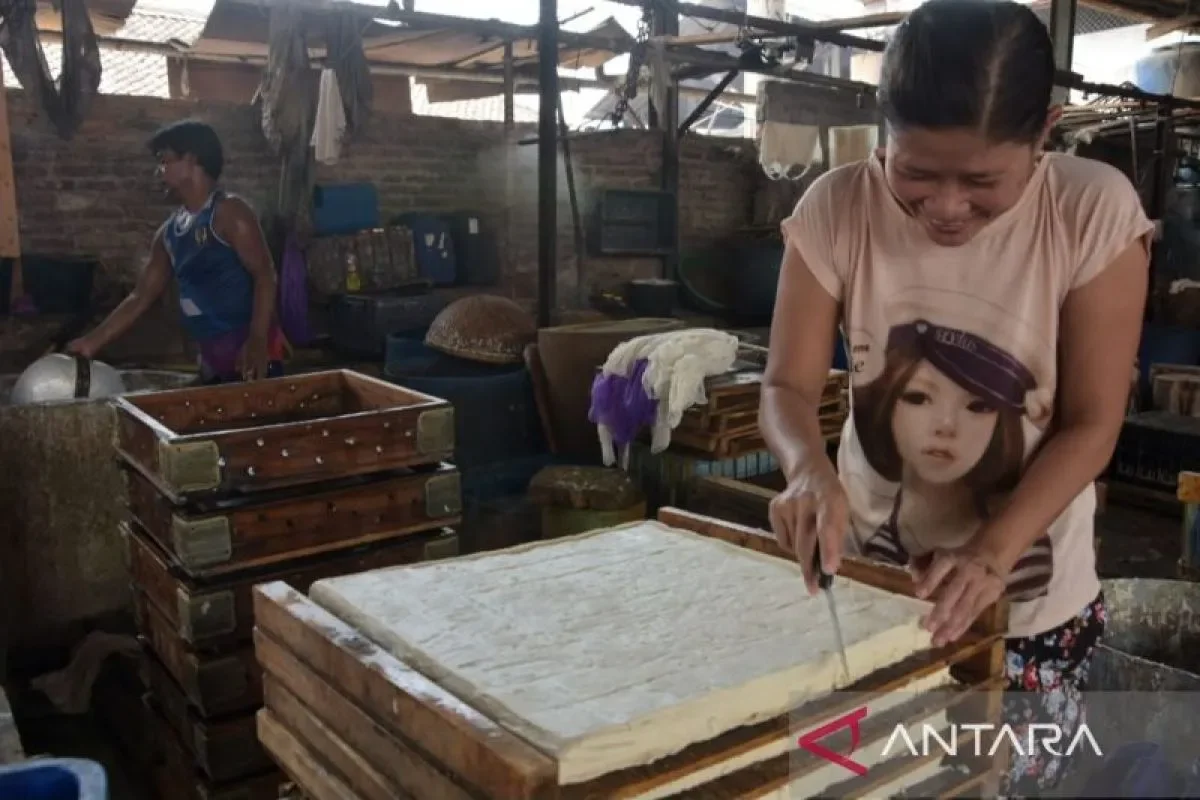
RRI.CO.ID, Bekasi Regency - Small-scale food producers in Bekasi, West Java, are fighting to keep their kitchens running as a volatile global economy sends the cost of essential raw materials soaring. Local tofu and tempeh artisans are facing a relentless spike in the price of imported soybeans and packaging supplies.
To stay afloat without alienating their customer base, they have been forced to adopt survival tactics ranging from shrinking product sizes to downsizing their workforce. In Cikarang Barat, 55-year-old tofu maker Deden has had to make the difficult decision to reduce his production scale.
To cope with the rising costs of imported soybeans and plastic wraps, Deden has subtly adjusted the dimensions of his tofu and implemented a rotational staffing system. "I want to save the business I built a long time ago. I am forced to do this so we can continue production," said Deden in Cikarang on Tuesday, April 7, 2026, as quoted by Antara.
| Baca juga: Weak Rupiah Hits Small Tofu Businesses |
He noted that while his employees understand the situation, nearly 50 percent of his workforce has been temporarily laid off, returning only during peak demand days to balance the books.
The economic pressure is equally visible in the tempeh industry. In Jayasampurna Village, Sukhep, 51, reported that the price of raw soybeans has climbed significantly from IDR 10,000 (USD 0.58) to IDR 10,900 (USD 0.64) per kilogram. "Usually, a quintal of soybeans costs IDR 1 million (USD 58.57), but now it has reached IDR 1,090,000 (USD 63.84)," explained Sukhep.
He highlighted the exhausting pace of these fluctuations, noting that prices seem to jump every time a new shipment arrives. "Every time it unloads from the truck, the price goes up by IDR 10,000 per quintal. Tomorrow, it could easily go up by another IDR 10,000," he added.
The crisis extends beyond the beans themselves, imported plastic packaging has seen an even more dramatic surge, with rolls jumping from IDR 270,000 (USD 15.81) to IDR 380,000 (USD 22.26). Sukhep suspects that global instability, specifically recent conflicts in the Middle East, is driving these hikes.
To maintain his profit margins without raising selling prices, a move he fears would drive customers away, he has opted to shrink the size of his tempeh logs. "The size of the tempeh is reduced. But if everything else keeps going up, the price might eventually have to follow. Clearly, in conditions like this, production volume can also drop as the product size shrinks," he said.
Local authorities have acknowledged the strain on these micro-industries but maintain that the supply chain remains intact. Head of Essential Goods Control at the Bekasi Regency Trade Agency, Helmy Yenti, confirmed the price hikes for both soybeans and plastics.
However, she urged the public not to panic, saying that commodity stocks are still sufficient. Helmy characterized the shrinking size of tofu and tempeh as a reasonable market response to raw material costs.
"According to our price monitoring officers, as of now, the market prices for tempeh and tofu are still within a normal range," she concluded, indicating that while sizes are smaller, the retail cost to consumers has remained stable for now. ***
News Recomendation
Loading latest news.....