



Industrial Confidence Index in March 2026 Remains in Expansion Zone at 51.86
- 01 Apr 2026 06:21 WIB
- Voice of Indonesia
Key Points
- The Indonesian Ministry of Industry noted that the Industrial Confidence Index (ICI) in March 2026 remained in the expansion zone, at 51.86.
- The industrial subsectors with the highest performance included the printing and motor vehicle industries, while contraction occurred in the beverage, tobacco, chemical, and electronics industries.
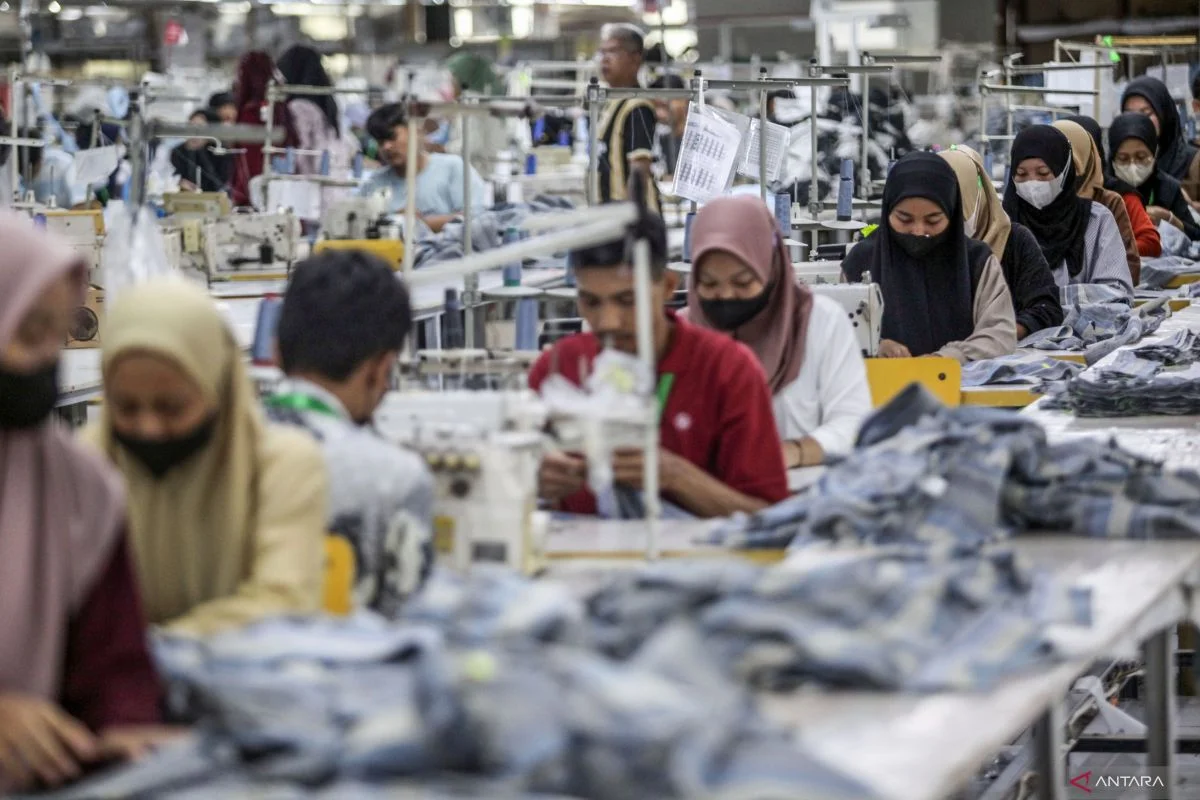
RRI.CO.ID, Jakarta - Indonesia’s manufacturing sector continued to grow in March 2026, despite global pressures and seasonal demand normalization following major religious holidays. The Industrial Confidence Index (ICI) stood at 51.86, remaining in the expansion zone, though slowing from 54.02 in February.
Ministry of Industry Spokesperson, Febri Hendri Antoni Arief, said the slowdown was influenced by seasonal factors after Eid al-Fitr and Chinese New Year.
“The industry reached its production peak in February 2026 to respond to the surge in demand during that period,” Febri stated in Jakarta on Tuesday, April 1, 2026, as quoted on the government’s official website.
He explained that logistics restrictions around 16 days before and after Eid led to a backlog of goods in warehouses, prompting industry players to adjust production levels to match market demand. “As demand normalized post-holiday, industry players reduced production levels to rebalance supply and demand,” he said.
Externally, geopolitical tensions in the Middle East involving Iran, Israel, and the United States could affect global energy routes such as the Strait of Hormuz. Febri noted, however, that the impact on Indonesia’s industry in March remained limited, concentrated in subsectors reliant on raw materials from the region.
Other indicators showed relatively strong performance. The manufacturing PMI in February reached 53.8, the highest level in nearly two years. Manufacturing exports in January grew 8.19 percent year-on-year, contributing 83.52 percent to total national exports, while imports rose 18.21 percent due to higher demand for raw materials and capital goods.
“Of the 23 manufacturing subsectors analyzed, 16 were in expansion, contributing 78.3 percent to the non-oil and gas manufacturing GDP,” Febri said.
The printing and motor vehicle industries recorded the strongest performance, while contraction occurred in the beverage, tobacco, chemical, and electronics industries. Seasonal factors related to Ramadan, weakened purchasing power, and global supply disruptions also affected these subsectors.
Febri added that pressures from logistics costs and rising raw material prices, driven by global geopolitical dynamics, further influenced performance.
The components of the ICI remained in expansion, with orders at 52.20, production at 51.55, and inventories at 51.47, though orders and production slowed compared to the previous month. “This indicates that industrial activity is still ongoing, but at a more moderate pace. Production has expanded for three consecutive months, albeit with a slowing trend,” he said.
The export PMI stood at 52.73, while the domestic PMI was 50.44, both still indicating expansion despite slowing. Febri emphasized the importance of strengthening the domestic market to maintain growth momentum amid global pressures.
The Ministry continues to strengthen industrial structures, increase production capacity utilization, and expand market penetration in non-traditional export markets by optimizing free trade agreements. Efforts toward energy efficiency and diversification of raw material sources are also being pursued to maintain competitiveness.
“We are optimistic that the national manufacturing industry retains strong fundamentals. With the support of appropriate policies and collaboration among stakeholders, the industrial sector will continue to be the primary driver of the national economy,” Febri said. ***
News Recomendation
Loading latest news.....