



Indonesia’s Stock Market Faces Volatility as Oil Prices, Geopolitical Risks Rise
- 26 Mar 2026 10:34 WIB
- Voice of Indonesia
Key Points
- The Jakarta Composite Index (IHSG) opened higher but is expected to remain volatile as investors weigh U.S. ceasefire efforts with Iran and shifting expectations about Federal Reserve interest rate decisions.
- The Indonesian government is strengthening energy security by diversifying fuel imports away from the Strait of Hormuz and maintaining reserves.
- European and U.S. stock markets closed higher on March 25, while Asian markets showed mixed performance on March 26, reflecting broader uncertainty amid rising oil prices and geopolitical risks.
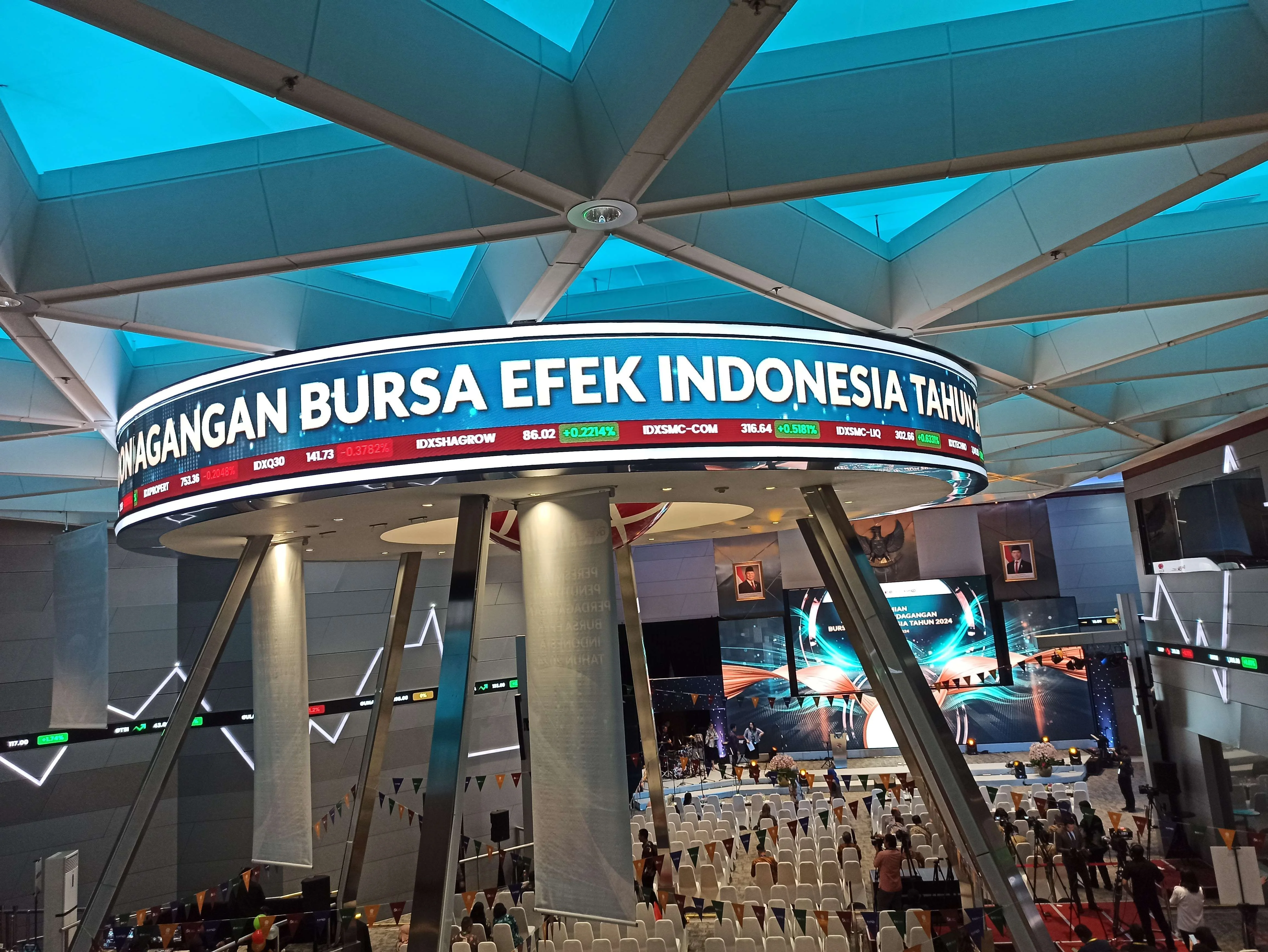
RRI.CO.ID, Jakarta - Global geopolitical tensions and shifting interest rate expectations are setting the tone for Indonesia’s stock market, with the Jakarta Composite Index (IHSG) projected to trade with heightened volatility on Thursday, March 26, 2026.
The uncertainty stems from ongoing U.S. efforts to broker a ceasefire with Iran, alongside changing market assumptions about the Federal Reserve’s policy path. Analysts warn that investor sentiment remains caught between “hope and reality”, with each positive headline quickly offset by Iran’s rejection of negotiations.
At the opening bell, the IHSG rose 11.54 points or 0.16 percent to 7,313.66. The LQ45 index, which tracks 45 leading stocks, edged up 0.42 points or 0.06 percent to 746.87.
| Baca juga: Oil Prices Rise, Markets Stay Resilient |
“Kiwoom Research recommends a cautious Average Up strategy, supported by disciplined money management,” Head of Research at Kiwoom Sekuritas Indonesia, Liza Camelia Suryanata, said in her review in Jakarta on Thursday, March 26, 2026, as quoted by Antara.
From abroad, the U.S. has tabled a 15-point peace proposal, including reopening the Strait of Hormuz and dismantling Iran’s nuclear facilities. While U.S. President Trump has described talks as ongoing; Iran insists no negotiations are taking place and demands broader concessions, including full war cessation, recognition of its control over Hormuz, sanctions relief, compensation, and freedom to pursue military programs.
Mediation efforts by Pakistan, Turkey, and Egypt continue, but the gap between both sides remains wide.
Meanwhile, global interest rate expectations have shifted sharply. Markets no longer anticipate Fed rate cuts this year, reversing earlier forecasts of two reductions.
Bank of America noted that current oil prices are already in a “hawkish zone” for the Fed. Sustained WTI crude at USD 80–100 per barrel could raise the risk of rate hikes, though a temporary shock that dampens consumption might push the Fed back toward a dovish stance.
Domestically, the government has stepped up energy security measures. The Ministry of Energy and Mineral Resources (ESDM) and state-owned oil and gas company Pertamina have accelerated fuel stock safeguards and diversified import routes away from Hormuz, sourcing from Malaysia, Brunei, Africa, and the U.S. Current domestic fuel reserves stand at 27 days -- above the minimum threshold but still vulnerable to external shocks.
On foreign policy, Indonesian President Prabowo clarified that the country has no USD 1 billion funding commitment to the Board of Peace (BoP), limiting its role to peacekeeping troops and humanitarian aid. Plans to deploy 8,000 personnel are currently on hold pending domestic considerations.
Financial stability measures are also in focus. The Finance Ministry has injected an additional IDR 100 trillion into banks, bringing total placements to around IDR 300 trillion, in response to rising government bond yields and tightening liquidity.
Separately, officials are preparing new export duties on coal and nickel -- expected to be finalized by March 26 and effective April 1 -- potentially adding IDR 25 trillion in revenue despite industry pushback.
Regional and global markets provided mixed cues. On Wednesday, European bourses closed higher, with the Euro Stoxx 50 up 1.29 percent, FTSE 100 up 1.42 percent, DAX up 1.41 percent, and CAC 40 up 1.33 percent. Wall Street also advanced, with the S&P 500 gaining 0.54 percent, Nasdaq 0.67 percent, and Dow Jones 0.66 percent.
In Asia, Thursday morning trading saw Japan’s Nikkei fall 333.12 points or 0.61 percent to 53,440.00, while Shanghai rose 0.45 percent, Hang Seng climbed 1.37 percent, and Singapore’s Strait Times added 0.42 percent. ***
News Recomendation
Loading latest news.....